
ERBIL, Kurdistan Region - Christian Democratic Union (CDU) leader Friedrich Merz is poised to become Germany’s next chancellor based on preliminary election results, but he remained cautious about the prospect as his party celebrated its victory on Sunday.
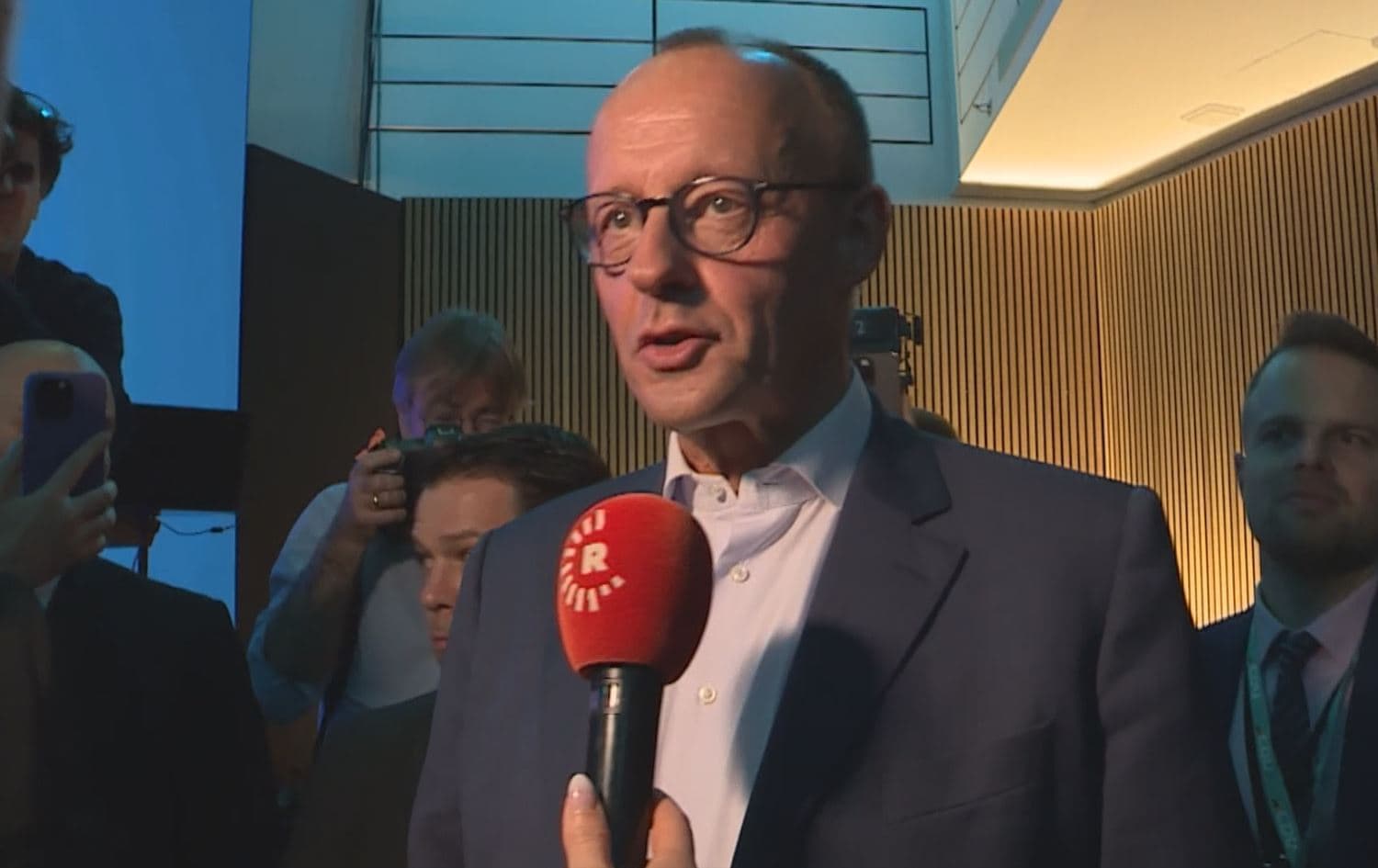
“We will see about that in the future, let’s see what happens. It should be discussed now,” Merz told Rudaw when asked if he would be Germany's next chancellor.
The 69-year-old chairman of the conservative CDU is set to become Germany's next chancellor based on preliminary election results. He was acknowledged as the main challenger to sitting Chancellor Olaf Scholz of the center-left Social Democrats (SPD).
Germans went to the polls in high-stakes federal parliamentary elections on Sunday. Exit polls showed the CDU and its Bavarian sister party, the Christian Social Union (CSU), leading with 29 percent, followed by the far-right Alternative for Germany (AfD) at 19.5 percent, and the SPD at 16 percent. A total of 630 parliamentary seats were up for grabs, with over 59 million eligible voters.
“The CDU is in good shape, we will celebrate tonight, but we will resume work from tomorrow,” Merz stressed.
He also commented on the support his party received when asked about backing from Kurds living in Germany, saying, “I am very happy for the many voters in Germany, for all the people in the CDU who helped us, worked tirelessly for us, and carried out this election campaign.”
Hours before the polls closed, Kamil Bazrgan, a social consultant, told Rudaw that Kurds in Germany are well-known in politics and play an active role in society. He cited official government data estimating the Kurdish population in Germany at around 1.3 million.
A total of 630 parliamentary seats were up for grabs, with over 59 million eligible voters. According to a recent poll by state-owned broadcaster Deutsche Welle (DW), immigration and economic issues were among the most pressing concerns for voters.