


LONDON - Nestled in the heart of Green Lanes, London’s Kurdish and Turkish heartland, is the Kurdish Community Centre (KCC), which has proved a haven for refugees and exiles since the early 1990s.
People drop in during the day to use the centre’s services, including legal advice, a school and garden, or just simply to get a coffee, have a chat and catch up with Kurdish TV and newspapers.
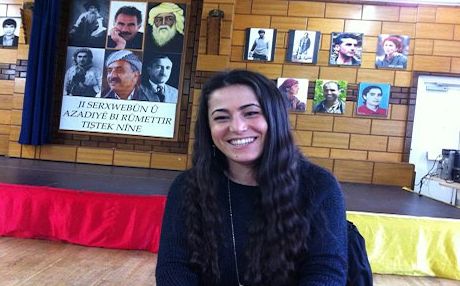
“People come to have tea, get the news and just spend quality time with our own people,” says Aysegul Erdogan, a member of the KCC’s foreign affairs committee. “But we also help with integration and provide support, such as learning English. We are here to help.”
Her own family were beneficiaries of the centre. In 1990, she arrived aged seven with her mother and three sisters to join their father in London after he decided there was not much of a “future” for them in Malatya, eastern Anatolia.
“I still remember our first day arriving at Heathrow (airport), my Mum crying. We would go to the centre to get a bit of home,” she says. I remember as a child seeing people arriving at the centre still with all their luggage and people rushing to help them.”
The big wave of immigration to Britain in the late 1980s and early 1990s – which included Iraqi Kurds escaping Saddam Hussein’s brutalities -- has since tailed off and the Kurdish community is now facing issues beyond the immediate challenges of housing and employment.
“Not so many people are coming now as in the past and it’s now about integration and dealing with the issues of the third generation,” Erdogan says. “Kurds used to live mainly in (the London boroughs of) Harringay and Hackney but now they’ve moved all around London and the country. But we still have lots of people around here.”
Now aged 32, Erdogan considers herself well integrated into British life. But she is also passionate about Kurdish culture, in particular singing and folk dancing, which she teaches at the center.
The centre’s political leanings appear well sign-posted -- there are leaflets and posters in support of the Kurdistan Workers’ Party (PKK) dotted throughout. But Erdogan says everyone is welcome, no matter their politics or ethnicity.
“The centre is for all people and we are very diverse. Turkish people come here, people from Iran, Iraq and all over,” she says. “It’s less of an issue meeting Turkish friends and it’s not a problem like it used to be before. For many people, here is more of a home than Turkey because they feel free to speak out and express themselves.
On a weekday afternoon, there were about 30 people either sitting around in the cafe or standing outside smoking and abiding by Britain’s strict anti-tobacco laws. Around 3,000 people might use the KCC in an average week, including when the centre is rented out for wedding celebrations.
Membership is 10 pounds a year. The KCC has charitable status and receives some local council support, but in an era of austerity government cuts, funding is always an “issue,” says Erdogan. The centre’s staff, and the lawyers who provide a legal clinic, work on a voluntary basis.
Among the activities on offer are Kurdish and English language courses, Kurdish folklore, a crèche, drama, IT and media.
“I like to come here to meet people. It’s very difficult to live in this country,” Kibar Erdal, a Kurdish refugee who comes to the centre’s cafe, said in halting English. “It’s very friendly here and I meet a lot of friends.”
Erdogan is currently involved with a possible case against the British police after she was part of a group travelling by coach to Paris that was stopped under controversial anti-terrorism laws in January.
The group went to Paris last month to take part in demonstrations to mark the first anniversary of the murder of three Kurdish women activists in Paris. Ankara denies it was behind the killings and claims it was an internal PKK dispute.
Some women passengers say they had their veils removed, suffered intrusive searches and had all their money confiscated. “One woman fainted in shock and the police confiscated different amounts of money,” says Erdogan.
The PKK is banned in the European Union.
The experience served to strengthen Erdogan’s commitment to upholding human rights: She is currently studying law part-time and she is running for election as a local representative in Hackney in May.
Her political activism also continues unabated. On February 16, she was one of the speakers at a rally to mark the 15th anniversary of the abduction of PKK leader Abdullah Ocalan by Turkish forces in Nairobi, before he was taken to be jailed in Turkey.
Erdogan is particularly enthused by her work with the Roj Kurdish women’s association, which provides general and legal advice and support for those suffering domestic violence, forced marriage or honor-based violence.
“After 24 years here, I do feel integrated but I also feel Kurdish. I like to go back to Turkey at least once a year, twice if I can afford it,” says Erdogan. “Keeping our culture alive, through story-telling and folk-dancing, is one of the reasons we’re here in the 21st century.”
Comments
Rudaw moderates all comments submitted on our website. We welcome comments which are relevant to the article and encourage further discussion about the issues that matter to you. We also welcome constructive criticism about Rudaw.
To be approved for publication, however, your comments must meet our community guidelines.
We will not tolerate the following: profanity, threats, personal attacks, vulgarity, abuse (such as sexism, racism, homophobia or xenophobia), or commercial or personal promotion.
Comments that do not meet our guidelines will be rejected. Comments are not edited – they are either approved or rejected.
Post a comment