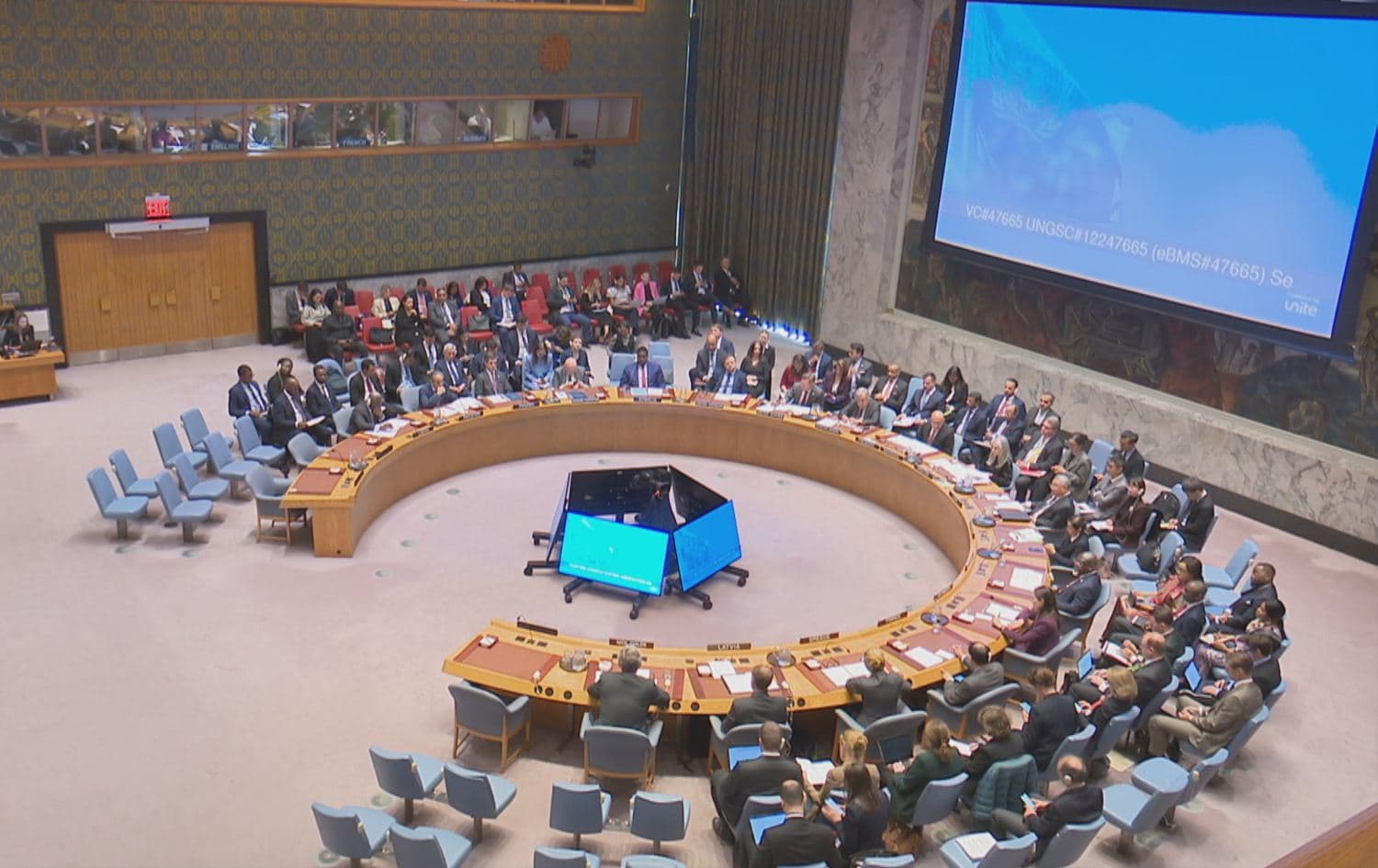

New York - Diplomats from dozens of countries gathered at the United Nations on Monday to demand the reopening of the Strait of Hormuz, piling pressure on Iran to lift a blockade that has paralyzed shipping through one of the world's most critical oil chokepoints.
The show of unity – staged ahead of an open Security Council meeting on the waterway – came as a Pakistani-mediated ceasefire between Washington and Tehran entered a fragile new phase, with negotiators struggling to bridge gaps over Iran's nuclear program and the waterway's future.
Reading a joint statement on behalf of the assembled delegations, Bahraini Foreign Minister Abdullatif bin Rashid al-Zayani, whose country holds the rotating Security Council presidency this month, said the closure of the strait and continued Iranian attacks on shipping posed a direct threat to international security.
"We reaffirm our full support for Resolution 2817, condemning Iran's attacks against regional neighbors," Zayani said. "Free navigation through the strait is a cornerstone of global security and prosperity."
Conspicuously absent from the gathering were the Chinese and Russian representatives, the two permanent Security Council members who earlier this month vetoed a Bahraini-led draft resolution that would have authorized states to coordinate defensive measures, including naval escorts, to keep the waterway open. The April 7 vote was 11 in favor, two against, with Colombia and Pakistan abstaining.
Speaking inside the chamber, UN Secretary-General Antonio Guterres echoed the call for unimpeded passage and urged the parties to step back from the brink.
"Navigational rights and freedoms through the Strait of Hormuz must be respected, as affirmed by this Council's Resolution 2817," Guterres said. "I appeal to the parties: open the strait. Let ships pass. No tolls. No discrimination. Let trade resume."
China's UN Ambassador Fu Cong, asked by Rudaw why Beijing had broken with the broader council consensus, said his government's priority was halting the wider conflict rather than backing what it views as a one-sided text.
"What is most important is to achieve peace, and then if peace prevails, I think the Strait of Hormuz will be open," Fu told Rudaw on the sidelines of the meeting.
Asked whether a rival resolution that China and Russia had been drafting was still alive, Fu said: "Yes, it's still on the table."
A waterway, a war, and a global shock
The diplomatic standoff at Turtle Bay is unfolding against the backdrop of the war that began on February 28, when the United States and Israel launched coordinated airstrikes on Iran, killing the country's Supreme Leader, Ayatollah Ali Khamenei, and a swath of senior military and government officials. Tehran retaliated with missile and drone strikes on Israel, US bases and Gulf states, and shut the Strait of Hormuz to commercial traffic.
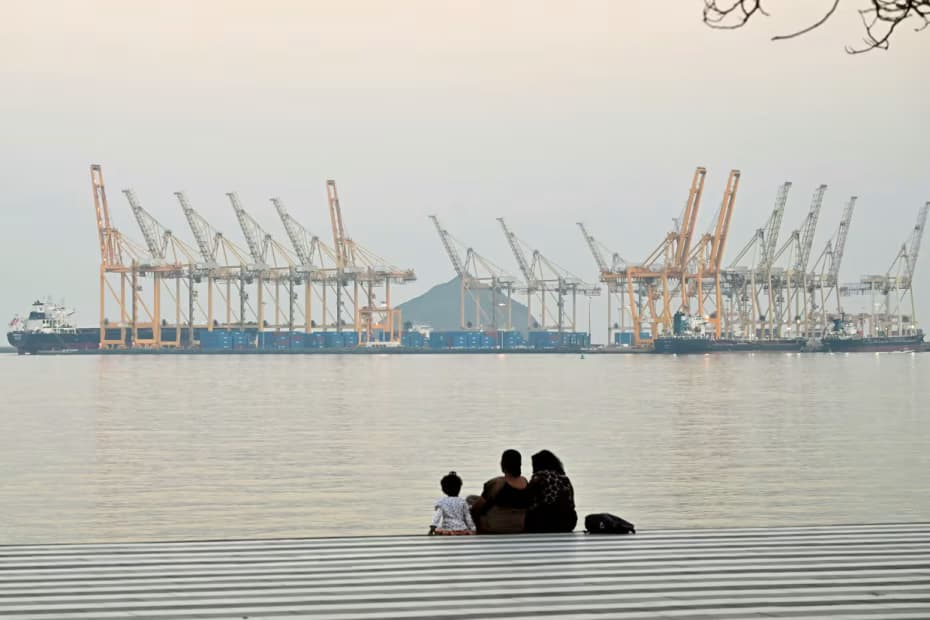
Roughly 38 percent of seaborne crude oil and a fifth of global liquefied natural gas pass through the 33-kilometer-wide strait between Iran and Oman in normal times, according to data cited by Bahrain at the Security Council. Traffic has fallen by more than 90 percent since the start of the war, the UN has said, warning that the disruption could push 45 million people worldwide into acute hunger.
Resolution 2817, adopted on March 11, condemned Iran's "egregious attacks" against Bahrain, Kuwait, Oman, Qatar, Saudi Arabia, the United Arab Emirates, and Jordan. It was co-sponsored by 135 member states – the largest number ever recorded for a Security Council resolution – though China and Russia abstained, arguing the text ignored the US and Israeli strikes that triggered the war.
The follow-up resolution vetoed this month would have gone further, citing Chapter VII of the UN Charter in earlier drafts. Russian Ambassador Vassily Nebenzia said it presented Iran as the sole source of regional tensions, while Fu said it failed to capture "the root causes and the full picture of the conflict."
Pakistan's tightrope
The UN session coincided with a renewed push by Pakistan, which has emerged as the principal mediator between Washington and Tehran. The Islamabad Talks earlier this month – led on the US side by Vice President JD Vance and special envoys Steve Witkoff and Jared Kushner, and on the Iranian side by parliamentary speaker Mohammad Bagher Ghalibaf and Foreign Minister Abbas Araghchi – ended after 21 hours without a deal, snagging on Iran's nuclear program, sanctions relief and the strait itself.
A two-week ceasefire brokered by Pakistani Army Chief Field Marshal Asim Munir on April 8 has since been extended by US President Donald Trump, who has nonetheless kept a naval blockade in place and threatened to resume strikes. Trump on Friday said he had ordered the US military to "shoot and kill" Iranian small boats in the strait.
Araghchi traveled to Islamabad, Muscat and Moscow over the weekend, presenting what US officials described as a new Iranian proposal to reopen the strait and end the war while postponing the thornier nuclear file to a later stage.
For all the choreography at the UN, diplomats privately acknowledge that the path to reopening the chokehold runs through Islamabad, Tehran, and Washington – not through the Security Council.