


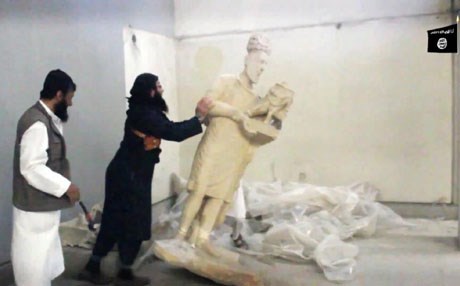
BERLIN — The UN's cultural agency said Monday the destruction of antiquities and heritage sites in conflict zones by the Islamic State and other extremist groups could amount to war crimes.
The UNESCO World Heritage Committee, meeting in Bonn, noted the Islamic State's destruction of the ancient city of Hatra in Iraq and expressed "deep concern" about the Syrian archaeological gem of Palmyra, which the group captured in May. Both are UNESCO World Heritage Sites.
"Intentional attacks against buildings dedicated to religion, education, art, science or charitable purposes and historic monuments may amount to war crimes," the committee said in a resolution it adopted.
In April, International Criminal Court Prosecutor Fatou Bensouda said she had received allegations of widespread atrocities in Syria and Iraq by ISIS, as well as the "wanton destruction of cultural property," but said she wasn't opening an investigation as neither country is a member of the court and the foreign fighters suspected of involvement are not high-ranking enough to prosecute.
In its resolution, UNESCO said it was "deeply shocked" by repeated attacks by ISIS and other groups "aimed at destroying cultural diversity through deliberate targeting of individuals and communities on the basis of cultural, ethnic or religious background, as well as places of worship, memory and learning."
It added further that it was alarmed by an increasing number of threats to cultural heritage through looting and illegal excavations "which seriously undermine irreplaceable cultural treasures, among them UNESCO World Heritage sites in Afghanistan, Iraq, Libya, Mali, Syria and Yemen.
UNESCO also cautioned that natural world heritage sites in Niger, Congo the Central African Republic and Ivory Coast are threatened by problems "likely to continue long after the end of hostilities."
The UNESCO World Heritage Committee, meeting in Bonn, noted the Islamic State's destruction of the ancient city of Hatra in Iraq and expressed "deep concern" about the Syrian archaeological gem of Palmyra, which the group captured in May. Both are UNESCO World Heritage Sites.
"Intentional attacks against buildings dedicated to religion, education, art, science or charitable purposes and historic monuments may amount to war crimes," the committee said in a resolution it adopted.
In April, International Criminal Court Prosecutor Fatou Bensouda said she had received allegations of widespread atrocities in Syria and Iraq by ISIS, as well as the "wanton destruction of cultural property," but said she wasn't opening an investigation as neither country is a member of the court and the foreign fighters suspected of involvement are not high-ranking enough to prosecute.
In its resolution, UNESCO said it was "deeply shocked" by repeated attacks by ISIS and other groups "aimed at destroying cultural diversity through deliberate targeting of individuals and communities on the basis of cultural, ethnic or religious background, as well as places of worship, memory and learning."
It added further that it was alarmed by an increasing number of threats to cultural heritage through looting and illegal excavations "which seriously undermine irreplaceable cultural treasures, among them UNESCO World Heritage sites in Afghanistan, Iraq, Libya, Mali, Syria and Yemen.
UNESCO also cautioned that natural world heritage sites in Niger, Congo the Central African Republic and Ivory Coast are threatened by problems "likely to continue long after the end of hostilities."
Comments
Rudaw moderates all comments submitted on our website. We welcome comments which are relevant to the article and encourage further discussion about the issues that matter to you. We also welcome constructive criticism about Rudaw.
To be approved for publication, however, your comments must meet our community guidelines.
We will not tolerate the following: profanity, threats, personal attacks, vulgarity, abuse (such as sexism, racism, homophobia or xenophobia), or commercial or personal promotion.
Comments that do not meet our guidelines will be rejected. Comments are not edited – they are either approved or rejected.
Post a comment