

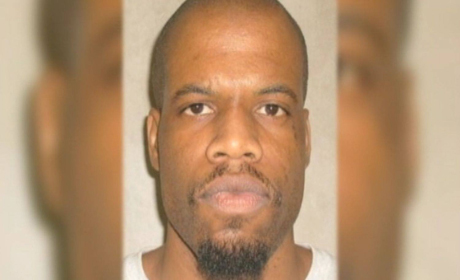
Washington, D.C - The death penalty has now become the subject of heated debate here after an execution went badly wrong earlier this month in Oklahoma.
Clayton Lockett, sentenced to death for the murder of a teenage girl, took 43 minutes to die after he was injected with a previously untested cocktail of three separate drugs.
Mr. Lockett eventually died of a heart attack after the authorities officially abandoned the execution when one of his veins ruptured.
The case has led to a new discussion about whether it is time for America to scrap the death penalty.
Today it remains available to prosecutors in 32 out of the country's 50 states but half of them have not carried out a single execution since 2010.
Inside America is looking into this subject, featuring interviews with:
- Shujaa Graham, an exoneerated man who lived several years on death row after being framed in the murder of a prison guard.
- Virginia's former chief executioner who took 62 lives using both electrocution and lethal injection. I start a 10-minute interview with him by asking him to describe a typical day on which he executed someone.
- Maja Kocijancic, Spokesperson of Catherine Ashton, European Union High Representative for Foreign Affairs and Security Policy and Vice-President of the European Commission, will give us what the EU view on execution in the US as European pharmaceutical companies are refusing to sell drugs to America prisons where capital punishment is still on the books.
- Richard Dieter, Executive Director Death Penalty Information Center, which collects and distributes data and analysis on the death penalty.
- David Martosko, US political editor of the Daily Mail.
- Judge Omed Mushin, the spokesperson for Kurdistan's Judicial Council, also explains how his autonomous region is gradually trying to scrap the death penalty, despite the high rate of executions that that continue to carried out in the rest of Iraq. Even though death penalty remains on the books, Judge Muhsin says, Kurdistan has not carried out a single execution for more than five years.

Comments
Rudaw moderates all comments submitted on our website. We welcome comments which are relevant to the article and encourage further discussion about the issues that matter to you. We also welcome constructive criticism about Rudaw.
To be approved for publication, however, your comments must meet our community guidelines.
We will not tolerate the following: profanity, threats, personal attacks, vulgarity, abuse (such as sexism, racism, homophobia or xenophobia), or commercial or personal promotion.
Comments that do not meet our guidelines will be rejected. Comments are not edited – they are either approved or rejected.
Post a comment