Over the past two decades, Iraq has exported oil worth $1.45 trillion, with the entirety of those revenues returned in US dollars. However, its total Gross Domestic Product (GDP) currently stands at only $273 billion. Had it not been for systematic corruption and waste, instead of sitting at the top of the rankings of the most corrupt, non-transparent, and least free economies in the world, Iraq would now be among the G20 group and the ranks of global economic superpowers.
This massive volume of Iraqi oil revenue is equivalent to one-fourth of the entire financial scale of a country like India—a country whose total GDP reaches $4.15 trillion, with a population of 1 billion 470 million people (nearly 30 times that of Iraq), making it the sixth-largest economy in the world.
In reality, a large part of this collapse is caused by a "foggy strategy" in data management, which has paved the way for corruption. For instance, the Ministry of Finance publishes reports containing discrepancies in the trillions. Furthermore, the two-month lag in data reporting between the Ministry of Finance and the Ministry of Oil regarding revenues creates a golden opportunity for billions of dollars to vanish, allowing numbers and their discrepancies to be easily concealed.
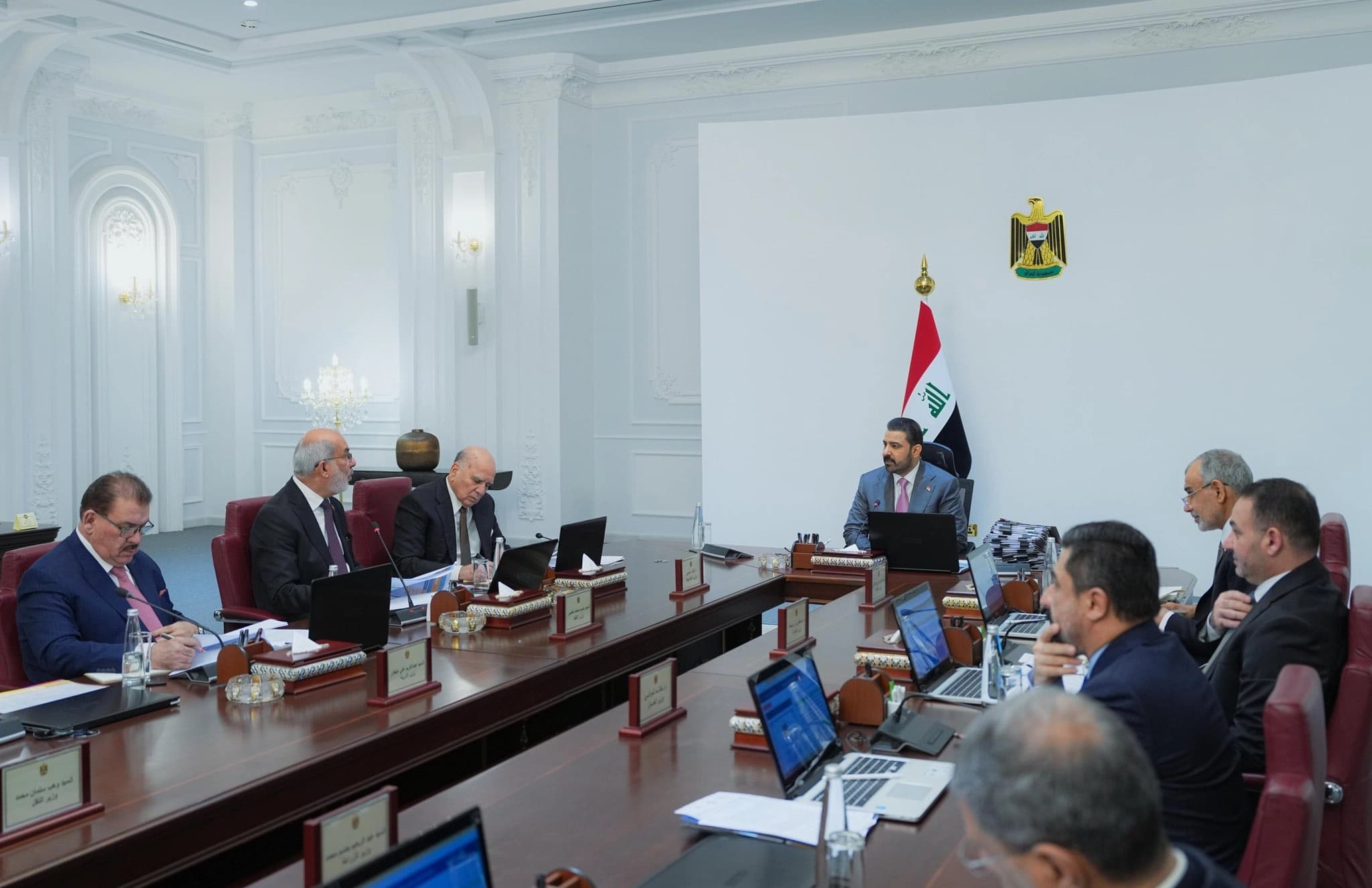
“Operation Dawn," which began on Sunday to pursue corrupt officials in the Green Zone and the provinces, raises various questions: Is this sudden move a radical strategic shift, or is it merely a financial necessity driven by liquidity shortages and accumulated debts? Has the system reached a dead end, unable to sustain monthly expenditures of 9 to 10 trillion dinars while its revenue is only 2 to 3 trillion, all while the unemployment rate stands at 16 percent (reaching 30 percent in some provinces), projects remain incomplete, and basic services fail to reach the population?
In this report, relying on data, we attempt to answer three key questions: What is the relationship between the budget law, what the Ministry of Finance reports, and corruption? Why is it that whenever corruption is mentioned, our minds immediately go to oil and electricity, making the energy sector the epicenter of corruption? Will "Operation Dawn" rescue Iraq from this economic situation, or is it a temporary phase, after which things will return to normal once the oil money blocked by the Strait of Hormuz returns?
Corruption and the elasticity of expenditures and revenues
The discrepancy between Iraq's annual budget law and the actual revenues and expenditures published by the Ministry of Finance constitutes a major part of the corruption that has gripped the system. The Iraqi Parliament approves a law that outlines revenue sources and expenditure targets, but when the end of the year arrives, the actual numbers reveal a quiet and massive discrepancy that is rarely discussed.
For example, in 2023, total expenditures in the budget law were set at 198 trillion Iraqi Dinars (IQD) (149 trillion for operational and 49 trillion for investment), while total revenues were estimated at 134 trillion IQD, meaning an imaginary deficit of 64 trillion IQD. However, looking at the Ministry of Finance's year-end report, we find that total expenditures were only 142 trillion IQD (118 for operational and 24 for investment) and total revenues were 135 trillion IQD. In other words, everything was different, and the actual deficit was only 7 trillion IQD.
This lack of clarity and elasticity continued in subsequent years. In 2024, despite it being a three-year budget (2023–2025) which was supposed to remain stable, Ministry of Finance data shows that total expenditures reached 150 trillion IQD (125 for operational and 25 for investment) and total revenues were 140 trillion IQD (127 from oil and 13 from non-oil). Last year (2025), total expenditures decreased to 141 trillion IQD (119 for operational and 22 for investment), and revenues dropped to 124 trillion IQD (109 from oil and 15 from non-oil). Meanwhile, within these figures, public employee expenditure (salaries) made a massive leap from 47 trillion IQD in 2023 to 60 trillion IQD in 2025.
If we look past the budget numbers and focus solely on non-oil revenues (taxes and customs duties), the massive gaps become even clearer. According to the Ministry of Finance report, non-oil revenues were 9.7 trillion IQD in 2023, over 13 trillion IQD in 2024, and nearly 15 trillion IQD in 2025, bringing the three-year total to 37.7 trillion IQD (approximately $29 billion).
However, the major issue arises here: according to data from the Central Bank of Iraq (CBI), during those three years, $204 billion (or 265 trillion IQD) left the country through the currency auction window to import goods. Even if the average import tax was calculated at just 20% (which in reality ranges between 15 percent and 35 percent ), the revenue from import taxes on goods alone should have been 53 trillion IQD, not the meager total non-oil revenue of 37.7 trillion IQD recorded over the three years!
The energy sector: Billions of dollars spent and ongoing darkness
The energy sector is the backbone of the Iraqi economy. As pointed out by the World Bank Group, this sector accounts for half of the Gross Domestic Product (GDP), 88 percent of state revenues, and 90 percent of exports. Between 2015 and 2025, more than 72 percent of Iraq's total investment funds went to the Ministry of Oil, dismantling 113 trillion IQD ($87 billion), in addition to 9.7 trillion IQD in operational expenditures. Meanwhile, the electricity sector's share of investment expenditure was 8.16 trillion IQD, alongside 62 trillion IQD in operational expenditures (meaning an annual average of 5.6 trillion IQD) going to electricity. With the amount spent on electricity, Iraq could have built 7 to 9 nuclear reactors with a generation capacity of 1,400 MW each (similar to South Korea's) or 13 to 18 reactors with a capacity of 1,200 MW (like China's). Yet, people still suffer from a lack of power, caught between the official grid and private neighborhood generators.
When these expenditures are placed side by side, it turns out that the Ministry of Oil absorbed 60 percent of the total investment expenditures of all of Iraq. Strikingly, most of these funds were spent in the final three months of the year, rather than being spread throughout the year! Despite these colossal expenditures and the provision of $12 billion in annual energy subsidies according to International Energy Agency (IEA) data, citizens still live under the smoke and noise of private generators, longing for 24-hour electricity.
On the other hand, for a decade, five different cabinets have promised to increase oil production to 6 or 7 million barrels per day, but production levels remain stagnant between 4 and 4.7 million barrels (with exports between 3 and 3.7 million barrels). The recent closure of the Strait of Hormuz demonstrated how strategy-less Iraq is, considering that 99% of its exports and 82 percent of its annual revenues stem from oil, tying the country's fate directly to that strait. Meanwhile, according to a World Bank report, the "West Qurna 2" field ranks first globally in resource waste by flaring 2.7 billion cubic feet of associated gas annually. The total associated gas flaring in Iraq reached 23.6 billion cubic meters in 2025, even as the country imports gas annually to fuel its power stations.
According to a report by the Energy Institute (EI), Iraq's oil reserves stand at 145 billion barrels (75 times that of Syria) and its gas reserves exceed 124 trillion cubic feet, yet daily oil production in 2025 was only 4.36 million barrels. Therefore, when we hear that $11 million and 4 billion IQD were found in the home of the former Ministry of Oil Undersecretary for Distribution Affairs, and $10 million and 3 billion IQD in the home of Adnan Joumaili (former Undersecretary for Refining Affairs), it shouldn't come as a surprise; they work in a ministry allocated trillions of dinars monthly.
Ghost projects and contradictory debts
Every year, dozens of mega-projects and new agreements are signed in Iraq, but the number of projects that actually enter execution and reach completion is very small. According to the Ministry of Planning, by the end of December 2023, the total number of documented projects stood at 2,559. The total funding required for these projects is 167 trillion IQD, but only 21 trillion IQD has been allocated. This has left 89.9 percent of the projects (approximately 2,301 projects) stuck in an incomplete "work in progress" status.
One of the most prominent examples is the "Baghdad Metro" project, which has been discussed since 2007 and was explicitly mentioned in the budgets of 2007, 2013, 2020, 2022 (when $2 billion was allocated), and 2023 (allocated 913 billion IQD), yet remains nothing but a design on paper. Another story is the new headquarters of the Central Bank of Iraq, the symbol of the country's financial status; its design was completed by Zaha Hadid in 2012, its foundation stone was laid in 2010, and construction resumed in 2018 with a planned completion date of 2023. However, work is still ongoing, despite massive modifications made to the original design during execution.
Another side to the numbers in Iraq and the lack of precision—despite their publication—has created a situation that has persisted for two consecutive decades. For example, the Iraqi Prime Minister stated in an interview with Asharq Al-Awsat newspaper that "Iraq's total debt is 208 trillion IQD." This figure vastly contradicts Central Bank data, which states that by the end of April 2026, Iraq's total domestic debt stood at 95.6 trillion IQD (consisting of 10.8 bonds, 20.2 loans, 8.8 treasury bills, and 55.6 trillion IQD in Ministry of Finance obligations to the Central Bank). Even if external debt is added—which Ministry of Finance data published in May 2026 estimated at around 13 trillion IQD—the grand total would be 108.6 trillion IQD. Here lies the serious question: How did the country's debts jump from 108 trillion to 208 trillion IQD in just two months?
Conclusion
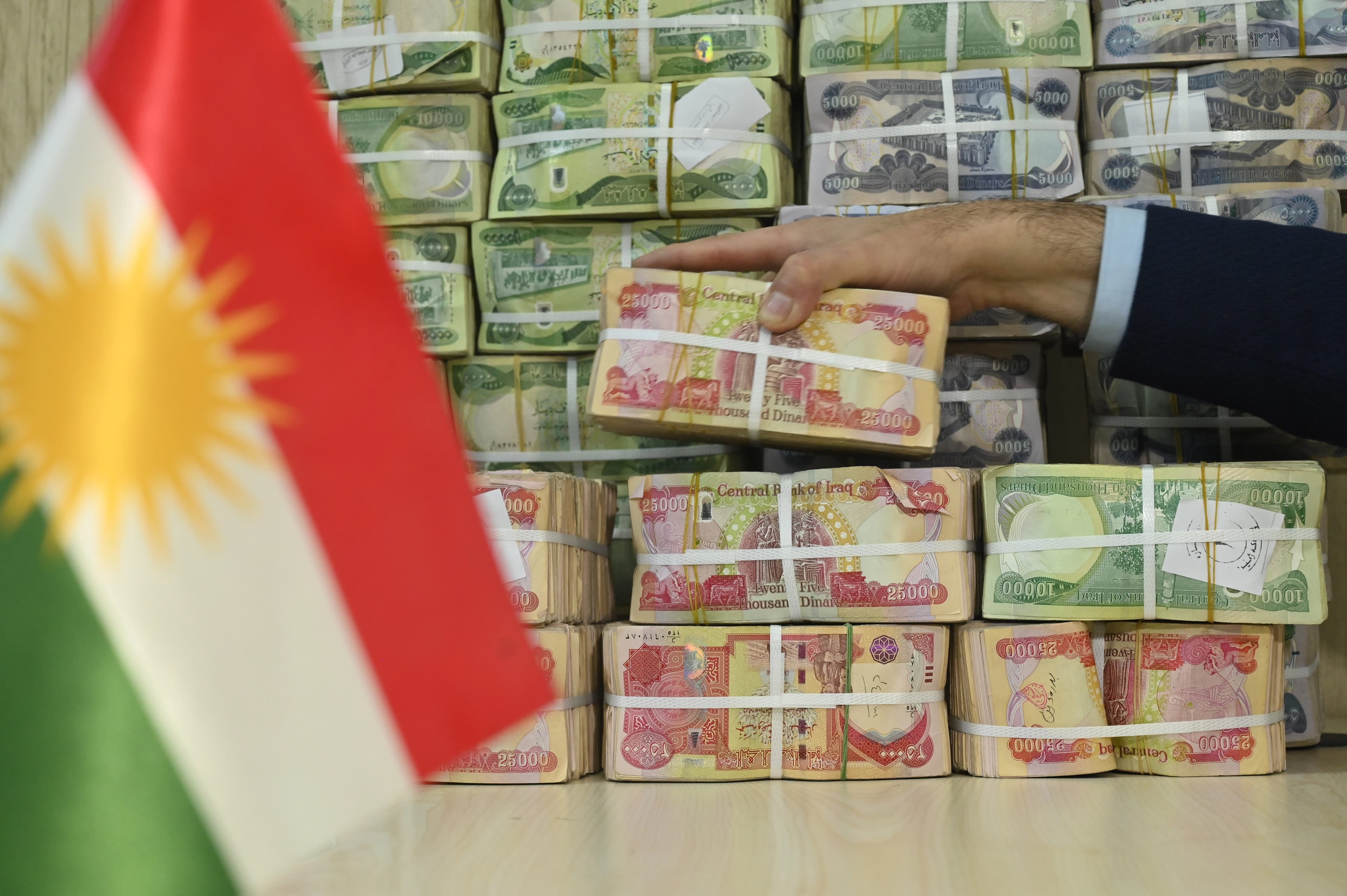
The anatomy of corruption in federal Iraq has permeated every nook and cranny, largely enabled by inaccurate figures. Therefore, "Operation Dawn" must not be reduced to merely publishing a few photos of stacks of 50,000-dinar, 25,000-dinar, or 100-dollar bills. This shouldn't echo the "Theft of the Century" case—which involved $2.5 billion or 3.7 trillion IQD from public revenues and taxes—and remains unforgettable in the public memory. That case was effectively swept under the rug by returning 317 billion dinars, showcasing sacks of cash as a major achievement, while the primary suspect was ultimately released!
Iraq's revenues and expenditures are comparable to those of the region's large and wealthy countries. It even possesses a larger budget than several countries with similar natural resource profiles (such as Algeria). Yet, in terms of quality of life, global rankings for basic services, and job creation, it lags behind everyone, matching underdeveloped nations.
With the revenues and expenditures Iraq has had over the past two decades—and continues to have—the unemployment rate should have been well below double digits, rather than seeing one out of every three young people unemployed in certain provinces. According to the Iraqi Statistical Bureau, youth unemployment (ages 15 and above) has reached 16.8%, and in some provinces, it is drastically high: Anbar at 29.5 percent, Muthanna at 29.2 percent, Maysan at 25 percent, Najaf at 24 percent, and Basra (Iraq's oil capital) at 20 percent. The sudden exposure of tens of millions of dollars and billions of dinars hidden away in bags, air conditioning units, and bedding in the homes of officials—funds that should have gone toward infrastructure and investment projects—is nothing compared to the vast sums that have vanished and remain unmentioned.
Ultimately, declining revenues, rising expenditures, an increase in dinar liquidity in the market, and a shortage of cash dollars at the Central Bank may have squeezed the new government, prompting this campaign. This current crisis is unlike the one in 2020; it cannot be patched over by devaluing the dinar.
Today, Iraq suffers from high domestic debt, printed currency soaring to 115 trillion IQD, foreign reserves dropping to 113 trillion IQD, and a government liquidity crunch. This explains why the Prime Minister remarked, "Whoever returns the money receives amnesty," because 90 percent to 92 percent of Iraq's money exists outside the banking system, hidden away in bedding and air conditioning units. We must wait and see just how far Operation Dawn will extend in reclaiming these stolen assets, whether in dollars or dinars.