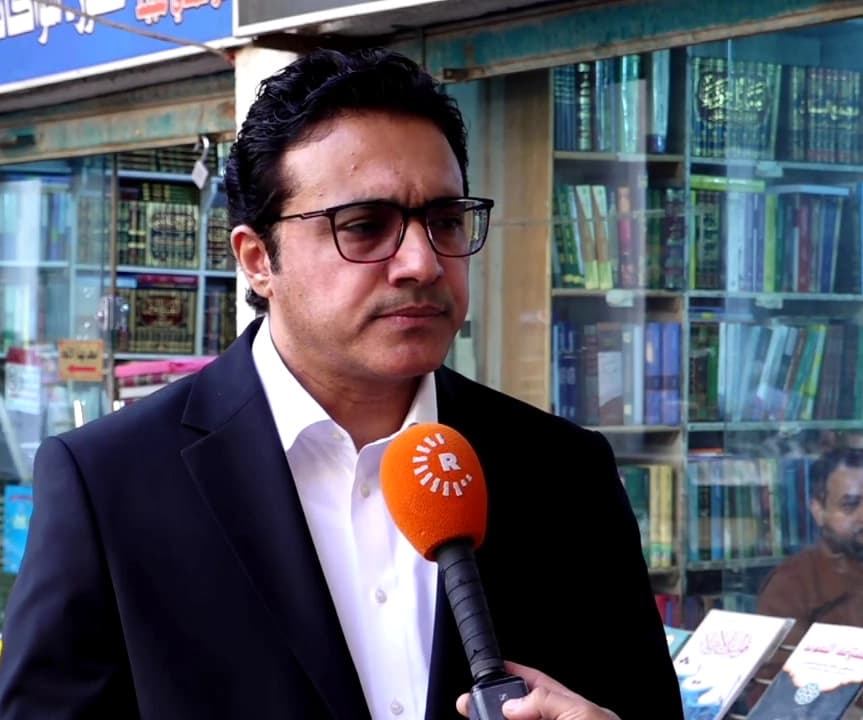

ERBIL, Kurdistan Region - Baghdad will eventually “impose a fait accompli on the Kurdistan Region” unless the two sides reach a lasting agreement on how to share power, constitutional expert Zaid al-Ali told Rudaw on Saturday.
Pointing to Baghdad’s growing political, economic and security power, Ali warned that “without a permanent agreement on these points and all the missing details in the constitution, Baghdad will eventually impose a fait accompli on the Kurdistan Region.”
Ali, a senior programme manager at International IDEA and author of Arab Constitutionalism: The Coming Revolution, told Rudaw’s Nma Nabaz that both sides had mishandled the dispute over border crossings and oil fields.
He placed greater responsibility on Baghdad, arguing that the federal government has a duty to bring the country together and avoid measures that could harm any part of its population.
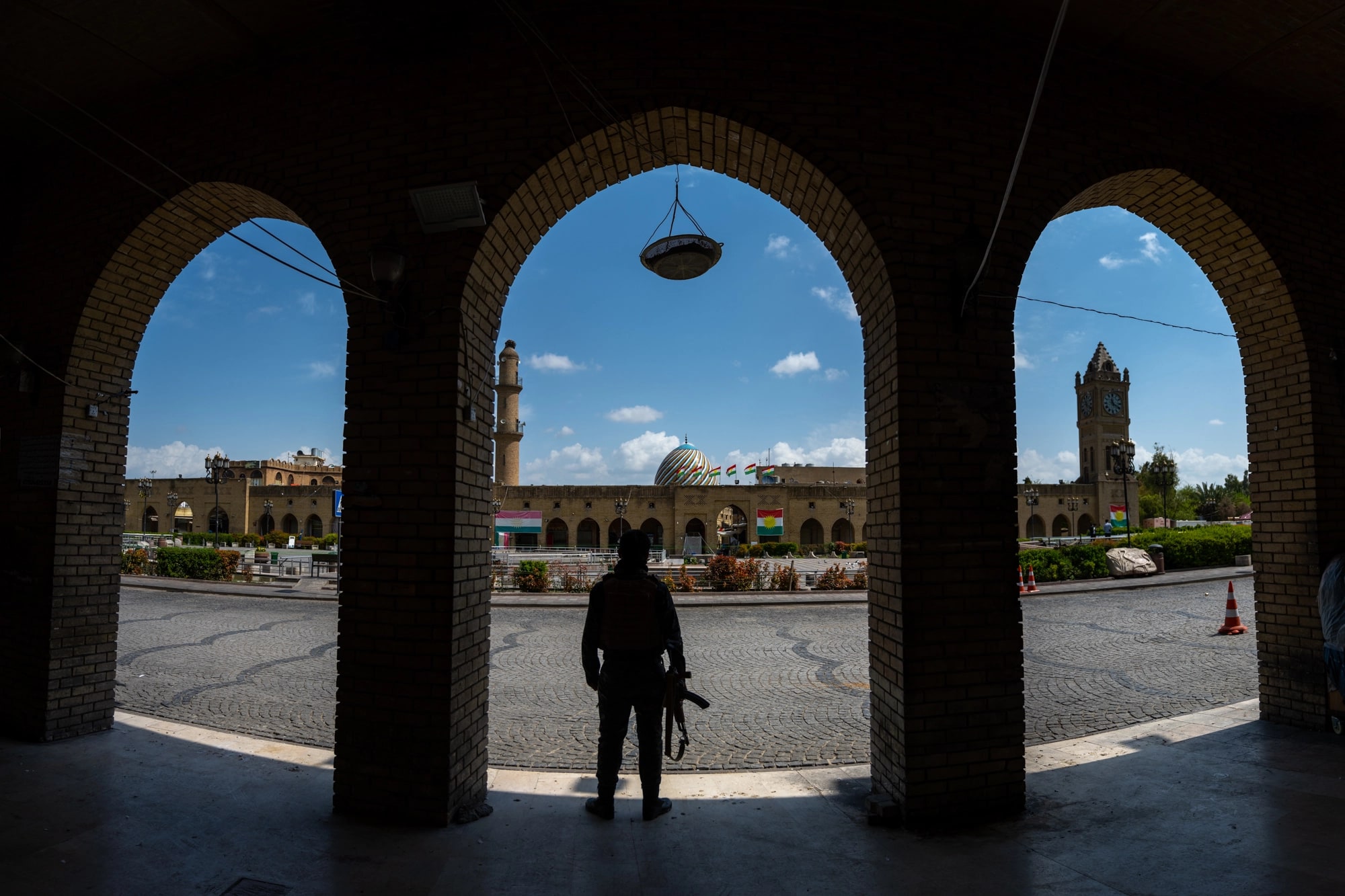
Federal authorities have already begun acting on Prime Minister Ali al-Zaidi’s orders. On Thursday, Iraq’s border forces announced they had closed two crossings administered by the Kurdistan Regional Government (KRG), one with Iran and another with Syria.
Two days earlier, Zaidi had ordered federal authorities to take over all of the Region’s border crossings and manage oil ministry fields under Kurdish security control in Kirkuk, Nineveh, Diyala and Salahaddin provinces. The orders followed an investigation into suspected oil smuggling at the state-owned North Oil Company.
“The biggest mistake is for any party—whether Baghdad or Erbil—to take unilateral steps without consultation or agreement with the other side,” Ali said.
For the expert, oil and borders raise different constitutional questions. “As stated in the constitution, authorities in the oil sector in particular are supposed to be largely shared, not unilateral,” he said.
Even if there are concerns regarding smuggling or other issues, Ali explained that “these matters should be addressed through dialogue and institutional oversight, rather than through unilateral moves and decisions.”
Federal responsibility for international borders, by contrast, is common in other federal states, he noted.
Iraq’s Federal Supreme Court ruled on Wednesday that Baghdad has the authority to deploy forces along the country’s international borders, including those in the Kurdistan Region. It also affirmed that Baghdad must coordinate customs administration with regional and provincial authorities and share responsibility for managing extracted oil and gas with producing regions and provinces.
Ali said the court’s decisions reflect a political consensus in Baghdad that favors strengthening the federal government’s powers relative to the Region’s. “This trajectory will continue, and year after year, the rulings will become more decisive and harsher toward the Kurdistan Region,” he said.
He nevertheless expects Iraq’s federal system to survive. “I do not believe we will return to a fully centralized country as it was in the past. I think it is difficult to imagine the future of Iraq without the Kurdistan Region,” he said.
He further explained that the current US administration “has decided to support the prime minister in Baghdad, and this certainly encourages the current prime minister and the political forces in Baghdad to take these current measures—and they will certainly take advantage of it."
Adding that “the current US administration, and all other countries in the world should not interfere in our internal affairs; that is certain.”
“If Trump or the Trump administration wants to play the role of mediator between the parties, they must certainly be neutral,” he said
The KRG has rejected Zaidi’s orders as unconstitutional and warned against a return to centralized rule. Iraqi government spokesperson Haider al-Aboudi told Rudaw on Friday that Baghdad saw no crisis in its relations with Erbil and defended the measures as necessary to combat oil smuggling.
The two sides are due to take part in a national dialogue in Baghdad on Tuesday, December 1, proposed by Supreme Judicial Council President Faiq Zidan. After a meeting in Sulaimani on Saturday, the Kurdistan Democratic Party (KDP) and Patriotic Union of Kurdistan (PUK) said they would attend with a common position.
Ali said any negotiations would have to continue beyond Tuesday. “We are not talking about a one-day talk. It is impossible to fix this situation in a single day when we have been stuck at the same point for 23 years.”