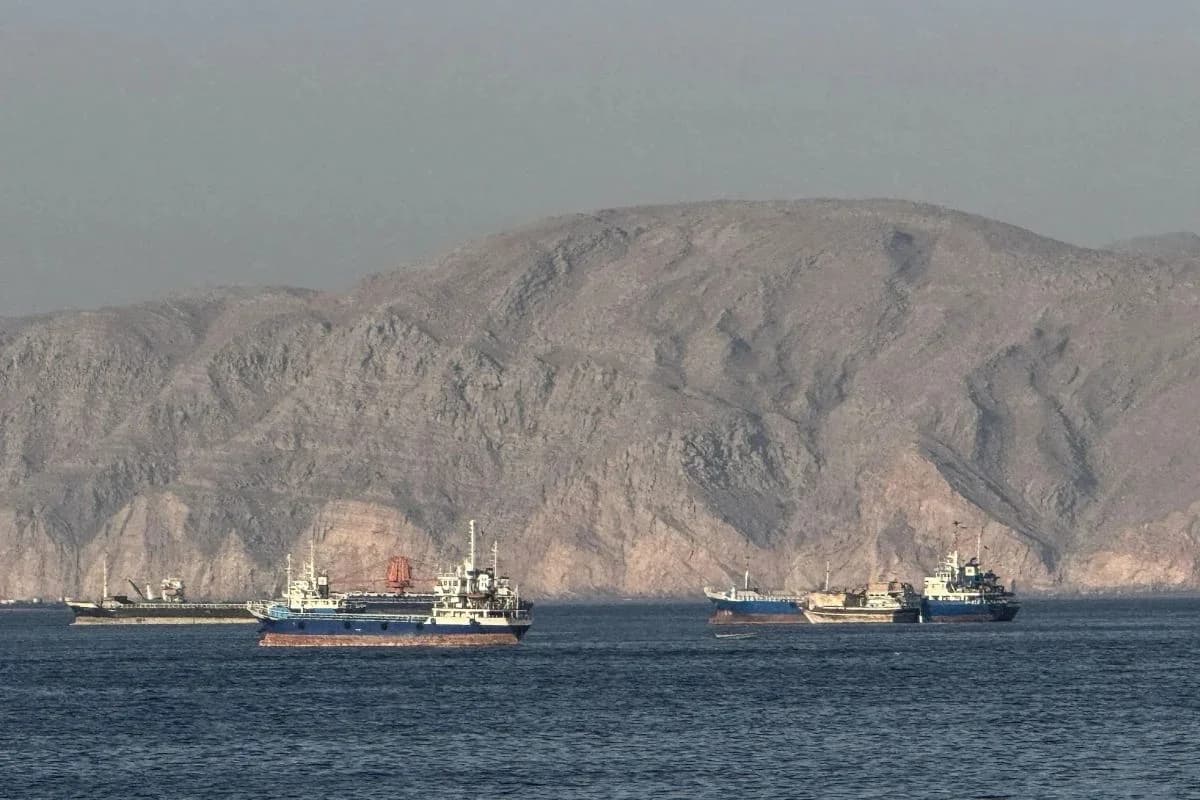

ERBIL, Kurdistan Region - Iran's deputy foreign minister on Tuesday stated that no entity knows the locations of naval mines in the Strait of Hormuz, except Iran, after US President Donald Trump claimed that the United States Navy had cleared Strait of all military ordnance.
"If that claim were true, why is no vessel passing through the strait? No one knows the location of the mines but Iran,” Iranian Deputy Foreign Minister Kazem Gharibabadi said during an interview with Iran’s state-run outlet, Islamic Republic of Iran Broadcasting (IRIB).
The remarks come after US President Trump on Tuesday announced on truth social that he had “just been informed by the United States Navy that all mines have been removed and/or detonated from within the International Waters of the Strait of Hormuz,” adding that “any ship or boat placing new mines will be destroyed” as the US monitors “every square inch of the Strait.”
General Dan Caine, chairman of the Joint Chiefs of Staff, told reporters in the Pentagon in mid-March that the US had targeted and destroyed 44 of mine-laying Iranian vessels to cripple Iran’s ability to lay mines in the Strait.
A maritime blockade put further pressure on Iran both economically and militarily on April 13 and later in mid-July, according to US Central Command (CENTCOM).
In April, the New York Times reported that Iran is unable to find the mines it laid in the strait of Hormuz and lacks the capacity to remove the explosives, preventing Iran from allowing more traffic through the waterway, citing US officials.
On July 26, an oil tanker hit a mine and exploded after having allegedly deviated from the route specified by the Islamic Republic of Iran, according to state-run Mehr news agency.
Iran has repeatedly maintained that it exercises sovereign control over the Strait, a vital waterway through which around one-fifth of global oil supplies transit, which has been a point of contention between the US and Iran since the onset of the war when the US and Israel launched a joint aerial campaign on February 28 striking thousands of targets across Iran.
In response, Tehran carried out thousands of drone and missile strikes across the Middle East, targeting alleged US assets - particularly in Gulf Arab states - as well as launching retaliatory attacks against Israel.
Iran started laying mines early March after the war in retaliation, according to US officials who spoke to CBS News.
Iran and Oman on Tuesday presented a proposed framework for a “temporary joint maritime corridor” through the Strait, including provisions for mine-clearing operations in the key waterway, according to a joint statement from the two sides that also underlined the importance of broader talks with littoral states.
The statement followed “constructive consultations” in Tehran between Omani Foreign Minister Badr Albusaidi and his Iranian counterpart Abbas Araghchi, who also serves as a key negotiator in the ongoing Iran-US talks, the statement said.
"The consultations focused on the importance both countries attach to resuming safe navigation through the Strait of Hormuz in a manner that preserves their sovereignty and sovereign rights,” the statement added, noting that the two ministers discussed "a phased framework aimed at providing a practical and actionable basis” for the waterway.
However, Gharibabadi maintained that the understanding reached with Oman does not mean the reopening of the Strait of Hormuz and that the waterway remains "militarily closed."
"In these talks, agreements were reached on each country’s share of the strait’s waters, as well as Iran and Oman’s respective shares of revenues from it. The United States is obstructing this process, and that has caused delays," Iran's Islamic Revolutionary Guard Corps (IRGC) spokesperson Hossein Mohebbi said on Wednesday, according to Tasnim news agency.
"If the US stops obstructing the process and returns to the memorandum of understanding, we can reopen the Strait of Hormuz within the framework of the agreement reached. Therefore, our conditions must be accepted by the United States," he said.
RELATED: Iran, Oman propose ‘temporary’ corridor, mine-clearing plan for Strait of Hormuz