
ERBIL, Kurdistan Region - Iran's Islamic Revolutionary Guard Corps (IRGC) late Friday dismissed statements by US officials saying the Strait of Hormuz was open for transit amid reports of increased maritime traffic through the vital corridor.
“Statements by American officials regarding the Strait of Hormuz being open are a blatant lie and are intended solely to control oil prices and cover up their own failures,” the IRGC’s naval command posted on X.
Iranian control over the strait “is absolutely decisive, and with full power and complete authority, the Strait of Hormuz is closed to all ships intending to transit without coordination with the Islamic Republic of Iran,” he stated.
US Central Command (CENTCOM) commander Brad Cooper earlier on Friday announced that US forces cleared the shipping lanes of mines "laid months ago by Iran's Islamic Revolutionary Guard Corps" in Hormuz, branding it as a "major milestone" and declaring that "internationally recognized transit routes in the Strait are free of Iranian sea mines."
"Today international shipping lanes are open, and momentum is building," he said.
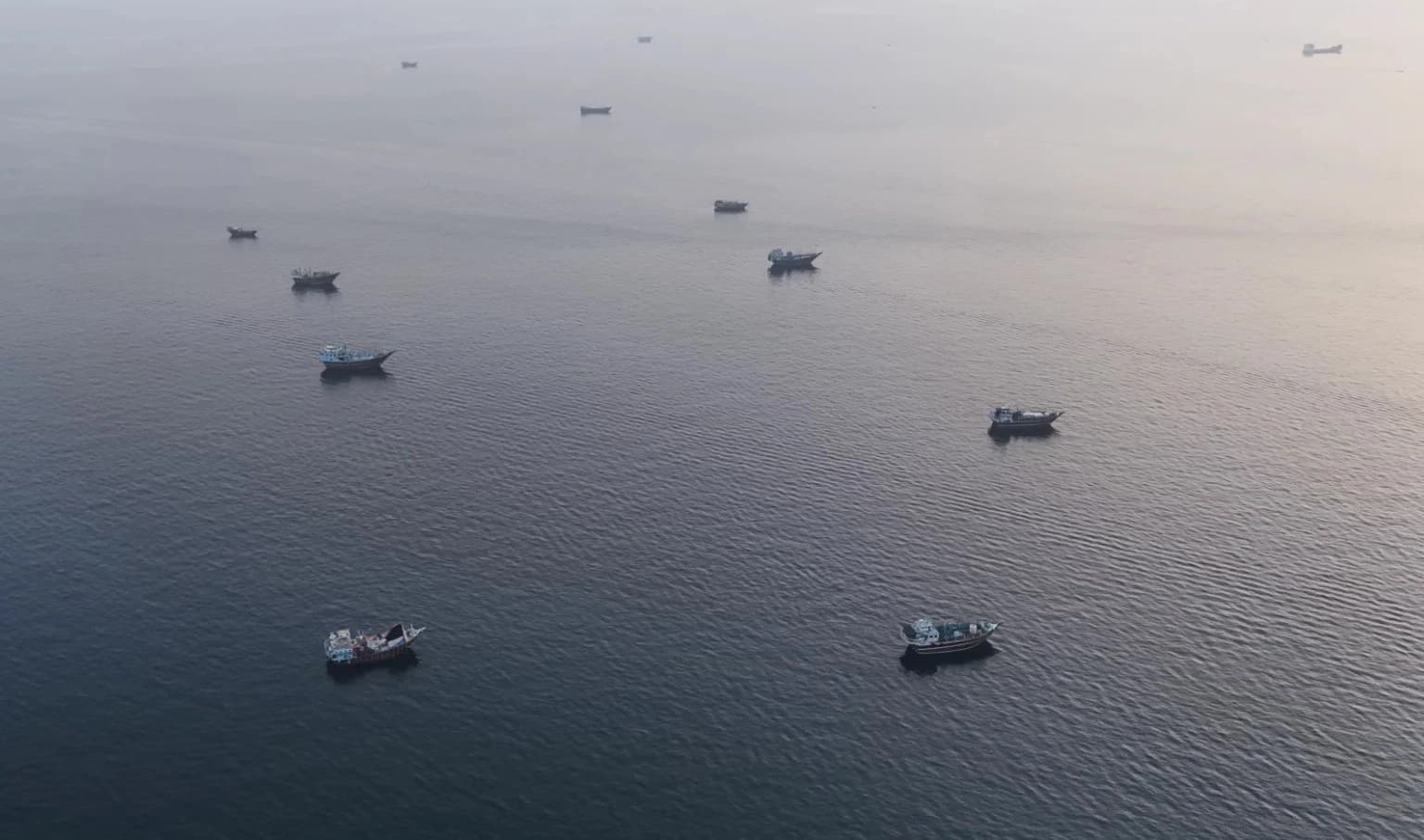
The Strait of Hormuz, a major energy chokepoint for around one-fifth of global oil supplies, has seen no return to normal shipping since the US and Israel launched a joint aerial campaign on Feb. 28, striking thousands of targets across Iran over six weeks.
Tehran responded with drone and missile strikes across the Middle East, targeting alleged US assets in Gulf Arab states and launching retaliatory strikes against Israel, after which the two sides reached a preliminary ceasefire in early April, followed by the Islamabad Memorandum of Understanding in mid-June, establishing a truce and set a 60-day window for negotiating a final agreement.
Despite the MoU, both sides have traded multiple rounds of strikes, the latest escalating on July 8 before subsiding later that month amid a US-imposed blockade in effect since mid-July despite Iran's continued claim of sovereignty over the waterway and attempts to coerce commercial vessels into seeking authorized passage.
The UK Maritime Trade Operations (UKMTO) disclosed in its weekly report earlier on Friday that 101 ships have transited outbound through the Strait of Hormuz since the previous week, while 103 ships have fully transited inbound.
Cooper said Friday that nearly 50,000 US troops deployed in the region are continuing to execute "the naval blockade against Iran while maintaining commercial traffic flow through the Strait."
"Over the past several months, US forces have assisted nearly 1,500 commercial vessels transiting the Strait by providing coordinated protection," he said, adding that those ships carried nearly 750 million barrels of crude oil from Gulf countries to global energy markets.
At the same time, however, "No ships have entered or left an Iranian port without our permission, and we have only allowed ships to pass through on humanitarian grounds," the CENTCOM commander noted, adding that 75 vessels attempting to run the blockade had been diverted and three that did not comply were disabled.
Iran, he affirmed, "has exported zero oil from its shores since we resumed the naval blockade in mid-July."
Of note, US forces have cleared Iranian sea mines from international shipping lanes in the Strait of Hormuz, the commander of US Central Command (CENTCOM) said Friday, despite Iranian claims that the locations of the naval mines are unknown to anyone except Iran.
Axios on Friday reported that more than 200 mine-like objects have been swept from the main lane of the strait, citing US officials as saying only 11 of them were actual mines and just a few were properly deployed.
RELATED: US forces clear Iranian mines from Strait of Hormuz as naval blockade holds: CENTCOM