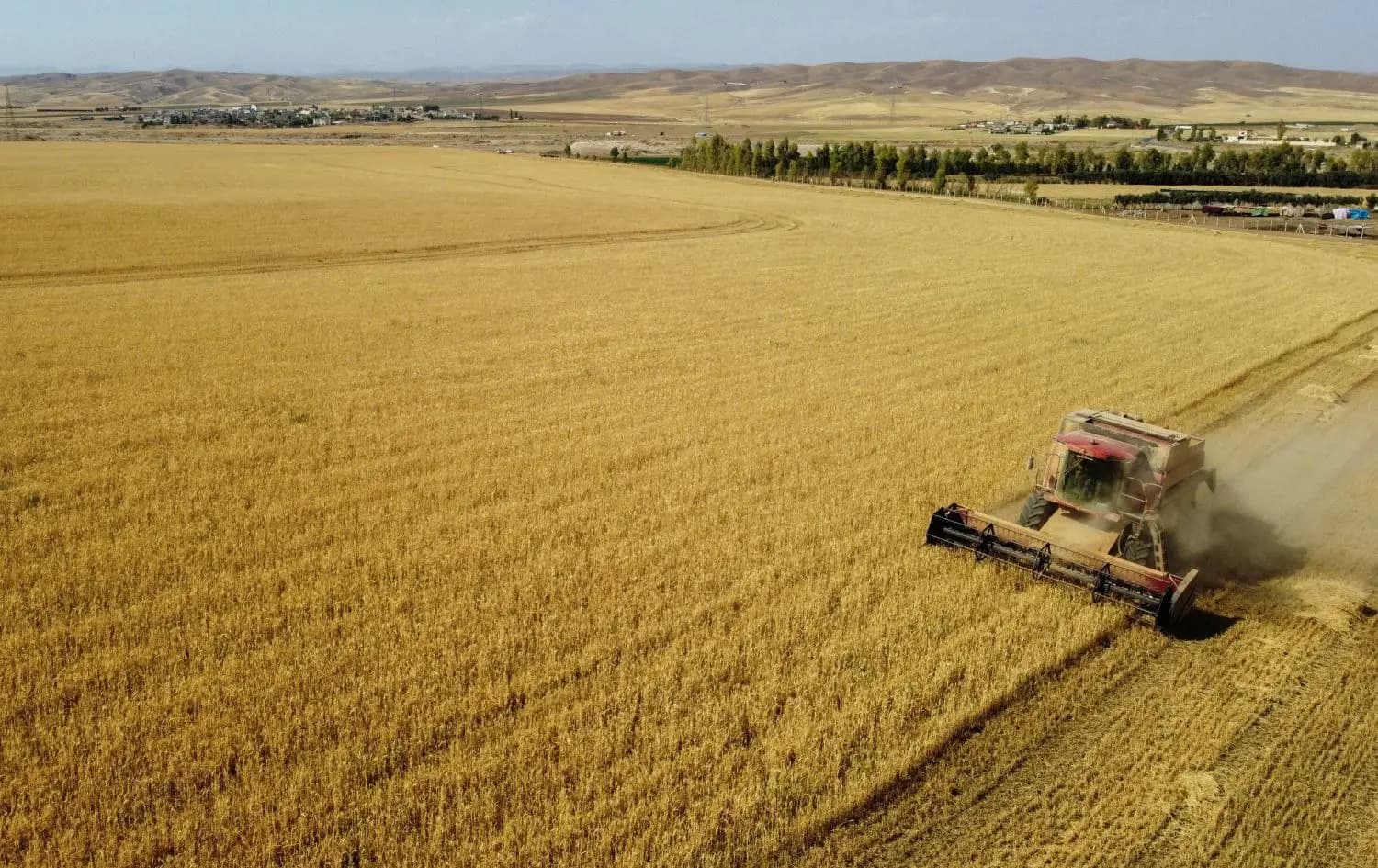
ERBIL, Kurdistan Region - Iraq has received more than four million tons of wheat from farmers across the country, including the Kurdistan Region, as the 2026 grain marketing season continues, a senior trade ministry official said on Saturday.
Haider Nouri al-Garawi, head of Iraq’s state-owned general company for grain trade, told Rudaw, "The quantities received so far have reached around 4.1 million tons from all Iraqi provinces, including the Kurdistan Region."
Garawi said wheat deliveries from the Kurdistan Region had reached 154,000 tons as of Friday, with approximately 250,000 tons still expected to be delivered.
He noted that wheat procurement operations have concluded in most Iraqi provinces, while collection centers remain open in Erbil, Sulaimani, Duhok, Kirkuk, and Nineveh.
The wheat procurement season began on June 12 in Erbil and Duhok before expanding to Sulaimani and Halabja, where collection operations are still ongoing.
The Iraqi government earlier this year approved the purchase of 400,000 tons of wheat from the Kurdistan Region. Under the Iraqi federal procurement policy, 292,000 tons fall within the national agricultural plan and are purchased at 700,000 Iraqi dinars (around $534) per ton, while more than 108,000 tons produced outside the plan are purchased at 500,000 dinars (around $382) per ton.
Garawi said wheat produced outside the agricultural plan will start being received in Kirkuk and Nineveh, while procurement operations have already been closed in Salahaddin, Diyala, Anbar, and all central and southern provinces.
He projected that total wheat deliveries for the current marketing season would reach "around 5 million tons or slightly less."
Garawi also praised the quality of this year's crop, describing the wheat received so far as "excellent" and highlighting the success of the government's marketing plan.
Earlier in June, Garawi told Rudaw that Iraq expected its 2026 wheat harvest to reach 5 million tons or slightly more. At the time, he said federal officials were preparing to launch the grain marketing season in the Kurdistan Region and confirmed Baghdad's decision to cap wheat purchases from the Region at 400,000 tons.
The quota was initially set at 292,000 tons, however drew criticism from Kurdish officials, who argued that the allocation was insufficient given the Region's production capacity and cultivated land.
Wheat is one of Iraq's most strategically important crops, with the government purchasing the grain from farmers each year as part of its food security program.
Collection centers remain open in the Kurdistan Region, Kirkuk, and Nineveh, where farmers continue to deliver their harvests for government procurement.