
ERBIL, Kurdistan Region - A military confrontation between Baghdad and the Kurdistan Region is “impossible,” a senior Kurdistan Democratic Party (KDP) lawmaker said Thursday, dismissing the escalating rhetoric as largely media-driven and insisting that the latest disputes will be resolved through negotiations.
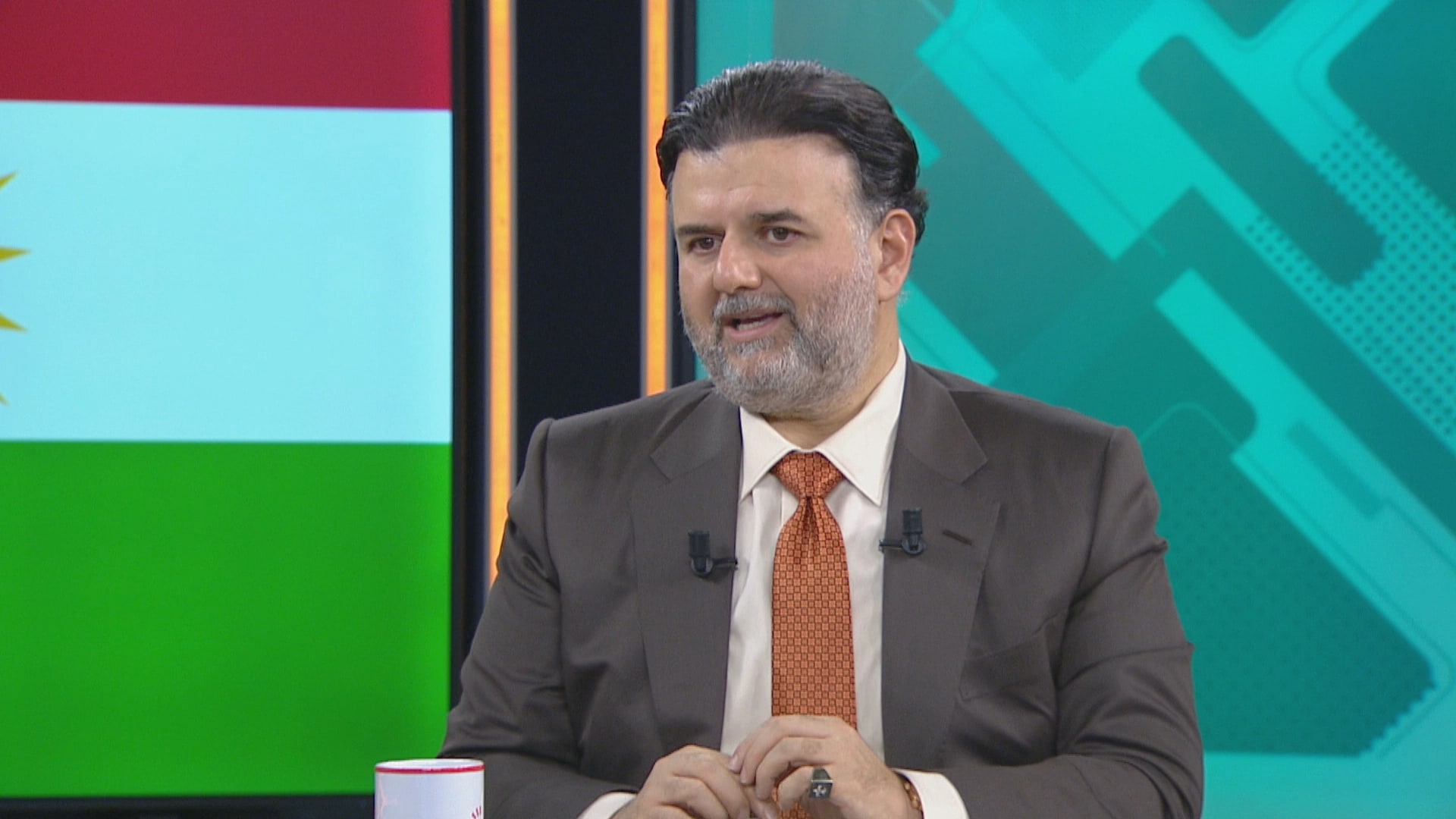
Bnas Doski, a member of the KDP faction in the Iraqi parliament, told Rudaw’s Nwenar Fatih on Wednesday that "the tensions portrayed in the media do not reflect the reality on the ground," arguing that Baghdad did not anticipate the strong political backlash its recent decisions would provoke across the Kurdistan Region.
“The military option is impossible,” Doski said, adding that the disputes between Erbil and Baghdad are longstanding and require fundamental solutions rather than further escalation.
His remarks came amid heightened tensions between Baghdad and Erbil following Iraqi Prime Minister Ali al-Zaidi’s directives to extend federal oversight over oil fields and border crossings in the Kurdistan Region, and the Federal Supreme Court’s subsequent endorsement of those measures.
The developments have raised concerns about a possible confrontation, particularly after footage obtained by Rudaw showed the Region’s armoured vehicles and heavy weaponry being deployed towards the Kurdistan Region’s borders with Kirkuk and Nineveh provinces.
US envoy to Iraq and Syria Tom Barrack has offered to mediate between Erbil and Baghdad, while sources told Rudaw that he had urged Zaidi to rule out military action.
Doski said the military spokesperson’s statement, issued on behalf of the Iraqi prime minister, had caught the Kurdistan Region by surprise because it was made without prior consultation or discussion.
He said the subsequent responses from Kurdistan Region Prime Minister Masrour Barzani, President Nechirvan Barzani, the KDP and the Patriotic Union of Kurdistan (PUK), as well as KDP leader Masoud Barzani, generated considerable pressure on Baghdad.
The lawmaker also pointed to statements by Iraq’s Supreme Judicial Council and the Coordination Framework, saying both had endorsed resolving the outstanding disputes between the federal government and the Kurdistan Regional Government (KRG) through constitutional mechanisms and dialogue.
Zahra Kadhim al-Sadr, a member of the political bureau of the National Wisdom Movement (Hikma), separately told Rudaw’s Nwenar Fatih on Wednesday that negotiations were continuing, with both governments seeking a mutually acceptable settlement.
"So far, the federal government is in favor of resolving the issue through dialogue," she said. "As the National Wisdom Movement (Hikma), we support having some concessions from the parties in order to find a common solution and minimize losses, as we currently have financial and oil losses."
Federal court ruling contains no new provisions
Addressing Federal Supreme Court Ruling No. 218, Doski argued that the decision introduced nothing fundamentally new, describing it as a reiteration of previous constitutional rulings and interpretations, most of which the Kurdistan Region had already implemented.
The ruling, issued following an interpretation request by Zaidi, addresses several areas of federal authority, including military affairs, border crossings, customs administration, oil management and the status of disputed territories.
On military affairs, Doski said the court had reaffirmed the prime minister’s authority as commander-in-chief of the armed forces across Iraq, including the Kurdistan Region. He said this was not a contentious issue, noting that "the Border Guard forces fall under federal authority and include Kurdish personnel."
Regarding border crossings, the lawmaker said "federal representatives had been stationed at the Kurdistan Region’s official crossings for more than a decade." He added that Article 114 of the Iraqi Constitution stipulates shared responsibility for customs administration and revenues.
On oil, Doski maintained that there was little room for disagreement, as the Kurdistan Region had been handing over its crude to the federal government since September 2025, with the State Organization for Marketing of Oil (SOMO) responsible for selling it.
The most contentious aspect, he said, concerns references to restoring the Kurdistan Region’s administrative boundaries to their pre-2003 status.
Although this provision could generate political controversy, Doski argued that the court itself had referred to Article 140 of the Constitution, which provides for a referendum to determine the status of disputed territories.
Responding to questions about Iraqi media coverage shifting from oil smuggling in Jurf al-Sakhr towards allegations involving the Kurdistan Region, Doski rejected what he described as an unfair comparison.
"Jurf al-Sakhr is a military area and does not contain oil wells, rather a pipeline passes through it; the pipeline has been punctured and blatant theft is being committed from it," he stated.
The latest standoff intensified after Zaidi ordered federal authorities to assume control over oil fields in areas under Kurdistan Region jurisdiction across Nineveh, Kirkuk, Salahadin and Diyala provinces.
He also tasked federal agencies with monitoring oil exports and border crossings in the Region and instructed the KRG not to export oil without approval from the federal Ministry of Oil.
The Federal Supreme Court subsequently upheld the directives, prompting a unified response from the KDP and PUK, which described any undermining of the Kurdistan Region’s federal status as a "red line" and called for disputes to be resolved through dialogue.
KDP leader Masoud Barzani has also expressed readiness to cooperate with Baghdad through legal and constitutional channels.
The developments coincided with Baghdad's move to reassert control over Jurf al-Sakhr, south of the capital, where Iraqi state forces entered last week after the area had remained under the control of the Iran-backed armed group Kata’ib Hezbollah for 12 years.
The operation followed allegations that oil was being stolen through illegal pipeline connections.
A leaked report on oil smuggling, circulated by the state-owned Iraqi News Agency, subsequently drew attention to alleged trafficking routes through Iran towards Afghanistan and Turkey, further fueling tensions between Baghdad and Erbil.