As the languishing mid-summer heat approaches its peak, the Iraqi Parliament is scheduled to host the Minister of Finance to evaluate Iraq’s economic situation.
Monthly oil export revenues have dropped from 9 trillion Iraqi dinars ($6.8 billion) to 1.5 trillion Iraqi dinars ($1.14 billion) while monthly expenditures remain above 9 trillion Iraqi dinars. Currently, Iraq's sole option to cover monthly expenses is to borrow - at a time when internal debt has surpassed 106 trillion Iraqi dinars ($81 billion) and it remains unclear whether external debt stands at $10 billion or $53 billion.
In reality, the difference between these two figures is massive and decisive.
An external debt of $10 billion is easily manageable and could be covered in less than two months once the situation in the Strait of Hormuz normalizes.
However, a debt of $53 billion, combined with the $81 billion in domestic debt, signals a national debt fast encroaching nearly 85 percent of Iraq’s economy.
According to this trajectory, total debt would equal the country's entire gross domestic product (GDP) by the end of this year.
If the latter figure holds true, the country is stepping toward a dangerous phase far beyond budget deficits and inflation in the coming months to potentially face direct risks such as state bankruptcy, currency devaluation, and rising prices of goods and commodities.
While internal debt leans more toward money printing and reducing foreign currency reserves to cover expenses and deficits, Iraq’s external debt, in contrast, necessitates a set of conditional economic measures to ensure it can repay the debts while implementing necessary reforms to cover future expenditures with minimal deficits.
Data discrepancy
On May 8, 2026 - just five days before the new cabinet took the oath in parliament - the Iraqi Ministry of Finance published a series of data-driven reports regarding its operations, one of which specifically addressed Iraq's internal and external debts.
According to the report, total debt stood at 96 trillion Iraqi dinars ($73 billion) in internal debt and $10 billion in external debt, amounting to a total of roughly $84 billion.
However, Central Bank statistics in its weekly report, Iraq's Economic Indicators, up to the end of March 2026 point to 103 trillion Iraqi dinars ($78 billion) in domestic debt and $53.4 billion in external debt.
These figures point to an external debt in the Central Bank's report that is five times higher than the Ministry of Finance's figure.
The gaping disparity begs the question: What factors explain the discrepancy of $40 billion between the Finance ministry’s report of $10 billion versus ? Which figure is correct?
Ministry of finance figures for Iraq's internal and external debt
The Ministry of Finance report indicates that it covers the period up to the end of April 2026. Regarding internal debt, it states that between 2023 and April 30, 2026, the government borrowed 46.035 trillion IQD. The breakdown of this debt by year is as follows: 2023: 7.6 trillion Iraqi dinars. 2024: 17.1 trillion Iraqi dinars. 2025: 10.8 trillion Iraqi dinars and first 4 months of 2026: 10.5 trillion Iraqi dinars.
The Ministry of Finance report also clarified that the government managed to repay 19.9 trillion Iraqi dinars ($15 billion) of its debt, bringing the total domestic debt to 96.6 trillion Iraqi dinars ($73.3 billion). It noted that a major portion of the domestic debt - reaching 70 trillion Iraqi dinars - resulted from the accumulation of debt from previous cabinets between 2004 and 2022.
Regarding external debt, the Ministry of Finance report lists $10.076 billion up to the end of April 2026, covering the cumulative period from 2023 through April 2026; $2.2 billion of this amount pertains to debt from previous governments.
CBI figures for Iraq's internal and external debt
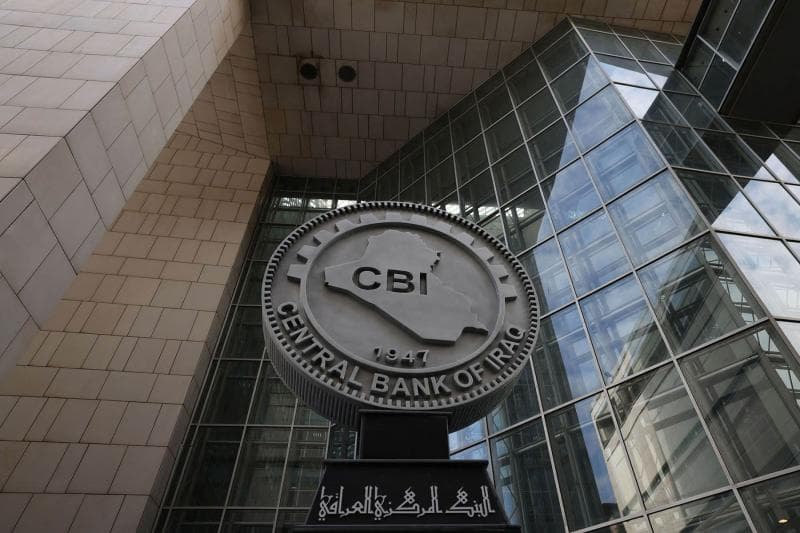
The Central Bank of Iraq (CBI) releases two weekly publications titled Key Financial Indicators and the Monthly Statistical Report, presenting overall financial and economic data for Iraq.
According to Central Bank data, internal debt as of May 31, 2026, reached approximately 103.18 trillion Iraqi dinars (comprising: 63.2 trillion Iraqi dinars from the Ministry of Finance, 8.8 trillion Iraqi dinars in treasury bills, 20.3 trillion Iraqi dinars in loans, and 1.068 trillion Iraqi dinars in bonds and certificates).
This means the Central Bank's domestic debt figures largely align with those of the Ministry of Finance.
The major discrepancy casting doubt on the accuracy of the data concerns external debt: the Central Bank's report estimates total external debt as of March 31, 2026, at $53.46 billion. In fact, over the past two years (end of 2024 and 2025), total external debt stood at $54.6 billion and $54.1 billion, respectively.
Why, then, does the Ministry of Finance state in May 2026 that external debt is only $10 billion?
A $40 billion difference in a single month
The time gap between the Central Bank's and the Ministry of Finance's external debt figures is only one month (March to April 2026). Based on the report, it might appear as if Iraq managed to repay $40 billion in debt in just one month. However, the reality is entirely different: during the first five months of 2026, Iraq's total revenue was only 33.5 trillion Iraqi dinars.
The Ministry of Oil (SOMO) reported that total oil revenues for May and June 2026 combined were just $2.33 billion - averaging $72 per barrel, at a time when market prices were $91, and before deducting production fees for oil companies.
This drop in Iraq's oil sales - caused by security conditions in the Strait of Hormuz and post-war tensions - forced companies transporting oil through the strait to demand steep discounts relative to global market prices.
SOMO's Director General recently stated clearly that while Iraq sells at daily market rates, the Strait of Hormuz situation resulted in discounts up to $20 below market price, with some Gulf nations selling at even steeper discounts.
These figures from SOMO prove that the government cannot possibly reduce external debt from $53 billion to $10 billion in a single month.
The Ministry of Finance published this report while having access to Central Bank reports, which have consistently shown figures around $53 billion for the past three years.
Conclusion
Currently, everyone in Iraq is discussing liquidity shortages, halted projects, and spending cuts; yet, from Basra to Zakho, markets are waiting for public sector salaries more than salary earners themselves. If Iraq takes on external debt starting from $10 billion, will the debt increase to $20 billion, or will it grow from $53 billion to $63 billion?
Moreover, we must wait to see what economic solutions the Iraqi Parliament - whose annual operating budget is 618 billion Iraqi dinars, with 89.2 percent allocated to salaries - will propose.
Finally, will Parliament demand that the Ministry of Finance present strategic, diversified, robust, and data-driven solutions at this stage, or will it give the government carte blanche to apply temporary fixes to pay monthly salaries above all else? Out of a population of 46 million, over 10.2 million receive government salaries; excluding those under 18, one out of every two Iraqi citizens receives a state salary. That is why news regarding salary payment remains the top priority.
For years, sustained oil exports and high prices kept this information out of headlines, but moving forward, any crisis impacting oil will turn funds for salaries into front-page news - requiring 8.33 trillion Iraqi dinars ($6.3 billion) monthly and 100 trillion Iraqi dinars ($76 billion) annually.
The opinions expressed in this article are those of the author and do not necessarily reflect the position of Rudaw.