
ERBIL, Kurdistan Region - Nejla Khelaf is among the thousands of displaced Kurds who still retains some dimmed level of hope to return to her home in Sare Kani (Ras al-Ayn), a town in northeast Syria (Rojava) to which return has halted indefinitely after rioters attacked a convoy carrying the internally-displaced persons (IDPs) to another Kurdish town in late October.
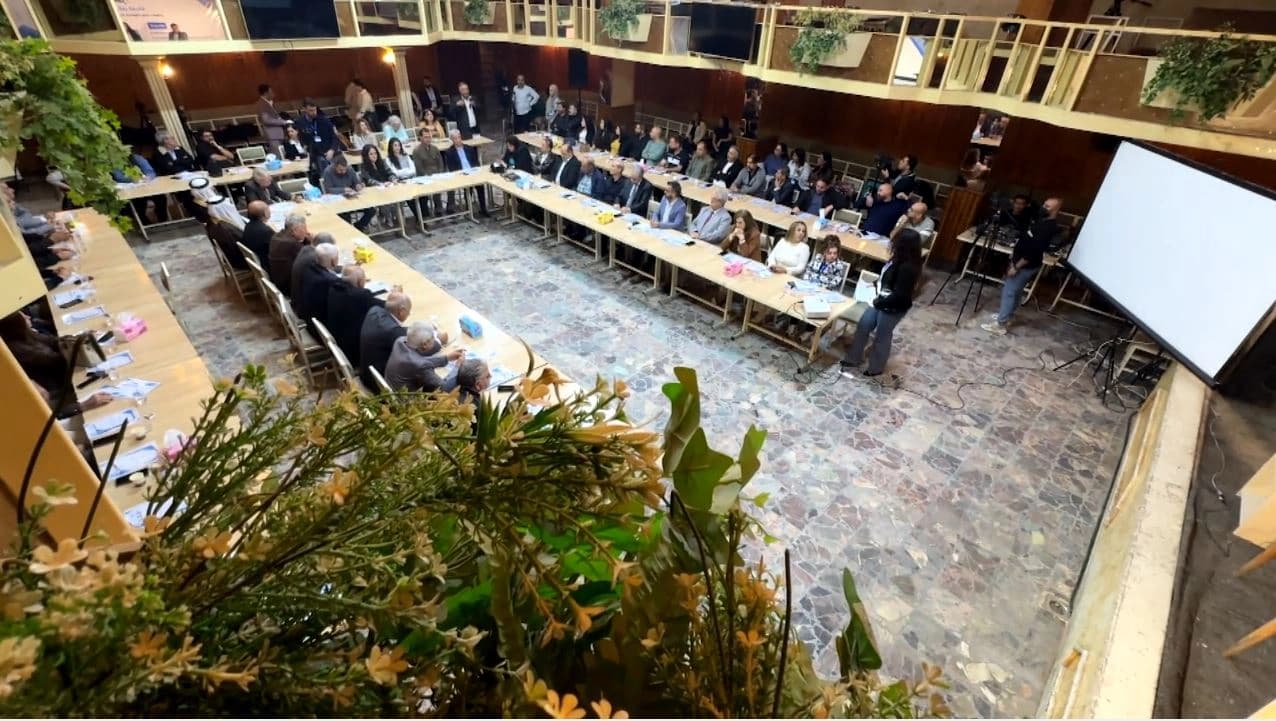
“There must be a safe route, protection, and legal guarantees for us to return,” Khelaf told Rudaw’s Vivyan Fatah on the sidelines of a forum for the victims of displacement in the Kurdish-majority city of Qamishli on Saturday.
“Anyone who goes back doesn't know if they will return safely or not, because armed groups are still present,” she added.
A Turkish-led offensive in 2019 forced hundreds of thousands of Kurds to leave their properties across Sare Kani and Gri Spi (Tel Abyad) in northern Syria and Rojava. The properties were subsequently looted and seized by armed groups aligned with Turkey who later handed them over to Arab settlers.
According to Khelaf, the Turkish-backed Sultan Murad Brigade occupied her house before it was repeatedly handed over, now sitting occupied by a fourth Arab settler.
The concerns among Sare Kani IDPs for return have been exacerbated after rioters attacked a returning IDP convoy to Gri Spi on October 26. More than 200 Kurdish IDPs were entrapped in an administrative building in the town as rioters were burning their cars. They were rescued by security forces after nearly nine hours.
Sare Kani IDPs relayed their stories about the impediments they faced upon their return.
“They are in our house. They say ‘we won't leave.’ Security forces are coming with us now, hopefully, they will leave,” Fatima Ahmed, one of the IDPs, told Rudaw on October 21, days before the outbreak of violence in Gri Spi that halted the return.
“We won't leave until he leaves. From what they said, he is from Deir ez-Zor,” she added.
Meanwhile, Abdulrahim Mahmoud, member of the Hasaka province’s Executive Council, told Rudaw on Saturday that a decree has been made against the settlers who refuse to vacate Kurdish homes but execution remains difficult on the ground.
“The official directive that was issued, outside the law, faces shortcomings in implementation. People are saying, ‘Let us apply effective measures to clear the path forward,’” he said.
Rudaw has obtained the decree, which was issued on October 26. It states that anyone who has “exploited” an IDP family will face “strict legal measures,” including referral to the judiciary for the “crime of property usurpation.”
Six organized convoys have so far facilitated the return of 3,181 families since the program began in August, including 645 in the latest convoy on Wednesday, according to official figures.