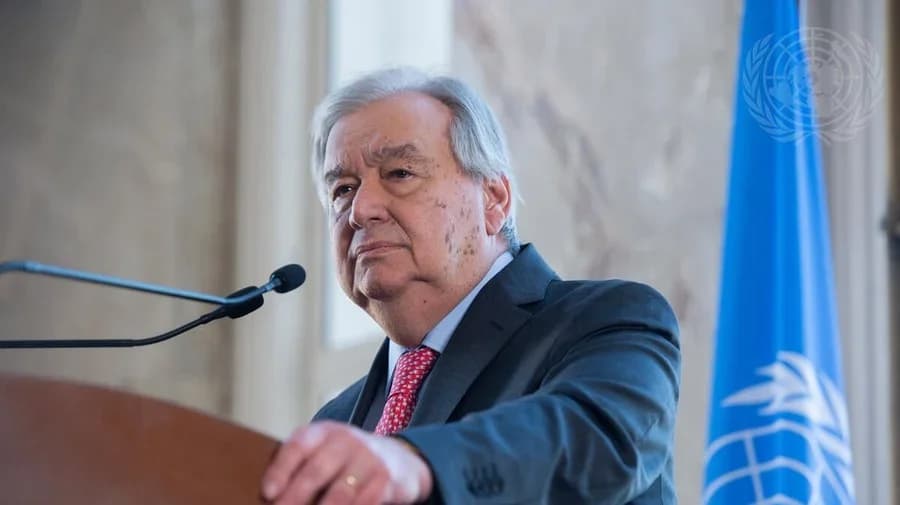
ERBIL, Kurdistan Region - The non-binding mechanism highlighted by UN Secretary-General Antonio Guterres to facilitate essential transit through the Strait of Hormuz was a "wise" proposal, his spokesperson said, while emphasizing that enforcement depends entirely on member state compliance.
“Given the current situation I think it was a wise move to reiterate the fact that this effort exists and to highlight the efforts that colleagues in [UN Office for Project Services] UNOPS and others have been making,” Stephane Dujarric told Rudaw's Namo Abdullah late Monday.
His statement came hours after the UN Secretary-General framed a task force he established in March for the “safe, orderly, and predictable maritime transit for humanitarian purposes” through the Strait of Hormuz.
Guterres proposed facilitating the transit of "commercial fertilisers and related raw materials” in the initial phase of the mitigating plan but “it could be expanded to include other products” and appointed the UNOPS to lead the task force.
Commercial trafficking in the Strait of Hormuz, through which one-fifth of global energy supplies passed during peacetime, has been significantly constrained by the fluctuating tensions between Iran and the US. Both sides have engaged in tit-for-tar restrictions since the outbreak of the nearly six week-long war in late February, with the latest US-imposed blockade in mid-July.
To date, US Central Command (CENTCOM) forces have redirected 71 commercial vessels, disabled three and boarded two to ensure compliance while more than 40 vessels supporting humanitarian aid have been allowed to pass, according to the most recent figures cited on X.
“Obviously the parties to this conflict” have to agree as “it is not a peace-enforcing mechanism we are proposing,” Dujarric said in response to Rudaw’s question on whether the mechanism’s launch was contingent on Iran’s consent.
“This is a mechanism to facilitate the transport of food and other goods through the strait,” he added, noting that the restrictions in and around the waterway eventually harms “the world’s most vulnerable [people].”
RELATED: UN chief says food supply 'collateral damage' in Strait of Hormuz conflict