
ERBIL, Kurdistan Region - A US federal court ruled to move forward with a torture case against Parviz Sabeti, the former head of Iran’s intelligence under the pre-revolutionary government, a US non-profit international human rights organization announced on Wednesday.
The lawsuit was filed under the Torture Victim Protection Act (TVPA) by three Iranian torture survivors in February 2025, who are proceeding under “John Doe” pseudonyms to protect their safety and represented by the San Francisco-based Center for Justice and Accountability (CJA) who represents and seeks redress for survivors from around the world of torture, war crimes, and crimes against humanity in US and Spanish courts.
The plaintiffs allege that during the 1970s, they were detained and tortured under a system of political repression designed, authorized, and overseen by Sabeti from 1973 to 1978 in his capacity as Deputy Director of SAVAK, the Shah-era intelligence service.
SAVAK, established in 1957, was the first of its kind in Iran and “is generally considered to have taken over certain counterintelligence functions handled by the police, gendarmerie, and military intelligence,” according to the US State Department.
Rights groups have long accused it of torturing dissidents who opposed Iran’s monarchical rule. A 1976 Amnesty report details the systemic use of torture, arbitrary detention, and lack of due process against political dissidents, including members of Iran's Kurdish minority, carried out by SAVAK. A New York Times article published in 1979 details the testimony of a former agent who said he tortured hundreds of people.
Tuesday’s rulings denied requests from Sabeti, who himself has lived under assumed names, to strip the plaintiffs of their right to proceed under pseudonyms and rejected his arguments stating that the claims were barred by the statute of limitations within the ten-year time frame in the Torture Victim Protection Act on grounds of having “feared for their safety” and that Sabeti had hid his location and whereabouts until 2023.
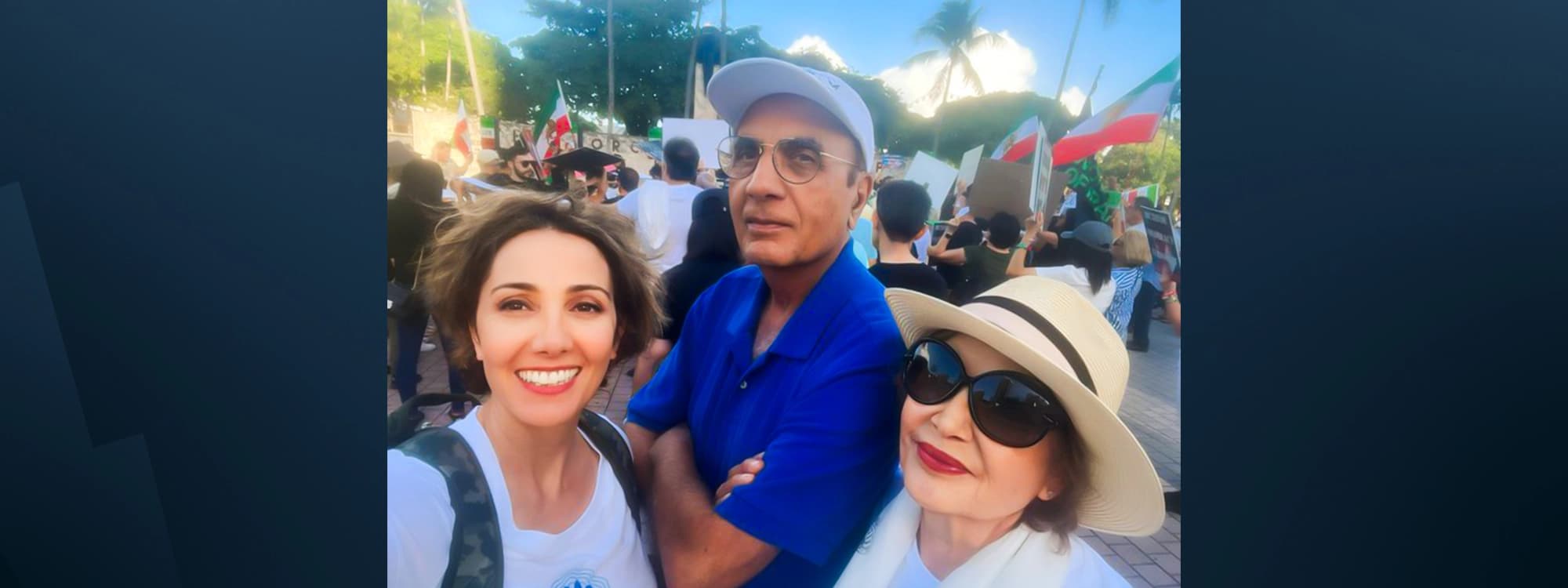
Sabeti returned to the public eye in February 2023 when his daughter, Pardis Sabeti, published a photo of herself and her 86-year-old father at an opposition rally in the US under the hashtag “Woman, Life, Freedom,” sparking intense backlash. The photos attracted attention in that they were widely described as the first recent public images of Sabeti since he left Iran after the 1979 revolution.
In an interview with Voice of America in 2011, Sabeti claimed that he was against torture: "I have always opposed torture, which was illegal, and because I studied law, I have always opposed anything that leads to torture.”
However, the plaintiffs alleged that “Sabeti not only had knowledge of the pervasive use of torture applied on behalf of the Shah's regime, but was a main advocate for its application.”
For decades, those who were arbitrarily arrested and tortured during the Shah’s regime have been denied recognition.
The Center highlighted the case as part of a wider endeavor to ensure that all victims of torture in Iran are recognized and have a meaningful path to seek accountability.
“By establishing that perpetrators of atrocity can be held accountable regardless of which regime committed the atrocities or how much time has passed,” the Center stated, “our clients hope to help build the norms and institutions that will shape whatever comes next for Iran, and for countries facing similar transitions around the world.”
Shadi Sadr, an Iranian human rights lawyer, activist and co-founder of the London-based NGO Justice for Iran, framed the Florida court’s decision to commence substantive proceedings as a “historic victory.”
The ruling is “the first fair court to address the crimes of the Shah's regime and SAVAK,” she said on X, underlining the significance and impact of the court ruling “not only for Sabeti himself and the issue of the absolute prohibition on torture, but also for Iran's political future.”
Lawyers working on the landmark case likewise lauded the court’s decision.
“While the court’s full order is sealed, the decision to allow the case to move forward recognizes a fundamental principle: perpetrators of torture should not escape accountability simply because survivors were forced to live for decades with fear and an inability to safely reach the person responsible,” said Claret Vargas, Senior Staff Attorney at CJA and counsel for the plaintiffs in a press statement.
“Our clients have carried these consequences for more than 50 years. Today, they move one significant step closer to justice.”

.png&w=3840&q=75)