


Kurdistan

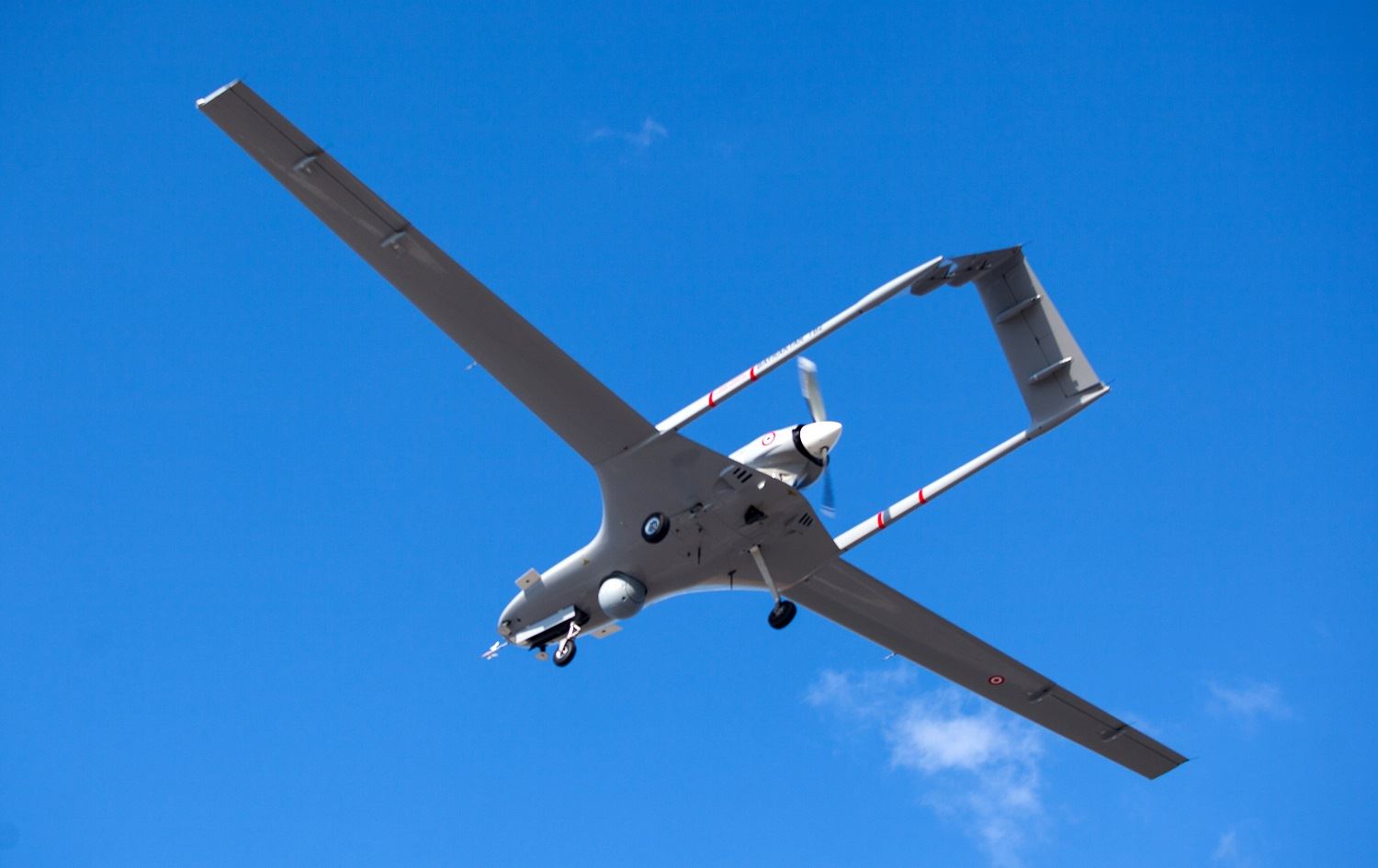
A Turkish-made Bayraktar TB2 drone is pictured flying at Gecitkale military airbase near Famagusta, Cyprus on December 16, 2019. File photo: Birol Bebek/AFP
SULAIMANI, Kurdistan Region — Turkey and Iran are increasingly adopting "game-changing" drones as their weapon of choice against Kurdish rebels in the Kurdistan Region and disputed territories, prompting fears for the safety of civilians and stoking geopolitical tensions.
"Not a day goes by without us seeing a drone," said Mohammad Hassan, mayor of Qandil, the mountainous stronghold of the Kurdistan Workers' Party (PKK).
"They fly so low Qandil's residents can see them with their naked eye," Hassan told AFP.
The PKK has used Qandil for decades as a rear-base for its insurgency against the Turkish state.
The Democratic Party of Iranian Kurdistan (PDK-I) has similar rear-bases in other remote areas of Iraqi Kurdistan, from which it launches attacks across the border into Iran.
The PKK has been fighting for decades for increased rights for Turkey’s Kurdish minority.
Turkey and Iran consider the Kurdish rebels as "terrorists" and routinely conduct cross-border ground assaults, air strikes and artillery bombardments against their Iraq bases.
Starting in 2018, both countries began using unmanned aerial vehicles (UAVs) for surveillance and even targeted assassinations in northern Iraq.
Drone use has expanded dramatically since Turkey launched a new assault in June, analysts and residents of affected areas told AFP.
Activists said dozens of border villages and adjacent farms have been abandoned by their terrified residents.
The drone strikes have also prevented thousands of Yezidis from returning to their homes in Shingal district, close to the Syrian border, where PKK elements now have a presence.
"The Turkish bombing causes so much terror, so Yezidis are not coming home," Shingal mayor Mahma Khalil told AFP.
'Mistrust, irritation'
Despite public criticism, Turkey has continued its drone warfare -- likely because of new strides against the PKK.
For years, the PKK sheltered in Iraq's mountains, where manned warplanes and ground troops struggled to reach them.
But drones have allowed Ankara to track, identify and eliminate PKK targets within minutes, Nicholas Heras of the Institute for the Study of War told AFP.
"Turkey's use of military drones in northern Iraq has been a game-changer in its war against the PKK," he said.
Ankara is now swapping expensive fighter-bombers like the US F-16 for drones like the domestically-produced Bayraktar TB2, which has better surveillance, can fly for 24 hours and is cheaper -- so "expendable" if downed by the PKK, said Turkish drone expert Sibel Duz.
In an exclusive interview in Qandil, PKK spokesman Zagros Hiwa told AFP Turkey had created a 15 kilometre (10 mile) buffer zone in northern Iraq with the help of its drones.
"Our forces have downed seven drones this year," he said, declining to provide details of PKK losses.
The PKK has had limited success with improvised drones of its own, commercial models fitted with explosives.
A US source familiar with Turkey's drones programme said US special operations forces in northern Iraq were bristling at the new "frequency and intensity" of strikes.
"The Turks are overflying US positions with armed assets, which is a no-no. There is general mistrust and irritation over all this," the source said.
'Shooting gallery'
Iran first began deploying aircraft fitted with cameras during its 1980-88 war with Iraq.
The newer Mohajer-6 and Shahed-129 are Tehran's weapons of choice for northern Iraq, said Adam Rawnsley, who tracks Iranian drones for the Foreign Policy Research Institute.
"The way Iran is using drones against Kurdish targets in Iraq is 180 degrees different than how they use drones everywhere else. It's much more sophisticated," he said.
In a rare interview this spring, the head of Tehran's drone division Colonel Akbar Karimloo told local media Iran uses the aircraft for both surveillance and attack, and to provide forward observation for artillery and missile launchers.
Earlier this month, Iran said it would "take coordinated steps" with Turkey to counter Kurdish rebel activity along its borders. It did not specifically mention drones.
Baghdad and Kurdish authorities have said little on the expanding drone campaigns, and Iraqi officials have told AFP privately they have no leverage over Turkey or Iran.
After a Turkish drone strike killed two top Iraqi officers in the Kurdistan Region in August, Baghdad expressed outrage but did not pressure Ankara.
"The general problem Iraq has is that larger powers tend to use it as a shooting gallery," Rawnsley told AFP.
Wim Zwijnenburg, who works on disarmament for Dutch peace organisation PAX, said avenues for recourse were limited.
"A lot of these strikes are in areas which are not very populated, so there's little information from people or journalists on the ground," he said.
Indeed, neither activists nor officials could provide a specific death toll from drone strikes in the north.
"That only adds to the obscurity of the drone campaigns," Zwijnenburg told AFP.


Comments
Rudaw moderates all comments submitted on our website. We welcome comments which are relevant to the article and encourage further discussion about the issues that matter to you. We also welcome constructive criticism about Rudaw.
To be approved for publication, however, your comments must meet our community guidelines.
We will not tolerate the following: profanity, threats, personal attacks, vulgarity, abuse (such as sexism, racism, homophobia or xenophobia), or commercial or personal promotion.
Comments that do not meet our guidelines will be rejected. Comments are not edited – they are either approved or rejected.
Post a comment