


Kurdistan

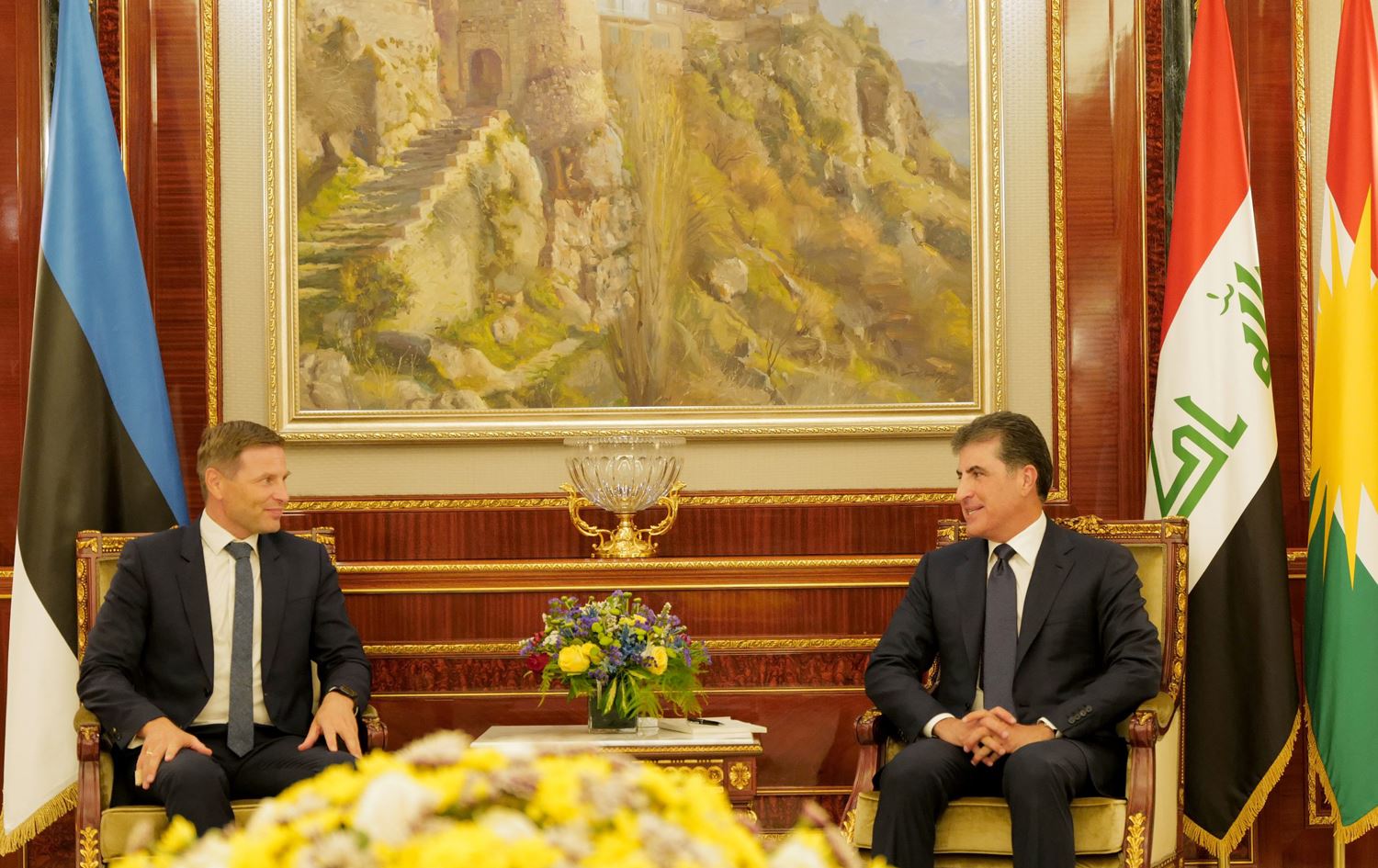
Kurdistan Region’s President Nechirvan Barzani (right) receives Estonian Defense Minister Hanno Pevkur (left) in Erbil on August 2, 2023. Photo: Office of the President
ERBIL, Kurdistan Region - Kurdistan Region’s President Nechirvan Barzani on Wednesday received Estonian Defense Minister Hanno Pevkur in Erbil, discussing Estonia’s role as a member of the global coalition against the Islamic State (ISIS).
Pevkur arrived in the Iraqi capital Baghdad on Wednesday and met with the country’s Prime Minister Mohammed Shia’ al-Sudani, before heading towards the Kurdish capital later in the day.
President Barzani expressed his gratitude for the Estonian troops stationed in the Kurdistan Region and their contributions to the coalition, emphasizing the need to continue military cooperation between the two sides.
Kurdistan Region President Nechirvan Barzani recieves Estonian Minister of Defense Hanno Pevkur ahead of their meeting in Erbil.
— Rudaw English (@RudawEnglish) August 2, 2023
🎥: Kurdistan Region Presidency pic.twitter.com/trSiTOVaCi
“Both sides agreed on the need to continue the mission of the international coalition against ISIS to confront the threat of terrorism and to ensure the eradication of ISIS, which remains a serious threat to the security and stability in the wider region,” read a statement from President Barzani’s office following the meeting.
Prior to his meeting President Barzani, Pevkur also met with Prime Minister Masrour Barzani, informing the Kurdish premier of Estonia’s willingness to continue cooperation with the Kurdistan Regional Government (KRG) and support for the Peshmerga forces.
The defense minister is expected to visit his country’s troops and military advisors that are deployed to the Kurdistan Region on Thursday.
Estonia has been a member of the US-led coalition against ISIS since 2016. The country deployed a unit of up to 110 members to Erbil in April, responsible for manning the base defense, rapid response, and providing security for advisors during activities outside the Erbil airbase.


Comments
Rudaw moderates all comments submitted on our website. We welcome comments which are relevant to the article and encourage further discussion about the issues that matter to you. We also welcome constructive criticism about Rudaw.
To be approved for publication, however, your comments must meet our community guidelines.
We will not tolerate the following: profanity, threats, personal attacks, vulgarity, abuse (such as sexism, racism, homophobia or xenophobia), or commercial or personal promotion.
Comments that do not meet our guidelines will be rejected. Comments are not edited – they are either approved or rejected.
Post a comment