


Error occured during this request! Please try again later.
Kurdistan

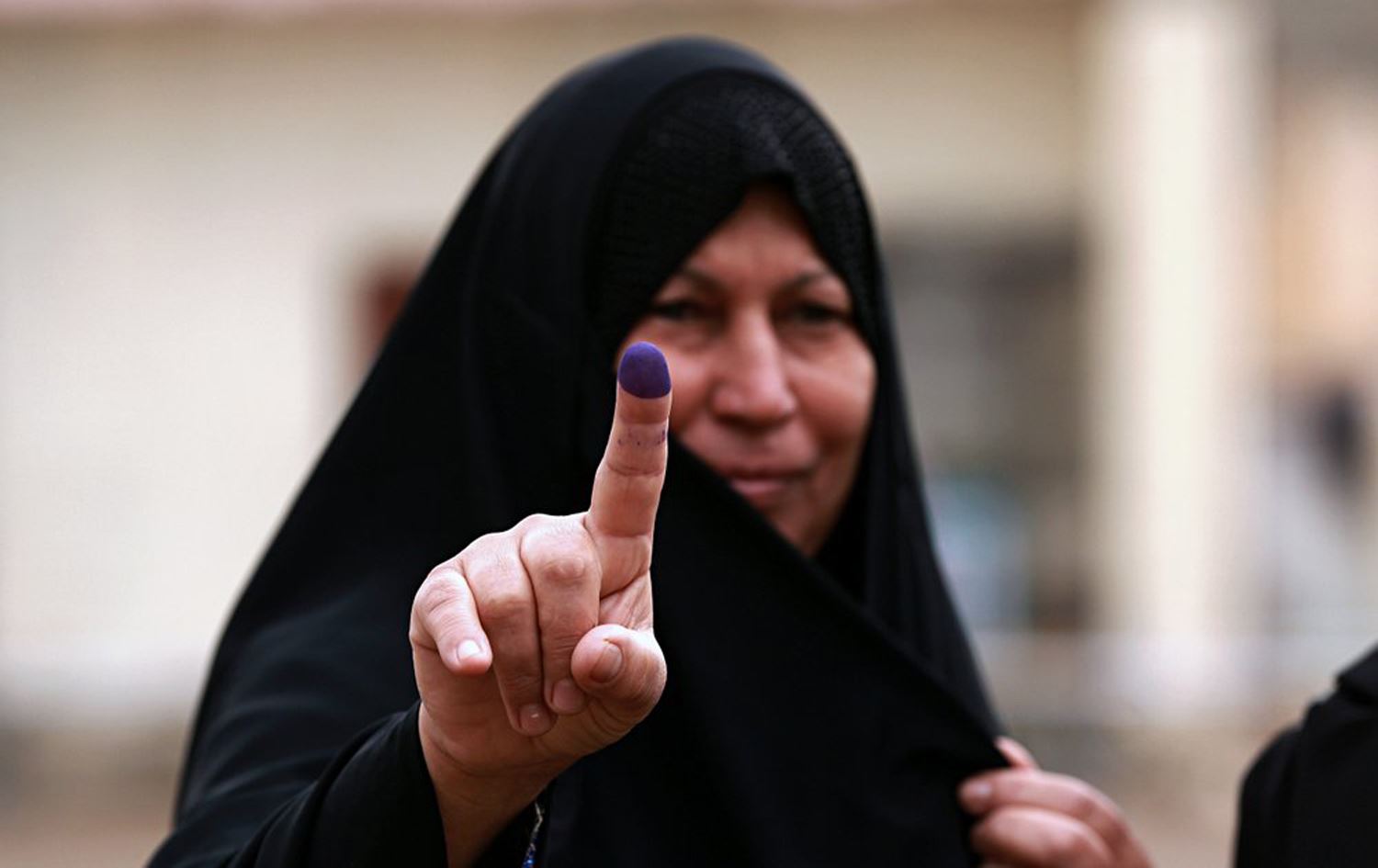
An Iraqi woman shows her ink-stained finger after casting her vote in the country's parliamentary elections in Ramadi, Iraq, May 12, 2018. File photo: Hadi Mizban / AP
ERBIL, Kurdistan Region – Hundreds of thousands of Nineveh voters could be disenfranchised in Iraq’s upcoming provincial elections as many have not undergone biometric registration or are unable to return to their constituencies.
Voters have just two weeks left to undergo biometric registration – a deadline which has already been extended several times.
Almost 100,000 internally displaced persons (IDPs) living in and around camps in the Kurdistan Region’s Duhok province have not had their biometric data registered, an elections commission official told Rudaw.
“Ninety percent of the 92,000 displaced persons living inside the camps of Duhok have done their biometric registrations with the elections commission offices for voting. But there are another 147,000 IDPs living outside the camps, of which only 13 percent have done the biometric registration,” Sagvan Derashi, spokesperson of Iraq’s elections commission in Duhok, told Rudaw on Monday.
“In general, nearly 100,000 IDPs have not registered the biometric with us yet,” he added.
Provincial elections are due to take place across Iraq on April 1, 2020. Controversially, they will also take place in several disputed areas, including the ethnically-mixed province of Kirkuk – a move opposed by all Kurdish parties who fear displaced Kurds will be stripped of their voting rights.
In addition to the biometric registration issue, another concern among Kurds is the Iraqi parliament ruling that voters must cast their ballot in their place of origin – effectively disenfranchising IDPs.
The move was part of a July amendment to the Election Law of Provincial Councils.
IDPs in Duhok have criticized the amendment, demanding the right to vote inside the camps, Derashi said.
“Iraqi Provincial Elections Law No. 12 of 2018... stipulates that each voter should cast their vote in their own province. Therefore, even if the voters have done the biometric registration, they cannot vote in the camps, but that they will have to return to Nineveh province,” he said.
Widespread criticism and public pressure could see the amendment revoked, the official added.
Many IDPs, particularly the Yezidi ethnic minority who survived the Islamic State (ISIS) genocide in 2014, are afraid to return to Sinjar, also known as Shingal, owing to the presence of various irregular armed groups in the region, a Kurdistan Democratic Party (KDP) official told Rudaw.
Kurdish parties have made a strong showing in past elections in Nineveh. The province’s deputy governor and the head of the Nineveh Provincial Elections office are both Kurds.
The KDP, which is the largest Kurdish party in the province, is concerned the ongoing displacement, the amendment, and the registration process could see up to 250,000 Kurdish voters disenfranchised.
“Kurdish votes in Nineveh are at risk of going to waste,” Edris Zozani, head of the KDP elections department in Shingal, told Rudaw.
“The elections law, which commits voters to vote in their province, will result in 250,000 Kurdish voters who are now displaced outside the province to go to waste.”
Zozani fears armed groups will prevent displaced voters from returning on election day in order to skew the vote in their favor.
“Then in this case, we will have a weak Kurdish position in the next Nineveh administration,” he said.
Related: Kurds mull joint list for Nineveh provincial elections
Nineveh is the second largest province in Iraq, home to a mixed population of Arabs, Kurds, Christians, Turkmen, Yezidis, and other minority groups.
A third of the population is Kurdish. Historically they have held top positions in the provincial administration.
Of 39 members of the current provincial council, 11 are Kurds, including nine KDP members, three PUK members, and one member of the Yezidi minority.
The number of the seats on offer in April 2020 however is being cut to 27 – three of which are to go to the minorities as quotas, including one seat for Yezidis, one for the Shabaks, and another for the Christians.
Voters have just two weeks left to undergo biometric registration – a deadline which has already been extended several times.
Almost 100,000 internally displaced persons (IDPs) living in and around camps in the Kurdistan Region’s Duhok province have not had their biometric data registered, an elections commission official told Rudaw.
“Ninety percent of the 92,000 displaced persons living inside the camps of Duhok have done their biometric registrations with the elections commission offices for voting. But there are another 147,000 IDPs living outside the camps, of which only 13 percent have done the biometric registration,” Sagvan Derashi, spokesperson of Iraq’s elections commission in Duhok, told Rudaw on Monday.
“In general, nearly 100,000 IDPs have not registered the biometric with us yet,” he added.
Provincial elections are due to take place across Iraq on April 1, 2020. Controversially, they will also take place in several disputed areas, including the ethnically-mixed province of Kirkuk – a move opposed by all Kurdish parties who fear displaced Kurds will be stripped of their voting rights.
In addition to the biometric registration issue, another concern among Kurds is the Iraqi parliament ruling that voters must cast their ballot in their place of origin – effectively disenfranchising IDPs.
The move was part of a July amendment to the Election Law of Provincial Councils.
IDPs in Duhok have criticized the amendment, demanding the right to vote inside the camps, Derashi said.
“Iraqi Provincial Elections Law No. 12 of 2018... stipulates that each voter should cast their vote in their own province. Therefore, even if the voters have done the biometric registration, they cannot vote in the camps, but that they will have to return to Nineveh province,” he said.
Widespread criticism and public pressure could see the amendment revoked, the official added.
Many IDPs, particularly the Yezidi ethnic minority who survived the Islamic State (ISIS) genocide in 2014, are afraid to return to Sinjar, also known as Shingal, owing to the presence of various irregular armed groups in the region, a Kurdistan Democratic Party (KDP) official told Rudaw.
Kurdish parties have made a strong showing in past elections in Nineveh. The province’s deputy governor and the head of the Nineveh Provincial Elections office are both Kurds.
The KDP, which is the largest Kurdish party in the province, is concerned the ongoing displacement, the amendment, and the registration process could see up to 250,000 Kurdish voters disenfranchised.
“Kurdish votes in Nineveh are at risk of going to waste,” Edris Zozani, head of the KDP elections department in Shingal, told Rudaw.
“The elections law, which commits voters to vote in their province, will result in 250,000 Kurdish voters who are now displaced outside the province to go to waste.”
Zozani fears armed groups will prevent displaced voters from returning on election day in order to skew the vote in their favor.
“Then in this case, we will have a weak Kurdish position in the next Nineveh administration,” he said.
Related: Kurds mull joint list for Nineveh provincial elections
Nineveh is the second largest province in Iraq, home to a mixed population of Arabs, Kurds, Christians, Turkmen, Yezidis, and other minority groups.
A third of the population is Kurdish. Historically they have held top positions in the provincial administration.
Of 39 members of the current provincial council, 11 are Kurds, including nine KDP members, three PUK members, and one member of the Yezidi minority.
The number of the seats on offer in April 2020 however is being cut to 27 – three of which are to go to the minorities as quotas, including one seat for Yezidis, one for the Shabaks, and another for the Christians.


Comments
Rudaw moderates all comments submitted on our website. We welcome comments which are relevant to the article and encourage further discussion about the issues that matter to you. We also welcome constructive criticism about Rudaw.
To be approved for publication, however, your comments must meet our community guidelines.
We will not tolerate the following: profanity, threats, personal attacks, vulgarity, abuse (such as sexism, racism, homophobia or xenophobia), or commercial or personal promotion.
Comments that do not meet our guidelines will be rejected. Comments are not edited – they are either approved or rejected.
Post a comment