
ERBIL, Kurdistan Region - French Foreign Minister Jean-Noel Barrot on Thursday visited Erbil to meet with leaders of the Kurdistan Region and northeast Syria (Rojava). He thanked Kurdistan Region President Nechirvan Barzani for his “decisive” role in ending hostilities between Kurdish forces and the Syrian Arab Army last month.
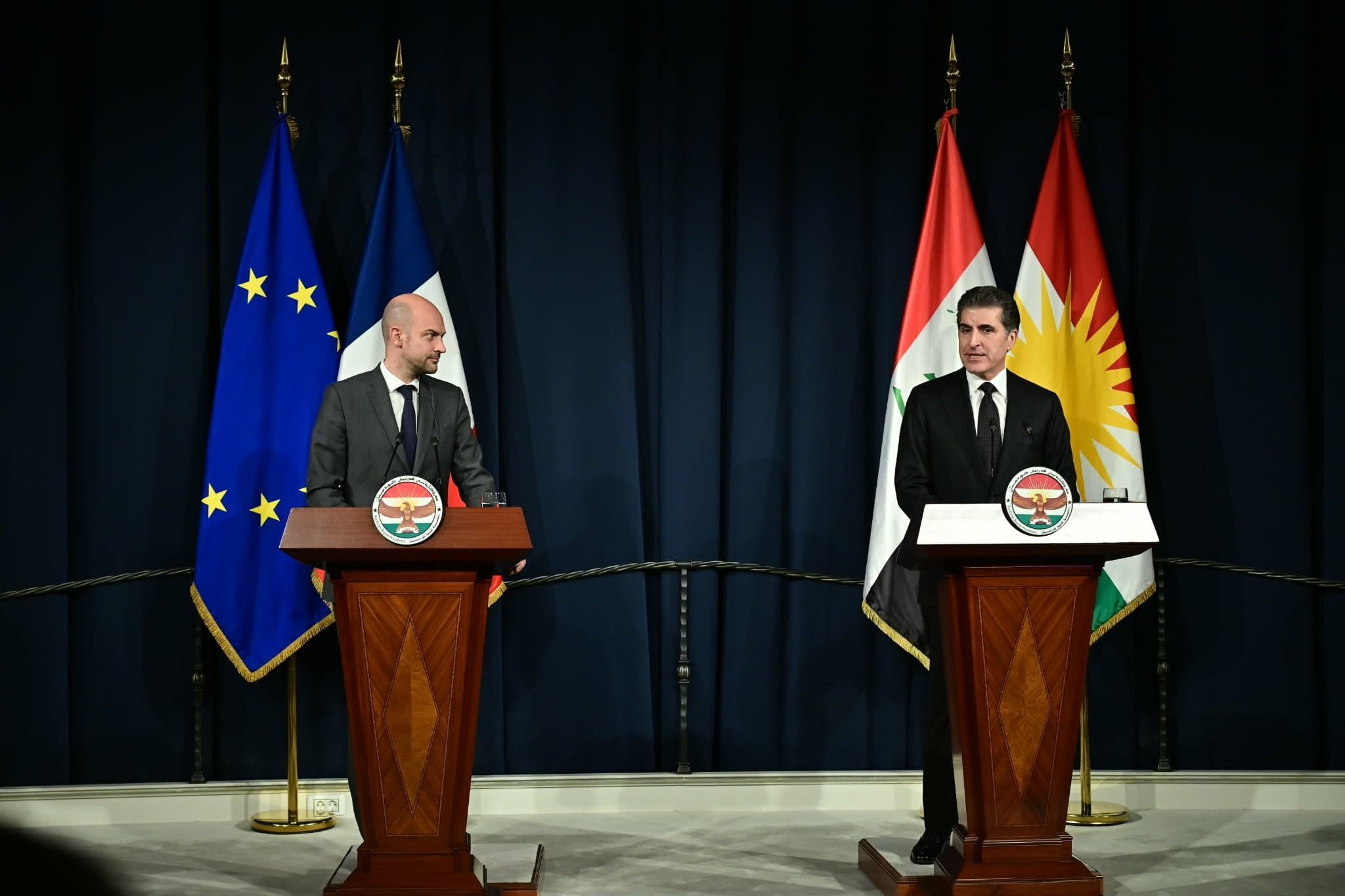
Barrot was received by Kurdistan Region President Nechirvan Barzani at the Kurdistan Region Presidency after arriving in Erbil International Airport. The two later held a joint press conference.
“I would like here to express my gratitude to the authorities of the Kurdistan autonomous region for the role they have played in recent weeks. In Syria, first of all, Mr. President, you personally played a decisive role in putting an end to the escalation between Damascus and the Syrian Democratic Forces [SDF],” Barrot said during the presser.
“While France has also been tirelessly engaged in mediation efforts, with the personal involvement of the President of the Republic [Emmanuel Macron], I wish to thank you for the close coordination we have had over the past weeks, which helped avert a bloodbath, bring about a ceasefire, and facilitate the conclusion of an agreement on January 29,” he added.
Erbil played a key role in the recent talks between the Kurdish-led SDF and the interim government in Damascus which produced a comprehensive agreement, which includes a permanent ceasefire following weeks of deadly clashes between both sides and the gradual integration of the SDF and Rojava’s civilian structures. Unlike previous truces, this is holding and practical steps have been taken on the groups for its implementation, including the deployment of state forces in Kurdish areas and the appointment of a Kurdish governor for the predominantly Kurdish province of Hasaka.
Many meetings between the SDF American mediators were held in Erbil and attended by the Region’s leaders.
The French foreign minister said the agreement “puts an end to the fighting and must be fully implemented to provide political and security guarantees for the integration of the Kurds into a unified Syria.” He also said that a recent decree by Syrian interim President Ahmed al-Sharaa seeking the recognition of the linguistic, cultural and educational rights of Kurds “must be fully implemented.”
“Recognition of Kurdish identity is a condition for Syria’s recovery, just as it was in Iraq,” he said. “The horizon of Syria’s Kurds must not be limited to their region. Like in Iraq, they are meant to take their full part in Syrian political life.”
President Barzani said during the press conference that during their meeting the two “discussed the bolstering of France’s relations with France and Iraq and the Kurdistan Region as well as expanding our strategic partnership for now and future. We also touched on the political situation in Iraq and the Kurdistan Region,” adding that he also thanked France for its lasting friendship with the Kurdish region.
He also thanked French President Emmanuel Macron for “always supporting the people of Kurdistan and their constitutional rights. The People of Kurdistan will never forget this.”
President Barzani also highlighted Macron’s “important role” in the talks between the SDF and Damascus and his support for “constitutional rights” of Kurds in Syria.
The top French diplomat said he will also meet with President Masoud Barzani, leader of the Kurdistan Democratic Party (KDP), on Friday. He is also expected to meet with a Rojava delegation led by General Mazloum Abdi, commander-in-chief of the SDF.
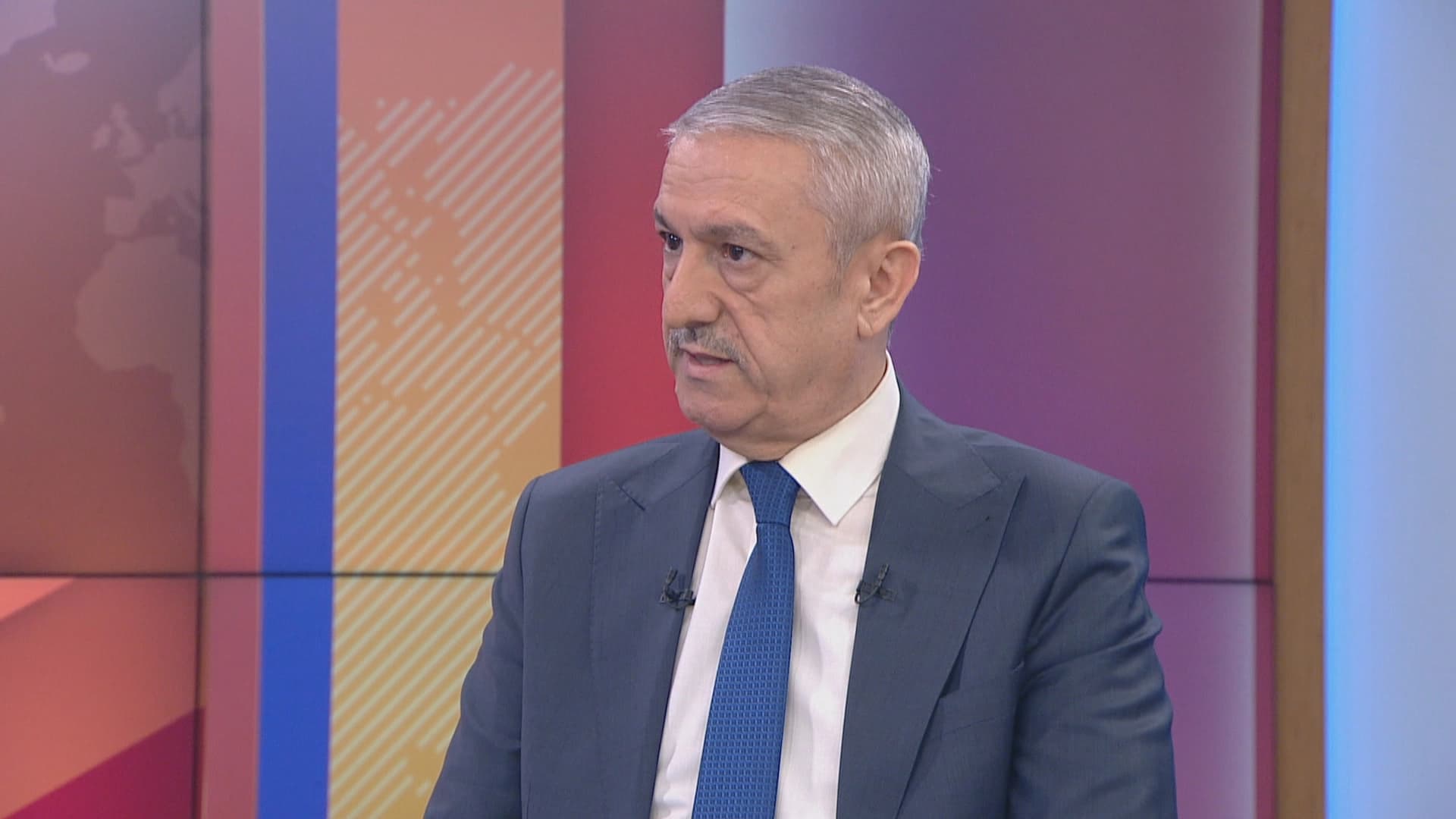
“France wants the Kurdish issue in Syria to be resolved constitutionally, similar to Iraq, but they know that without the Kurdistan Region and the role of President [Masoud] Barzani and Nechirvan Barzani, President of the Kurdistan Region, this will be difficult to achieve.” Ali Dolamari, who represents the Kurdistan Regional Government (KRG) in France, told Rudaw ahead of the French minister’s visit.
“France is a strong supporter of the Kurds in all four parts of Kurdistan. The French foreign minister’s visits to Damascus, Baghdad, and Erbil show that they do not want tensions to escalate and that they support Kurdish rights,” he added.
Earlier in the day, the top French diplomat held meetings with senior Syrian officials in Damascus. There, he highlighted France’s support for the fight against the Islamic State (ISIS) and Kurdish rights.
In a post on X following a joint press conference with his Syrian counterpart, Barrot said the January 29 agreement is “an important transition on the path to a united Syria, in which each of the components of this plural country feels recognised and supported.”
Before Erbil, Barrot also held meetings with Iraqi leaders in Baghdad.
Iraqi Prime Minister Mohammed Shia’ al-Sudani’s office said in a statement that he and Barrot discussed a range of issues, including the transfer of ISIS prisoners from Kurdish-held areas in Syria to Iraq.
Sudani “noted that Iraq has assumed significant responsibilities on behalf of the international community, most recently in relation to the transfer of terrorist detainees from prisons in Syria. He emphasized that Iraq requires international support at this critical juncture, and that concerned states must fulfill their obligations by repatriating their nationals, given the shared security threat posed by this issue. He further reaffirmed continued cooperation with France in strengthening Iraq’s defense capabilities,” said the office.
It added that the French minister “expressed France’s desire to work closely with Iraq to promote regional stability and coordinate efforts to combat terrorism, praising Iraq’s role in transferring terrorist detainees as a step that contributes to regional security. He also affirmed France’s readiness to provide support in addressing issues related to terrorist detainees.”
Nearly 1,400 of the 7,000 ISIS prisoners held in Rojava have been transferred so far.
Updated at 10:35 pm