
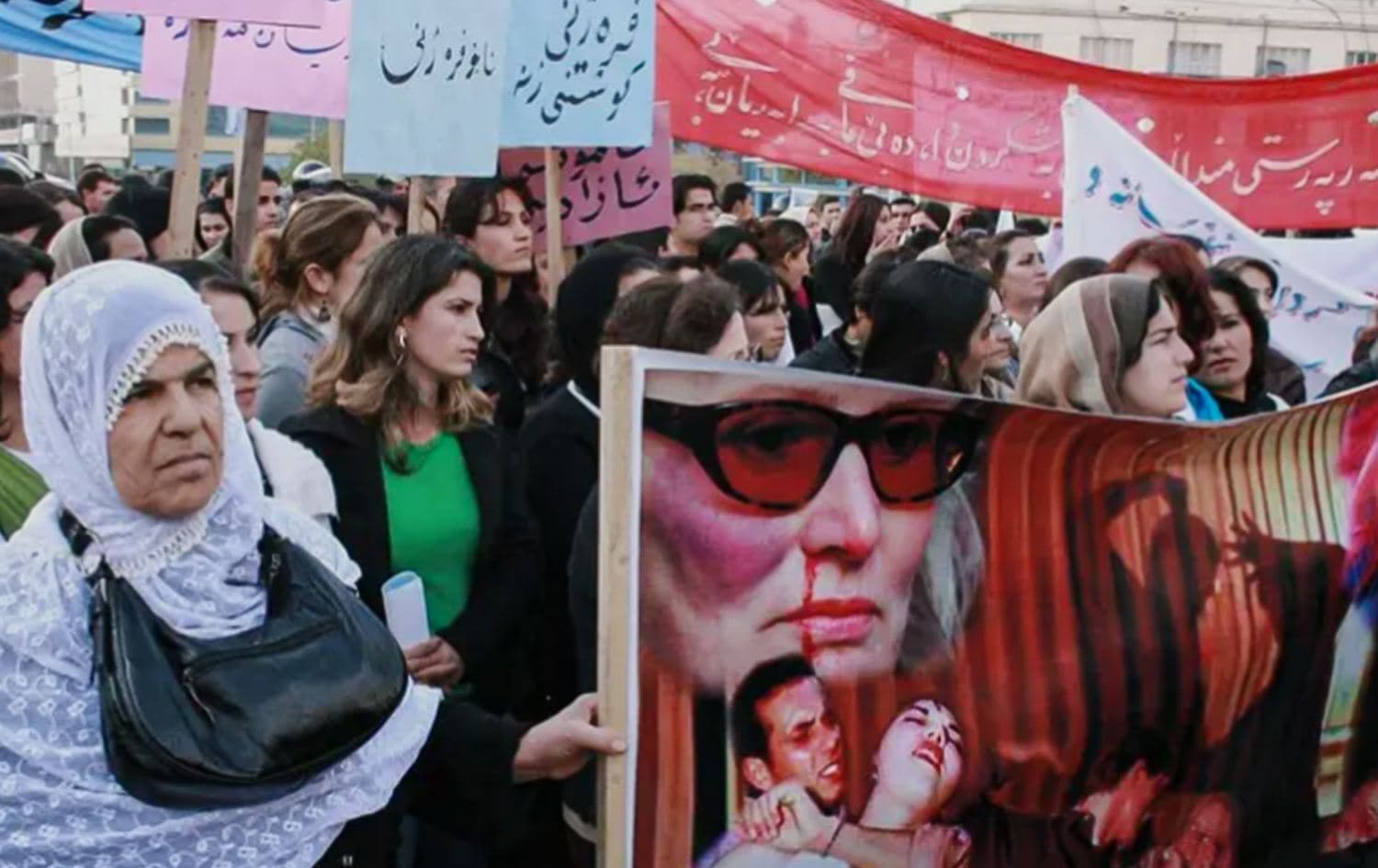
ERBIL, Kurdistan Region - The Kurdistan Region’s domestic abuse office received just under 12,500 complaints last year, Fenik Shafiq, head of the Kurdistan Regional Government’s (KRG) General Directorate of Combating Violence Against Women and Families (GDCVAW), said, warning that the trend has risen sharply.
“The Directorate recorded 12,456 complaints in 2025 alone,” Shafiq said in a Monday interview with Rudaw’s Nalin Hassan, adding that 3,500 cases involved physical violence and another 3,000 were related to family disputes.
She further added that the GDCVAW, which operates under Erbil’s interior ministry, also recorded 99 cases involving the non-consensual dissemination of images and videos, 95 cases of electronic violence, and 73 cases of sexual abuse.
“Violence against women exists all over the world, whether at home or in the workplace; especially electronic violence, which has now become the most common type and has turned into a threat for women, girls, and even men,” Shafiq noted, attributing the rise in abuse cases namely to the increased use of smart devices and wider internet access.
While the figures do not reflect all cases of abuse, as many victims avoid reporting for various reasons, the head of the GDCVAW said “the annual increase in complaints may indicate either a real rise in incidents or the success of efforts to raise awareness and encourage individuals to file reports.”
The Kurdistan Region passed a domestic violence law in 2011, marking a milestone in criminalizing violence against women within the family.
Based on this law, the GDCVAW operates eight main directorates in major urban centers, 28 district-level offices, and three sub-district units. In addition to a dedicated police force, its services include a 24/7 hotline, family counseling, and reconciliation committees.
The law also explicitly criminalizes several forms of violence against women, including female genital mutilation, forced and child marriage, and marital rape, as well as physical, psychological, social, and economic abuse.
However, advocacy groups have long censured the legislation for classifying domestic violence as a misdemeanor and limiting penalties to a maximum of three years in prison or a fine. Moreover, the law requires court orders for survivors to enter or leave shelters, restricting their freedom of movement and shifting shelters into a more custodial role.
The bill also places strong emphasis on family reconciliation in a way that may discourage survivors from filing formal legal complaints or pursuing cases in court, rights groups often warn.
Accordingly, Shafiq told Rudaw that the existing laws addressing domestic abuse are outdated, urging “the relevant authorities” to “amend the laws or introduce new ones that better protect girls and women.”


