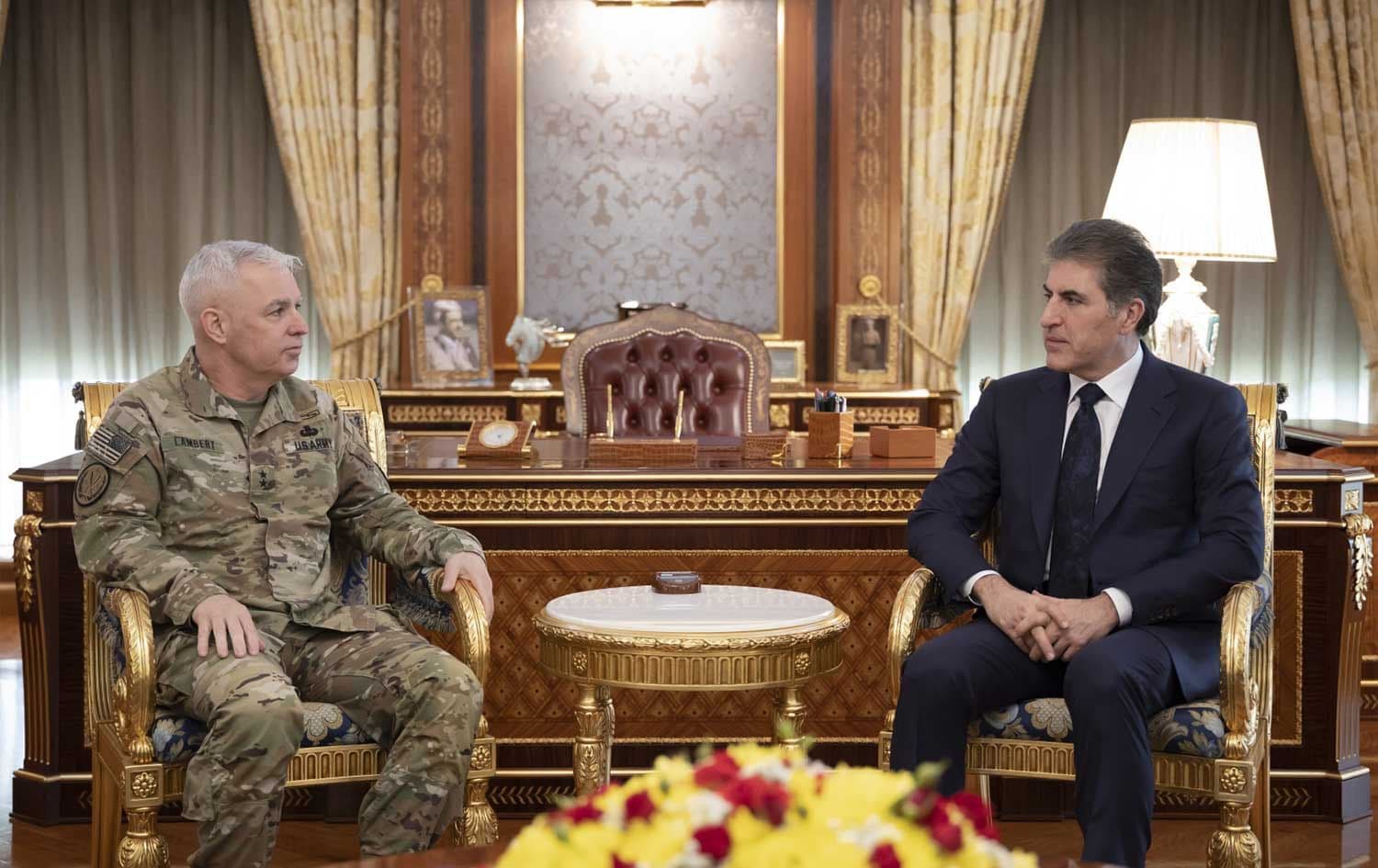
ERBIL, Kurdistan Region - Kurdistan Region President Nechirvan Barzani on Thursday met with Kevin Lambert, commander of the US-led Global Coalition to Defeat the Islamic State (ISIS), to discuss security developments and ongoing coordination between local and international forces.
According to a statement from the Kurdistan Region Presidency, both sides "emphasized the necessity of continued cooperation between the Peshmerga, the Iraqi army, the security forces of Iraq, and coalition forces, particularly during this critical period to ensure stability and address challenges."
The talks also focused on "the threat of terrorism and the fight against ISIS, the repercussions of the war on Iraq and the surrounding region, as well as other matters of mutual interest," the statement added.
The meeting comes after Washington and Tehran agreed to a two-week ceasefire, halting nearly 40 days of intense fighting that had pushed the Middle East to the brink of a wider war.
The US-led coalition was established in 2014 after Iraq requested international support following ISIS’s rapid territorial gains across Iraq and Syria. Although ISIS lost its territorial holdings in Iraq by 2017 and in Syria by 2019, remnants and sleeper cells still carry out deadly attacks in both countries.
In September 2024, Baghdad and Washington agreed to conclude the coalition’s combat mission in Iraq by September 2025, with the Iraqi government citing improved Iraqi security capabilities. Nonetheless, coalition and Kurdish officials continue to view ISIS as a persistent threat requiring ongoing international cooperation.
In mid-January, Iraqi security forces took full control of Ain al-Asad Air Base after the departure of the remaining advisers from the US-led Global Coalition, marking the end of the coalition’s military presence in federal areas of the country.