

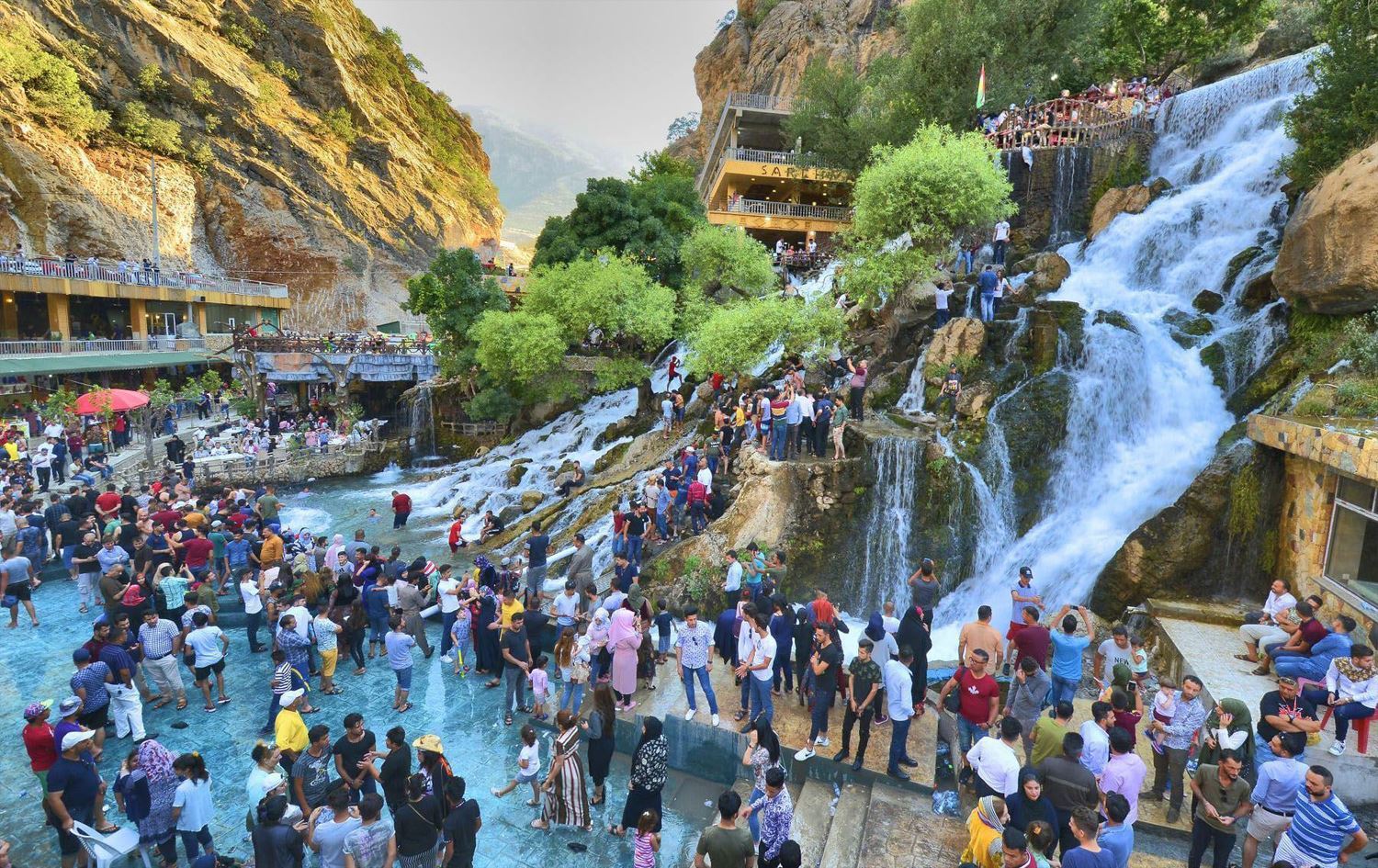
ERBIL, Kurdistan Region - Approximately 90,000 tourists from across Iraq visited Erbil, the capital of the Kurdistan Region, during the four-day Eid al-Adha holiday.
Eid al-Adha, known among Muslims as the Greater Eid, commemorates the Quranic and Biblical story of Prophet Ibrahim (Abraham), who was willing to sacrifice his son Ismail (Ishmael) in obedience to God. Before the act could take place, God provided a ram to be sacrificed instead.
Muslims around the world observe this annual holiday with the ritual of Qurbani (or Udhiya) - the offering of an animal, which is traditionally distributed to the poor and needy.
Each year, the Kurdistan Region becomes a major tourist destination during Eid al-Adha.
According to figures released by Erbil authorities, some 89,301 tourists arrived in the city over the holiday period, and more than 108,000 people visited parks and recreational areas. In addition, 270 large livestock and 1,191 smaller animals were sacrificed in Erbil as part of the Eid observance.
Shukir Aziz, deputy head of the Kurdistan Region Restaurant and Guesthouse Association in Erbil, told Rudaw on Thursday that 90 percent of the city’s 445 hotels were booked by tourists.
In the Region’s eastern Sulaimani province, preparations were similarly thorough. Mahmood Tofiq, head of the association’s local branch, confirmed that all necessary arrangements were in place to accommodate visitors.
In the northern Duhok province, restaurants and other tourist attractions remained open throughout the holiday. “Hotels are full of tourists, most of them pre-booked by travel companies,” said Sheikh Ihsan Issa, the head of the association in Duhok.
Meanwhile, Halabja - officially recognized as a province by the Iraqi federal government in early May - also welcomed a wave of tourists, particularly to the scenic summer resorts of the Hawraman region near the Iranian border.
According to the Kurdistan Region’s Tourism Board, hotel occupancy rates in Erbil, Duhok, Sulaimani, and Halabja exceeded 90 percent on the first day of Eid, which fell on Friday.
Ahead of the holiday, the Tourism Board had projected that more than 300,000 tourists - primarily from Iraq’s central and southern provinces - would visit the Kurdistan Region during the Eid al-Adha season.
By comparison, during Eid al-Fitr - referred to as the Lesser Eid, marking the end of Muslims fasting month of Ramadan - approximately 200,000 tourists from central and southern Iraq visited the Kurdistan Region over the three-day celebration, according to official statistics.
With its mild summers and cold winters, the Kurdistan Region has established itself as Iraq’s leading tourist destination, attracting visitors year-round. The majority of tourists come from within Iraq, especially from the central and southern provinces, while the remainder include international travelers.
Looking ahead, the Kurdistan Regional Government (KRG) has set an ambitious goal of attracting 20 million tourists annually by the year 2030.


Comments
Rudaw moderates all comments submitted on our website. We welcome comments which are relevant to the article and encourage further discussion about the issues that matter to you. We also welcome constructive criticism about Rudaw.
To be approved for publication, however, your comments must meet our community guidelines.
We will not tolerate the following: profanity, threats, personal attacks, vulgarity, abuse (such as sexism, racism, homophobia or xenophobia), or commercial or personal promotion.
Comments that do not meet our guidelines will be rejected. Comments are not edited – they are either approved or rejected.
Post a comment