


Error occured during this request! Please try again later.
Kurdistan

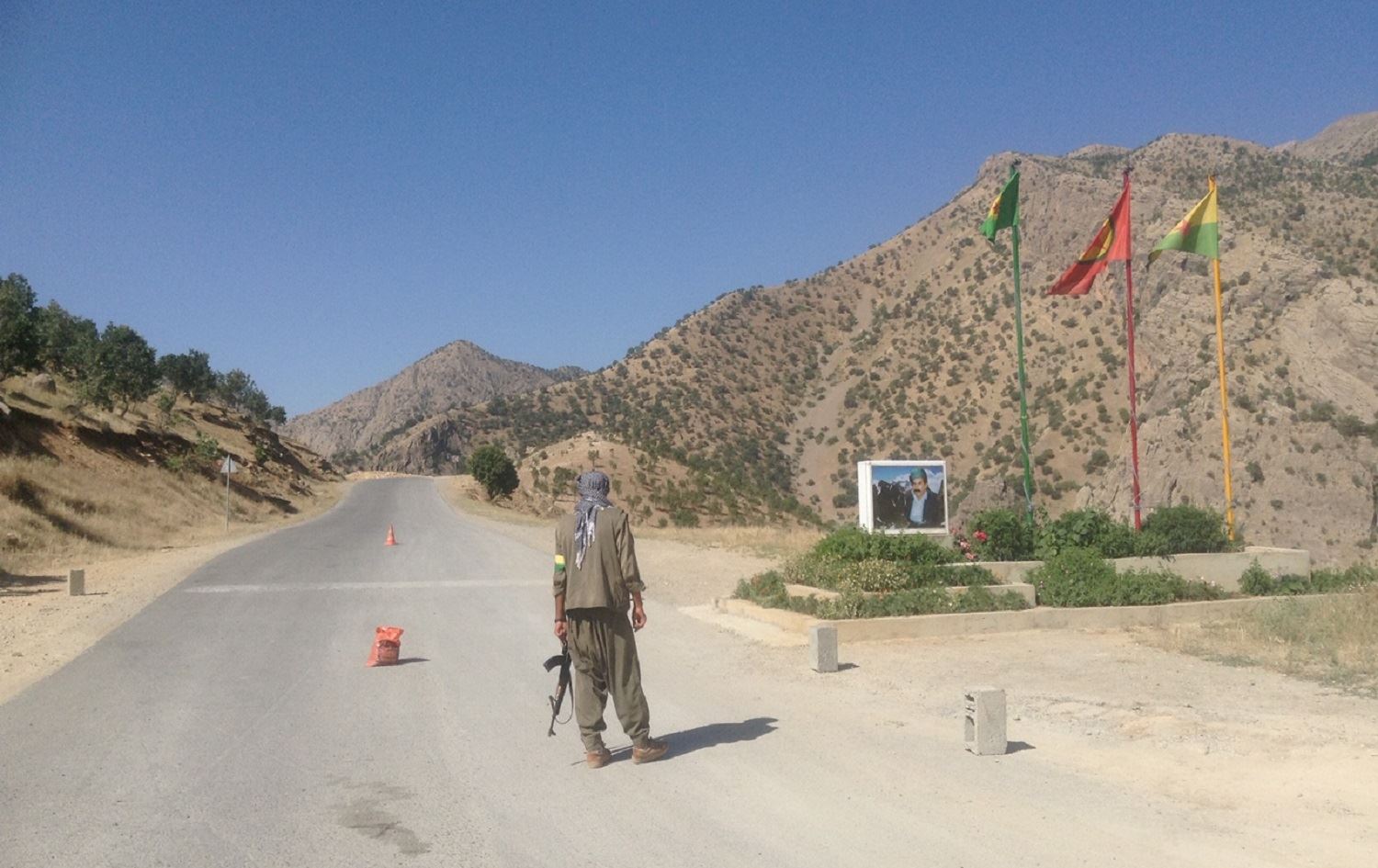
A PKK fighter mans a checkpoint in the Kurdistan Region’s Qandil mountains in June 2013. File photo: Fazel Hawramy/Rudaw
ERBIL, Kurdistan Region – The Kurdistan Workers’ Party (PKK) denied a claim by Turkey’s foreign minister that the group wants to seize control of Erbil, saying it is Ankara that has such ambitions.
“The PKK has promised to defend the people of Kurdistan in every field and acts with this in mind. Therefore, seizing Hewler [Erbil] can only be the plan of the Turkish special war. As the PKK, our goal is to remove and liberate Kurdistan from the Turkish occupation,” read a statement by the PKK, published by its affiliated media, ANF.
The PKK was responding to a claim by Turkish Foreign Minister Mevlut Cavusoglu that the armed Kurdish group wants to take control of areas held by the Kurdistan Democratic Party (KDP), which has good relations with Ankara.
“It [the PKK] has almost controlled Sulaimani, its cities and 1,000 of its villages. Actually, the PKK’s aim is to control the Erbil administration [as well],” Cavusoglu said during a joint press conference with Congo's foreign minister Jean-Claude Gakosso in Ankara on Tuesday.
The “Erbil administration” refers to the provinces of Duhok and Erbil, areas controlled by the KDP. Sulaimani is dominated by the Patriotic Union of Kurdistan (PUK).
The PKK said the people of Erbil, Sulaimani and all of the Kurdistan Region “have great respect and sympathy for the PKK struggle and the guerrillas.”
Ankara and the PKK have fought in armed clashes since 1984, resulting in the deaths of over 40,000 people on both sides, including civilians. Much of the fighting in recent years has taken place in the Kurdistan Region after the PKK retreated from areas Turkey as part of failed 2013 peace process concessions.
The PKK has its headquarters in Kurdistan Region’s Qandil mountains and maintains a presence along much of the border with Turkey, controlling some rural areas of Duhok, Erbil, and Sulaimani provinces. In its military campaigns against the PKK, Turkey is also establishing bases within the Kurdistan Region. Ankara said in July that it has 37 "military points" in the Kurdistan Region, including one each in the cities of Duhok, Erbil, Soran, and Zakho.
“The PKK has promised to defend the people of Kurdistan in every field and acts with this in mind. Therefore, seizing Hewler [Erbil] can only be the plan of the Turkish special war. As the PKK, our goal is to remove and liberate Kurdistan from the Turkish occupation,” read a statement by the PKK, published by its affiliated media, ANF.
The PKK was responding to a claim by Turkish Foreign Minister Mevlut Cavusoglu that the armed Kurdish group wants to take control of areas held by the Kurdistan Democratic Party (KDP), which has good relations with Ankara.
“It [the PKK] has almost controlled Sulaimani, its cities and 1,000 of its villages. Actually, the PKK’s aim is to control the Erbil administration [as well],” Cavusoglu said during a joint press conference with Congo's foreign minister Jean-Claude Gakosso in Ankara on Tuesday.
The “Erbil administration” refers to the provinces of Duhok and Erbil, areas controlled by the KDP. Sulaimani is dominated by the Patriotic Union of Kurdistan (PUK).
The PKK said the people of Erbil, Sulaimani and all of the Kurdistan Region “have great respect and sympathy for the PKK struggle and the guerrillas.”
Ankara and the PKK have fought in armed clashes since 1984, resulting in the deaths of over 40,000 people on both sides, including civilians. Much of the fighting in recent years has taken place in the Kurdistan Region after the PKK retreated from areas Turkey as part of failed 2013 peace process concessions.
The PKK has its headquarters in Kurdistan Region’s Qandil mountains and maintains a presence along much of the border with Turkey, controlling some rural areas of Duhok, Erbil, and Sulaimani provinces. In its military campaigns against the PKK, Turkey is also establishing bases within the Kurdistan Region. Ankara said in July that it has 37 "military points" in the Kurdistan Region, including one each in the cities of Duhok, Erbil, Soran, and Zakho.


Comments
Rudaw moderates all comments submitted on our website. We welcome comments which are relevant to the article and encourage further discussion about the issues that matter to you. We also welcome constructive criticism about Rudaw.
To be approved for publication, however, your comments must meet our community guidelines.
We will not tolerate the following: profanity, threats, personal attacks, vulgarity, abuse (such as sexism, racism, homophobia or xenophobia), or commercial or personal promotion.
Comments that do not meet our guidelines will be rejected. Comments are not edited – they are either approved or rejected.
Post a comment