


Error occured during this request! Please try again later.

SULAIMANI, Kurdistan Region - Escaping from the brutality committed by the Islamic State (ISIS) in the north Syrian city of Kobane in 2014, then eight years old Laila Fadhil alongside her parents and siblings sought sanctuary in the Kurdistan Region, the place where she developed her handicraft skills, which she now uses to provide for her family.
As part of its attempts to further expand its so-called caliphate, in mid-September of 2014, ISIS began laying siege to Kobane, in Syria’s Aleppo province, taking village after village as they slowly tightened a noose around the city.
Thousands of civilians fled across the border to Turkey at the time, among them Laila and her family.
After staying in Turkey for around three months, her family managed to enter the Kurdistan Region in 2015 through their father who was already trying to make ends meet across the border.
Having left her home town at only eight, memories of Kobane are very hazy in Laila’s mind.
“There were houses and buildings and two streets around our neighborhood,” Laila told Rudaw English, recalling the only memories she had of Kobane along with the fact that it reminded her a lot of Sulaimani.
Now 16, Sulaimani’s Barika camp is what Laila remembers as the place where she continued her studies and recently developed skills through which she supports her low-income family.
Though difficult for anywhere to feel the same as home, Laila looks not back at what they had lost at the hands of ISIS and years of civil war, but rather forward to sell dozens of handmade cups, pottery, candles, soap, and paintings she has made in a market for local venders in Erbil on Friday, November 11.
At the time of our visit to the Barika camp to meet the dozen of displaced women who had found sanctuary in supporting their families through their handicraft, Laila was the only one at the workspace making cups out of clay.
Two of her friends had left the camp to Sulaimani in order to buy clothes to wear for Friday’s event, through which their products and those of over two dozen local small businesses will be put to sale.
While working, Laila spoke of her experience at the camp.
“When we first came here, the situation was bad, there were only tents,” she said. “But now they have become houses and they are fine.”
Job opportunities inside the Barika camp are very rare. Laila’s father is one of many who struggle to find a permanent job, and to provide for the family.
“I go to school and after school I come here, my dad works sometimes, and my mom is always at home,” Laila said.
Embed: Picture of the Sisterhood workspace in Sulaimani’s Barika Camp.
Laila is among several other women who are helping provide for their families through the Sisterhood project.
The Sisterhood was launched in 2018 with the support of Preemptive Love, an international organization working on promoting peace making through sustainable economic development.
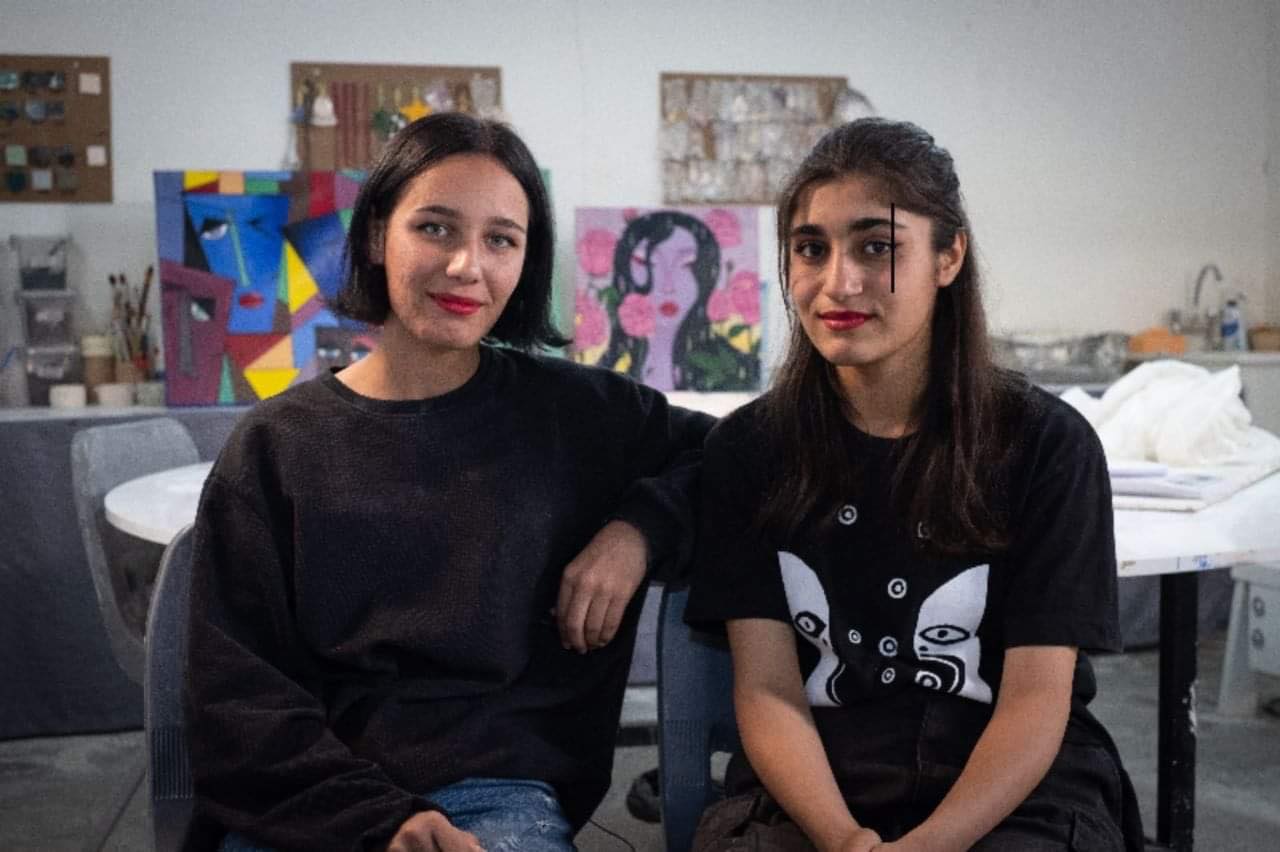
“Sisterhood products provides displaced people (particularly women) with a second chance at supporting their families with income made directly from the beautiful products they create,” Sisterhood Program Officer at Preemptive Love, Abbas Ahmad told Rudaw English.
“Families are rebuilding their lives from the ashes of war. With each candle, every bar of soap, and hand-stitched animal toy, they are one step closer to home,” Ahmad added.
In addition to offering handicraft courses for many like Laila to obtain skills they could use to support their families, Preemptive Love also uses the Sisterhood project to provide dozens of displaced families with a variety of classes, such as yoga and Kurdish language classes for all the women far away from home.
The organization also helps put the products on an international market, bringing in large demands all the way from the US.
The products made by the displaced women in the camps ranges from pottery and clay cups to bars of soap and candles, and a number of paintings which will be exhibited in the event organized by Preemptive Love on Friday.
“Part of our directors' vision as sisterhood is to support local entrepreneurs, and the local supply chain. We are creating an economic vision of fair trade, local supply chain support, zero waste, and we are using the highest quality supplies in our production,” Ahmad said.
The products are sold at an affordable price to people who will be attending the event, in addition to several other small business products.
To many like Laila, selling their products is not just a financial support to their families, but also a reminder of how far one can go despite life’s hardships.
“The good side of it sure is that we make money, but it also gives us a good feeling about what we are doing,” she said.


Comments
Rudaw moderates all comments submitted on our website. We welcome comments which are relevant to the article and encourage further discussion about the issues that matter to you. We also welcome constructive criticism about Rudaw.
To be approved for publication, however, your comments must meet our community guidelines.
We will not tolerate the following: profanity, threats, personal attacks, vulgarity, abuse (such as sexism, racism, homophobia or xenophobia), or commercial or personal promotion.
Comments that do not meet our guidelines will be rejected. Comments are not edited – they are either approved or rejected.
Post a comment