


Kurdistan

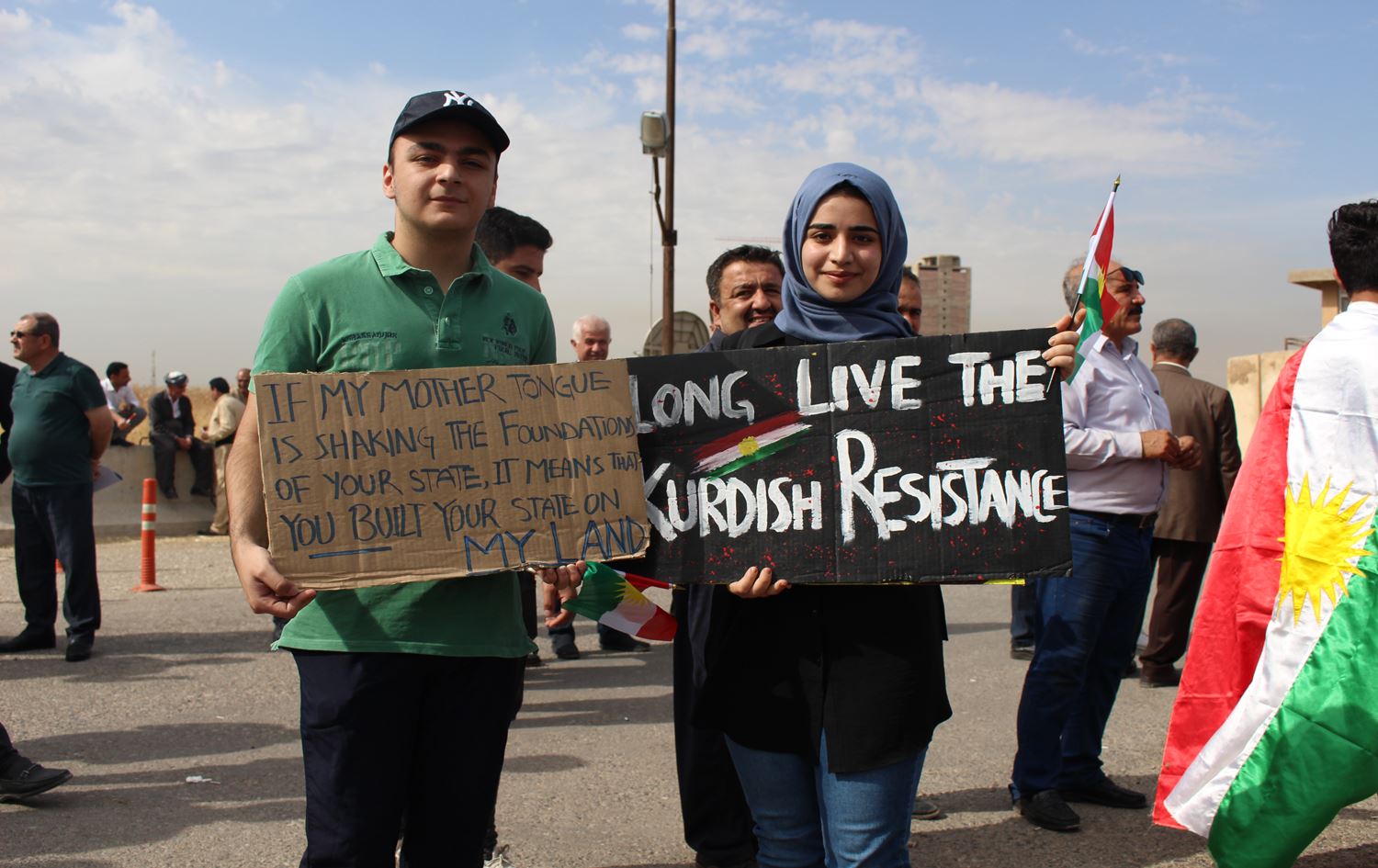
Kurds protest outside the UN in Erbil on October 12, 2019 against Turkey's invasion of northeast Syria. Photo: Rudaw English/Hannah Lynch
ERBIL, Kurdistan Region — Hundreds of Kurds gathered in front of the UN complex in Erbil Saturday morning in opposition to Turkey’s military incursion into northeastern Syria and the failure of the international community to stop it.
Turkey’s operation against Kurdish forces there is the “next genocide for Kurdistan,” said one protester.
“Throughout history, our nation has been massacred. We’re hopeless and angry at the same time,” Karzan Luqman, 20, from Erbil, told Rudaw English. “This is an explosion.”
On Wednesday, Turkey began its long-planned operation against the Kurdish-led Syrian Democratic Forces (SDF) in Syria after the US moved some of its own forces out of Turkey’s war path. The US supports the SDF against the Islamic State (IS), but Turkey considers the SDF a terrorist organization linked to the Kurdistan Workers’ Party (PKK) in Turkey.
The US has called on Turkey to stop its operations since then, but its original apparent greenlight for Turkey’s actions have angered many Kurds.
The protest was the second of its kind in three days. Hundreds of protesters also congregated at the UN on Thursday, before heading towards the Turkish consulate.
Ahmad Said, 30, from Qamishli in northeast Syria, carried a sign offering Trump the money he has. Said is offering Trump $60, saying “take it and stop the aggression.”
Trump only acts when he can see financial gain, according to Said.
On Saturday, Trump said he would be sending more troops to Saudi Arabia because they agreed to pay the US.
Said’s brother is in the People’s Protection Units (YPG) - the main Kurdish group in the SDF. The rest of his family is still living in Qamishlo, where they are afraid of recent Turkish bombings.
“Yesterday they slept outside,” he told Rudaw English.
But they won’t be forced out of their home, according to Said.
“They will not leave,” he said. “It’s their country.”
The Turkish army launched Operation Peace Spring in coordination with its Syrian rebel groups, with President Recep Tayyip Erdogan tweeting on Wednesday “our mission is to prevent the creation of a terror corridor across our southern border, and to bring peace to the area.”
Kurdish forces and officials in their autonomous part of north and northeast Syria accuse Erdogan of wanting to change the demographics of the area by pushing the Kurds out and settling Syrian refugees now living in Turkey.
The pro-Syrian opposition conflict monitor the Syrian Observatory for Human Rights (SOHR) says the death toll among the SDF is 54 and the Operation Peace Spring forces is 42, including six Turkish soldiers. Tens of civilians have been reported killed on both sides of the border Turkey-Syria, including several children.
Protesters in Erbil are watching the carnage from here.
“I saw a child without legs,” said protester Ala Shwani, 20, from Erbil, who has been closely following the news, to Rudaw English. “How can the world not see this, feel this?”
The protesters also raged against the Turkish president, chanting “Terrorist Erdogan! Fascist Erdogan!”
Another local told Rudaw English the crisis next door has caused sadness among Kurds in the Kurdistan Region.
“Nobody’s happy in Kurdistan today,” said Halmat Mama, 35, wearing his traditional Kurdish clothes belted with the colourful scarf commonly worn by YPG fighters and their female counterpart - the YPJ.
“Erdogan is a terrorist,” he said, calling on the international community to “stop the fire in Syria.”
The UN estimates 100,000 civilians have been displaced by the conflict after just three days.
“Nothing is more important than protecting civilians, right now, and doing everything in our power to ensure humanitarian actors can reach safely and deliver assistance to all those in need,” said Imran Riza, the UN’s humanitarian coordinator for Syria.
Sitting on a curb in front of the UN with bright orange marigolds sticking out of his shirt pocket, 77-year-old Abdul Maseeh Salman Soor from the Erbil suburb Ankawa is not holding his breath for the UN to help Syrian Kurds.
“From the beginning of its history, the UN does nothing about any nation,” he told Rudaw English. “But we come. We hope to do something.”


Comments
Rudaw moderates all comments submitted on our website. We welcome comments which are relevant to the article and encourage further discussion about the issues that matter to you. We also welcome constructive criticism about Rudaw.
To be approved for publication, however, your comments must meet our community guidelines.
We will not tolerate the following: profanity, threats, personal attacks, vulgarity, abuse (such as sexism, racism, homophobia or xenophobia), or commercial or personal promotion.
Comments that do not meet our guidelines will be rejected. Comments are not edited – they are either approved or rejected.
Post a comment