


Error occured during this request! Please try again later.
Kurdistan

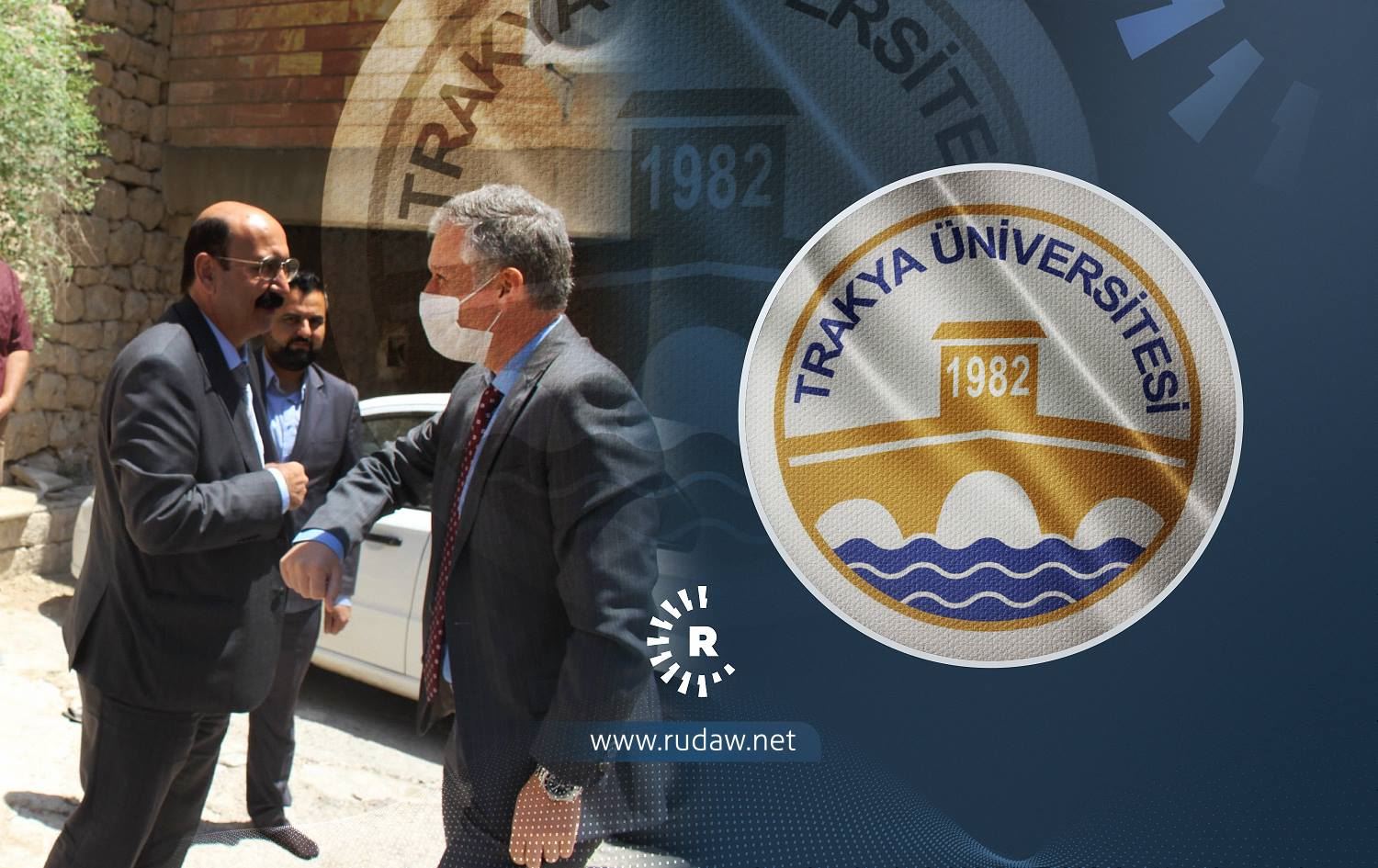
From left: Mir Hazim and Turkish consul general met at Lalish on July 13, 2021., and the logo of Trakya University. Photo: Mir Hazim's office. Graphic: Rudaw
ERBIL, Kurdistan Region — The Turkish government has dedicated five higher education seats at a state university for Yazidi students, according to a statement from the ethno-religious group’s leader.
Hakan Karacay, Turkish consul general in Erbil, and an academic and humanitarian delegation from Turkey visited Mir Hazim Tahsin Beg, the leader of the Yazidi community, in Duhok province on Tuesday.
The Turkish top diplomat expressed his joy visiting Lalish, the Yazidi holy site, and Mir Hazim, telling them that “we have allocated five seats for Yazidi students in undergraduate studies and for master's and doctoral studies, at our expense,” according to the statement from the Yazidi leader's office.
“From the first day of the Yazidi genocide, we have provided aid and opened our doors to you,” added Karacay, referring to the Islamic State (ISIS) attack on Yazidi-majority Shingal district in 2014 which led to the death and abduction of thousands of Yazidis.
Over half of the missing Yazidis have yet to be found.
An informed source, who spoke on the condition of anonymity, confirmed to Rudaw English that Turkish state-owned Trakya University, whose representatives were members of Karacay’s delegation to Lalish, has dedicated five scholarships for Yazidis.
“Turkey dedicated 15 study scholarships for the minorities in the Kurdistan Region last year. They have dedicated another 15 for ethnic and religious groups this year. However, the five seats dedicated to Yazidis are separate,” said the source.
Turkey grants study scholarships to thousands of foreign students - covering most of the costs. The Yazidi leader was quoted in the statement by his office as saying that Yazidis have historical roots in Turkey and they have “good relations with Turkish people.”
Thousands of Yazidis live in Kurdish-majority areas like Sanliurfa (Riha), Batman, and Mardin in southeast Turkey.


Comments
Rudaw moderates all comments submitted on our website. We welcome comments which are relevant to the article and encourage further discussion about the issues that matter to you. We also welcome constructive criticism about Rudaw.
To be approved for publication, however, your comments must meet our community guidelines.
We will not tolerate the following: profanity, threats, personal attacks, vulgarity, abuse (such as sexism, racism, homophobia or xenophobia), or commercial or personal promotion.
Comments that do not meet our guidelines will be rejected. Comments are not edited – they are either approved or rejected.
Post a comment