
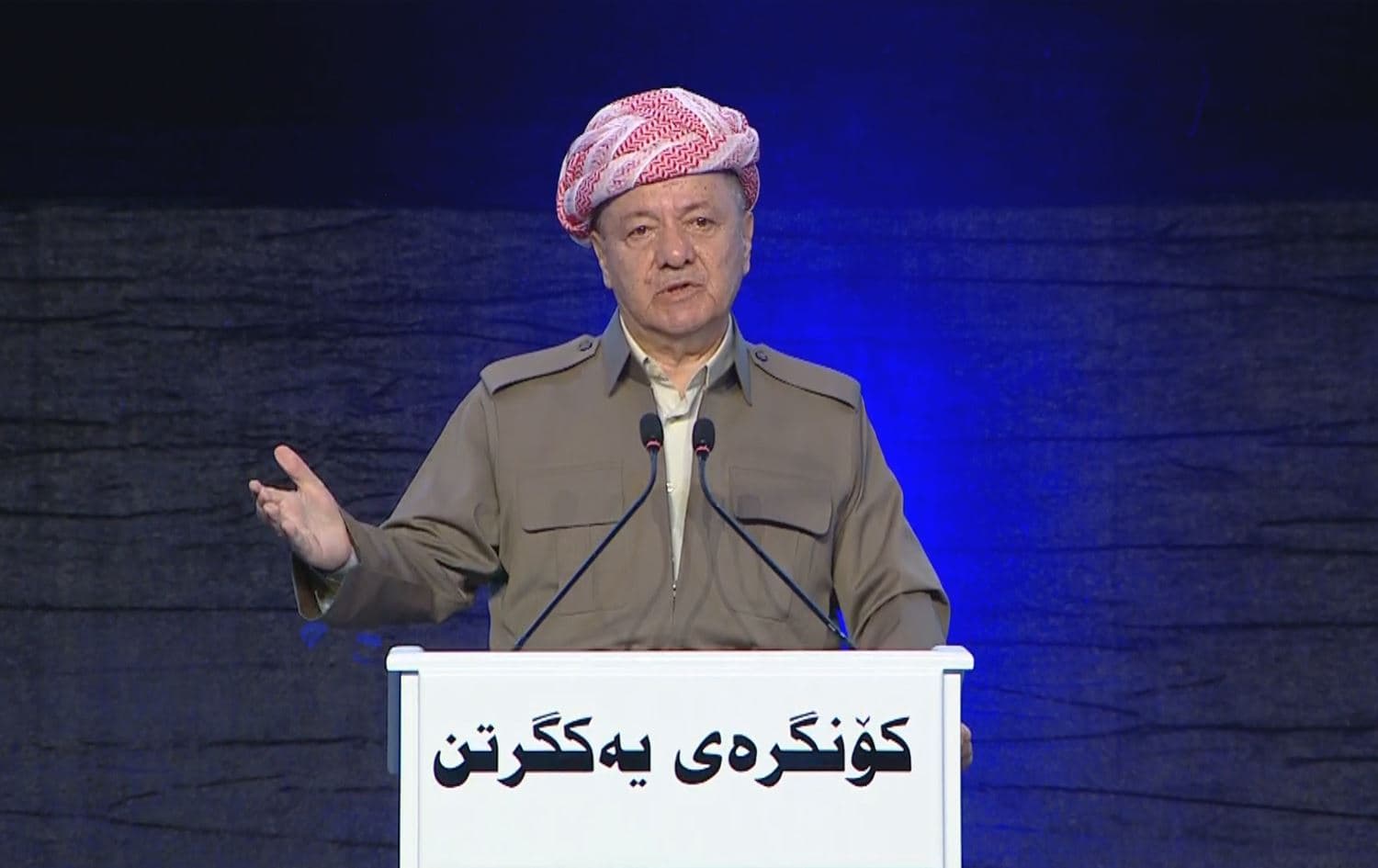

“The way that they [Baghdad] have treated civil servants in previous months is completely unacceptable,” Barzani said at a party meeting in Erbil. “I see this as an insult to the martyrs, to the struggles of the Kurdish people, and to this nation’s history.”
He criticized Baghdad for dealing with the Kurdistan Region in a centralized and non-federal manner. “If federalism no longer exists, they should tell us, because the current treatment of the Kurdistan Region is not a federal relationship.”
“It seems as if Kurds are foreigners in this country,” Barzani regretted.
The Iraqi government cut the Kurdistan Region’s share of the federal budget in 2014, after which Erbil began to export crude oil independently and relied on these funds as its primary income.
Low oil prices and the war with the Islamic State (ISIS), however, hit the government’s finances hard. Civil servants have borne the brunt of the government’s austerity measures. Their monthly salaries were frequently delayed or reduced, and are now being paid by Baghdad.
“They have made it seem as if the struggle and fight for this nation, all those years, all those heroic leaders, all those great ones, the martyrs, all those Anfal and chemical attack victims, all of it was because we were demanding salaries,” Barzani lamented. “If the goal was salaries, the previous regimes would have kissed Kurdish hands and been grateful.”
“After 2003, we went to Baghdad with pure intentions and complete sincerity, and we still have those intentions if Baghdad shares them,” Barzani continued, adding that he expected the ruling Iraqi officials to defend the Kurdistan Region’s rights even in the absence of the Kurds.
The unpaid salaries crisis in the Kurdistan Region has been aggravated over the past two years following the suspension of Kurdish oil exports in March 2023 as a result of a court ruling in favor of Baghdad that Ankara violated a 1973 pipeline agreement by allowing Erbil to export oil independently.
Negotiations between Iraqi and Kurdish officials, along with international oil companies operating in the Kurdistan Region, have yet to reach a conclusion. The oil companies demand payment guarantees and contractual security, Baghdad insists on federal oversight, and Erbil seeks a resolution that safeguards its economic interests.
.png&w=3840&q=75)