
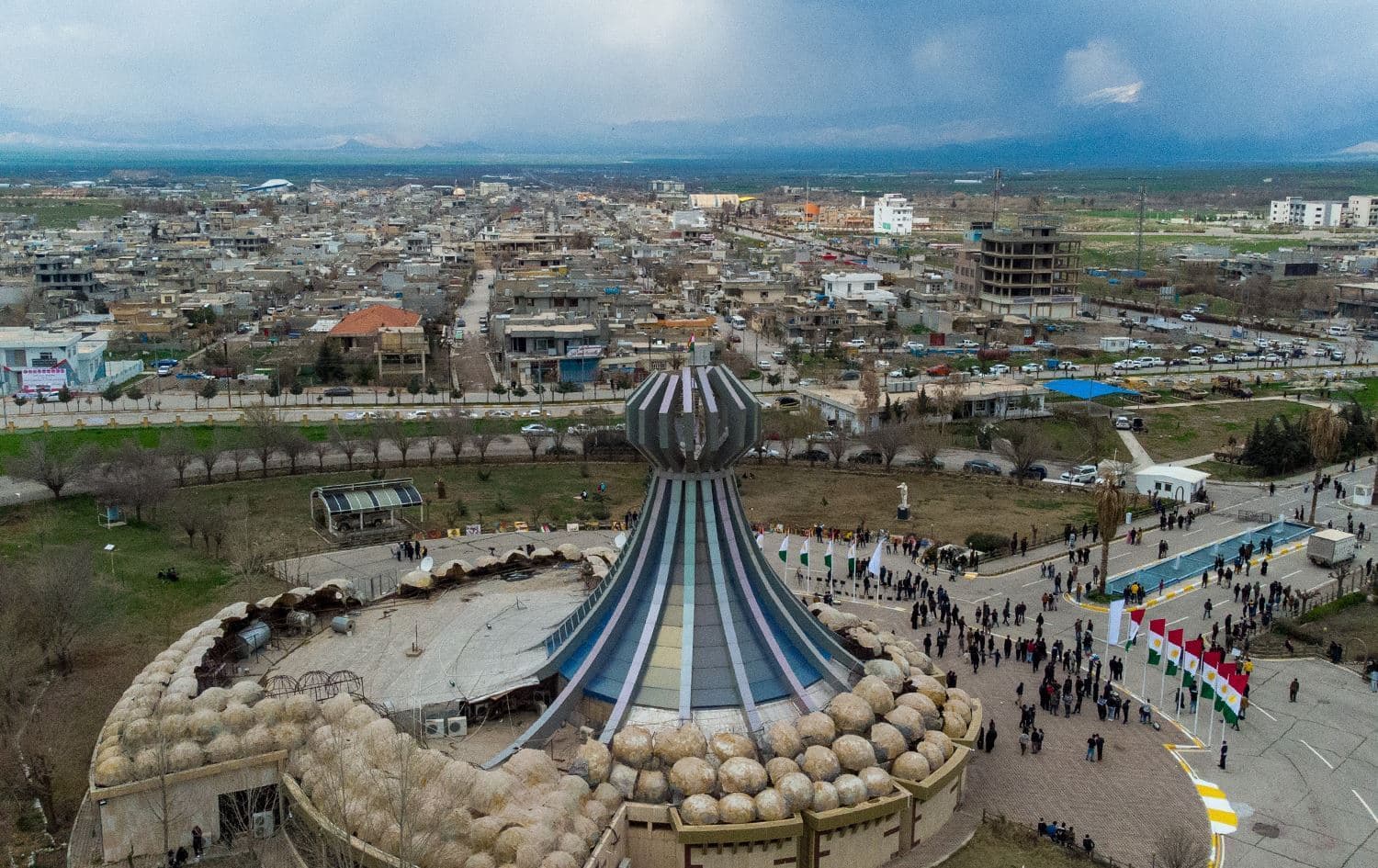
ERBIL, Kurdistan Region - The Kurdistan Region’s leaders on Monday honored the victims of the 1988 Halabja chemical attack and called for the compensation of victims on its 38th anniversary, saying the attack was part of a broader campaign to erase Kurdish identity.
On March 16, 1988, towards the end of the eight-year war between Iran and Iraq, the city of Halabja was targeted with chemical weapons by the regime of former dictator Saddam Hussein. The attack resulted in the deaths of at least 5,000 people, primarily women and children, and injured thousands more. The massacre was part of the former Iraqi Baathist regime’s Anfal campaign against the Kurds that killed over 182,000 people.
"The events in Halabja represented not merely an effort to physically eradicate the Kurdish people, but also constituted a crime against humanity and a savage assault on the aspirations of a people who sought only life and liberty," Kurdistan Region President Nechirvan Barzani said, according to a statement from the presidency.
President Nechirvan Barzani reiterated his call on the Iraqi government to compensate the genocide survivors and their families.
"On this occasion, we emphasize the responsibilities of the Iraqi Federal Government regarding Halabja and its victims. In line with the decisions of the Iraqi High Tribunal, which designated the chemical attack on Halabja as genocide, it is imperative to provide compensation to the victims to guarantee that justice is achieved," President Barzani said. "The victims of this tragedy must be afforded the highest standard of services and care within the Kurdistan Region."
President Barzani stressed that the genocide was part of a broader goal to “eliminate the people of Kurdistan.”
“On this occasion, we emphasize once again that the people of Halabja and all the victims of genocide and Anfal must be compensated and provided with the best services in all areas,” he reiterated. “If there was true justice, this tragedy alone would be enough to recognize all the legitimate rights of the Kurdish people.”
Kurdistan Region Prime Minister Masrour Barzani remembered the chemical attack on Halabja as a "deep wound" in the history of Kurds, while urging Baghdad to assume its legal responsibilities by compensating the victims' families.
"This brutal crime must never fade from the memory and conscience of the people of Kurdistan and of all of humanity," Prime Minister Barzani said.
The Kurdish premier detailed: "On this solemn occasion, we once again remind the federal government that it must uphold its legal and constitutional responsibility and, in a proper manner, provide reparations for the families of the martyrs of Halabja, the casualties of the Anfal genocide operation, and all the other victims of the former Iraqi regime."
In April 2025, Iraq’s parliament officially recognized Halabja as the country’s 19th province and the Kurdistan Region’s 4th, passing a long-awaited bill.
President Masoud Barzani, leader of the Kurdistan Democratic Party (KDP), for his part, labeled Baghdad as responsible for compensating the victims.
"Despite committing this barbaric atrocity, there are still chauvinistic voices in Baghdad who continue to deny the rights of the Kurdish nation, as well as the crime of Halabja and the long history of oppression against the Kurdish people."
President Barzani added that "there is a legal, and historical responsibility on the shoulders of Iraq that it must compensate the Kurdsitan nation."
Halabja has a population of about 120,000 and consists of four subdistricts: Khurmal, Biyara, Bamo, and Sirwan. It is also a tourist destination.
.png&w=3840&q=75)