


Kurdistan

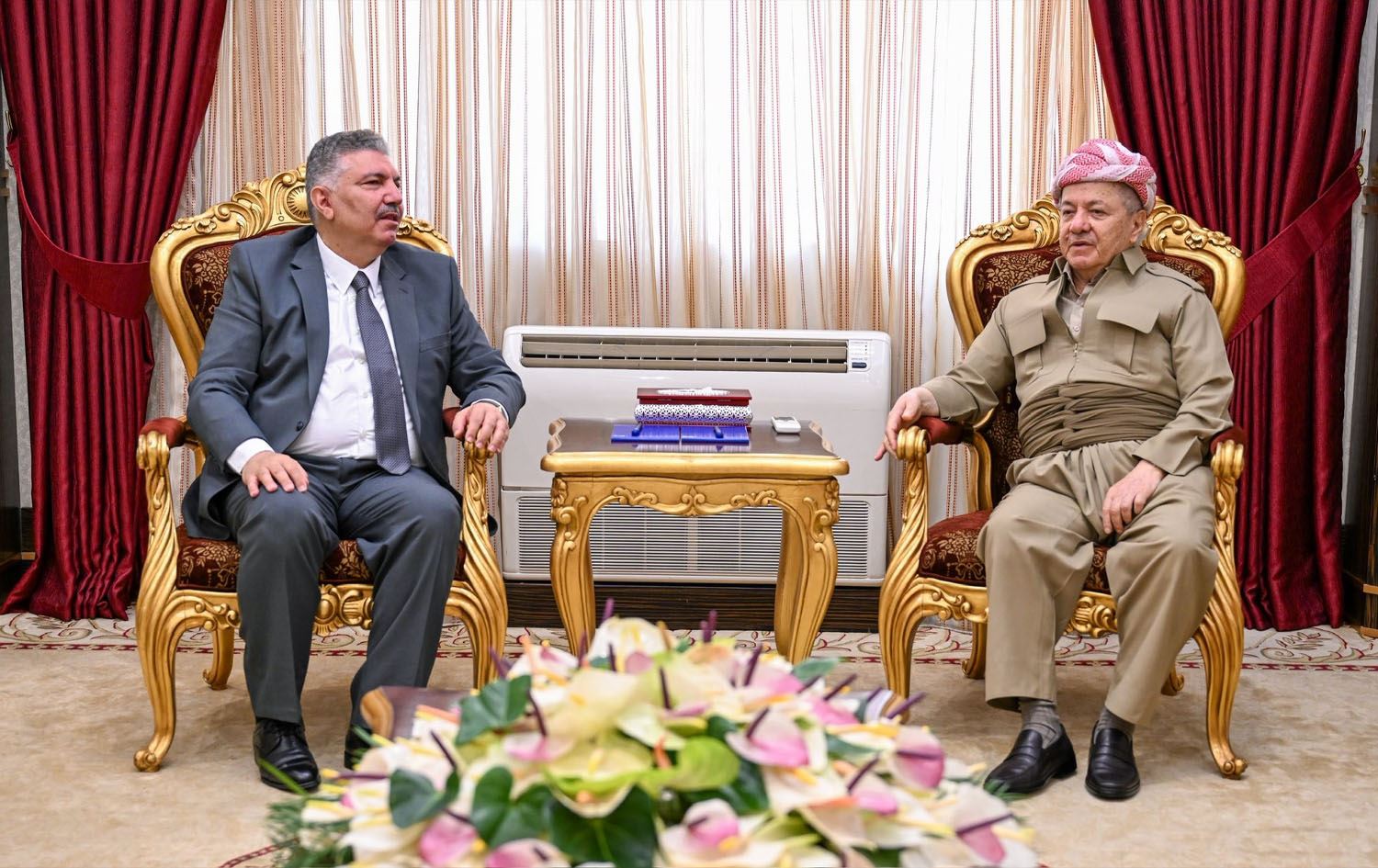
Kurdistan Democratic Party (KDP) leader Masoud Barzani (right) in a meeting with Mahmoud Meslat, co-chair of the Syrian Democratic Council (SDC) (right), in Erbil, August 16, 2025. Photo: Barzani Headquarters/Facebook
ERBIL, Kurdistan Region - Kurdistan Democratic Party (KDP) leader Masoud Barzani on Saturday met with Mahmoud Meslat, co-chair of the Syrian Democratic Council (SDC), in Erbil to discuss recent developments in Syria where Kurds are under pressure to make a deal with the new government in Damascus.
According to a statement from Barzani’s office, he and Meslat discussed “the need to encourage Syrian political parties and the Syrian government to rely on dialogue and mutual acceptance to resolve problems and overcome difficulties and obstacles.”
The SDC is the political wing of the Kurdish-led Syrian Democratic Forces (SDF) which serves as the de facto army in northeast Syria (Rojava).
Rojava’s political landscape shifted significantly after dictator Bashar al-Assad was ousted in December. Rival Kurdish coalitions accelerated unity talks in order to strengthen their hand in negotiations with the interim government in Damascus. In January, Barzani hosted a landmark meeting in Erbil with SDF commander Mazloum Abdi to advance that dialogue.
In March, Abdi and Syria’s interim president Ahmed al-Sharaa reached an agreement outlining the integration of Rojava’s civil and military institutions into the Syrian state. While some steps were taken toward implementing the deal, last week Damascus canceled planned talks with the SDF in Paris, accusing Rojava of breaching their agreement when it hosted representatives of the country's minority groups for a unity conference in Hasaka.
This past week, the two sides have each accused the other of carrying out attacks on their forces in Aleppo province, in violation of a ceasefire agreement.
Barzani’s office said he and Meslat “reaffirmed that disagreements between the parties should not become a cause for fighting between Kurds and Arabs.”
According to a statement from the SDC on X, they “emphasized the importance of dialogue and resolving disputes away from conflicts, while stressing #Syrian_unity and ensuring the rights of all its components.”
“We are in agreement with the leadership of the [Kurdistan] Region that Syria must head towards dialogue. There is no other option. We do not want to slip into civil war. A civil war, God forbid, leads us towards separation and many problems,” Meslat told Rudaw’s Nalin Hassan.
He added that during the meeting, KDP leader Barzani said the Kurdistan Region extends its support for Syria and Rojava “with all available means.”
Following Barzani’s meeting with Abdi, Rojava’s ruling Democratic Union Party (PYD) entered into negotiations with the opposition Kurdish National Council (ENKS/KNC), which is close to the KDP. A national conference to bolster Kurdish unity in Syria was held in April and included representatives from the Kurdistan Region, including Hamid Darbandi, who represented Barzani. Damascus condemned the event, calling it a separatist initiative.
Last week, Rojava held another conference in Hasaka attended by over 400 minority representatives. The gathering called for amendments to the transitional constitution, which critics say grants sweeping powers to interim President Sharaa while marginalizing non-majority groups.
According to a statement from Barzani’s office, he and Meslat discussed “the need to encourage Syrian political parties and the Syrian government to rely on dialogue and mutual acceptance to resolve problems and overcome difficulties and obstacles.”
The SDC is the political wing of the Kurdish-led Syrian Democratic Forces (SDF) which serves as the de facto army in northeast Syria (Rojava).
Rojava’s political landscape shifted significantly after dictator Bashar al-Assad was ousted in December. Rival Kurdish coalitions accelerated unity talks in order to strengthen their hand in negotiations with the interim government in Damascus. In January, Barzani hosted a landmark meeting in Erbil with SDF commander Mazloum Abdi to advance that dialogue.
In March, Abdi and Syria’s interim president Ahmed al-Sharaa reached an agreement outlining the integration of Rojava’s civil and military institutions into the Syrian state. While some steps were taken toward implementing the deal, last week Damascus canceled planned talks with the SDF in Paris, accusing Rojava of breaching their agreement when it hosted representatives of the country's minority groups for a unity conference in Hasaka.
This past week, the two sides have each accused the other of carrying out attacks on their forces in Aleppo province, in violation of a ceasefire agreement.
Barzani’s office said he and Meslat “reaffirmed that disagreements between the parties should not become a cause for fighting between Kurds and Arabs.”
According to a statement from the SDC on X, they “emphasized the importance of dialogue and resolving disputes away from conflicts, while stressing #Syrian_unity and ensuring the rights of all its components.”
“We are in agreement with the leadership of the [Kurdistan] Region that Syria must head towards dialogue. There is no other option. We do not want to slip into civil war. A civil war, God forbid, leads us towards separation and many problems,” Meslat told Rudaw’s Nalin Hassan.
He added that during the meeting, KDP leader Barzani said the Kurdistan Region extends its support for Syria and Rojava “with all available means.”
Following Barzani’s meeting with Abdi, Rojava’s ruling Democratic Union Party (PYD) entered into negotiations with the opposition Kurdish National Council (ENKS/KNC), which is close to the KDP. A national conference to bolster Kurdish unity in Syria was held in April and included representatives from the Kurdistan Region, including Hamid Darbandi, who represented Barzani. Damascus condemned the event, calling it a separatist initiative.
Last week, Rojava held another conference in Hasaka attended by over 400 minority representatives. The gathering called for amendments to the transitional constitution, which critics say grants sweeping powers to interim President Sharaa while marginalizing non-majority groups.


Comments
Rudaw moderates all comments submitted on our website. We welcome comments which are relevant to the article and encourage further discussion about the issues that matter to you. We also welcome constructive criticism about Rudaw.
To be approved for publication, however, your comments must meet our community guidelines.
We will not tolerate the following: profanity, threats, personal attacks, vulgarity, abuse (such as sexism, racism, homophobia or xenophobia), or commercial or personal promotion.
Comments that do not meet our guidelines will be rejected. Comments are not edited – they are either approved or rejected.
Post a comment