


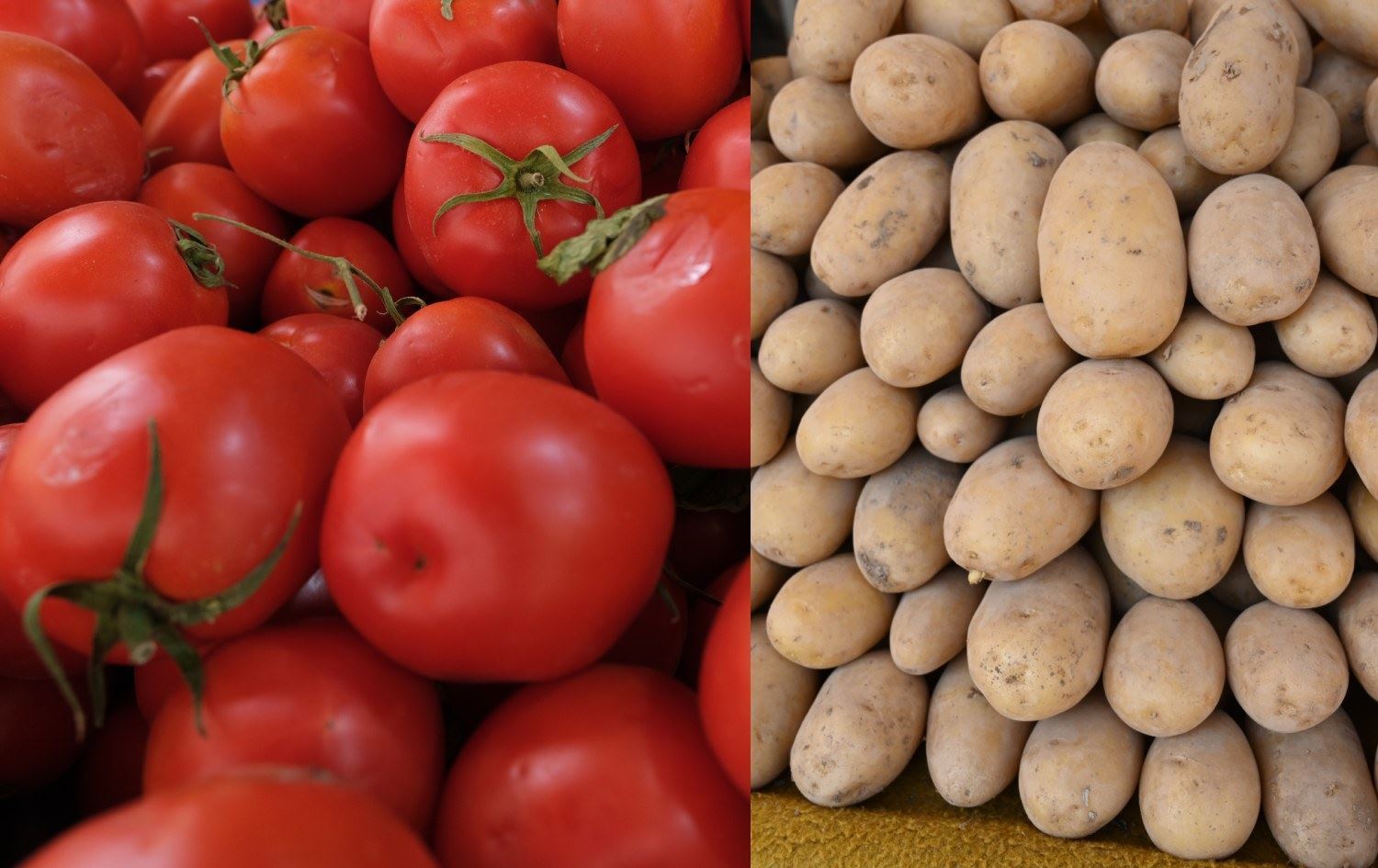
ERBIL, Kurdistan Region - Imported tomatoes, potatoes, and cucumbers have incurred significant financial damage to domestic produce in the Kurdistan Region's markets, despite a ban in place, officials warned on Sunday, urging the government to act.
"The importation of potatoes and tomatoes has begun, causing serious damage to domestic production," Rajab Haji Azeez, head of the Erbil Wholesale Market Council, told Rudaw. "Tomatoes and potatoes in a coordinated way are smuggled in through Sulaimani's [border] crossings, significantly damaging the domestic products."
A kilogram of tomatoes costs between 250 to 600 dinars wholesale, while potatoes sell for 250 dinars, Azeez said.
"If potatoes continue to be imported, the bulk of domestic potatoes from next month will not be sold," he stressed, adding that Erbil and Duhok produce 700,000 tons of potatoes annually combined.
Despite the Kurdistan Region being characterized by fertile soil, Kurdish farmers often struggle with selling their produce. Farmers are often seen trampling and dumping their products in protest over low prices in the street, protesting the presence of banned imports that pushed their fruits and vegetables out of the market.
The KRG has identified agriculture as a sector it wants to develop as part of efforts to diversify the economy away from oil.
Azees called on the Kurdistan Regional Government (KRG) to put an end to the smuggling of food items from neighboring countries and to find markets for domestic products.
"If potatoes are not smuggled in, and our domestic products are exported to Sulaimani from Erbil and Duhok, then we have largely served and supported our domestic products," he said.
In August, a kilogram of cucumbers in wholesale would sell for 1,000 dinars, but the value dropped to 750 dinars on Sunday, Sarwar Ali, head of the Sulaimani Wholesale Market Syndicate, told Rudaw, echoing Azeez’s claims.
"It is true that potatoes are smuggled in, but they mostly end up in Garmiyan markets, not the city of Sulaimani," he explained.
The KRG’s agriculture ministry has banned the import of several food items during the summer season to promote the domestic market.
"The importation of potatoes and tomatoes has begun, causing serious damage to domestic production," Rajab Haji Azeez, head of the Erbil Wholesale Market Council, told Rudaw. "Tomatoes and potatoes in a coordinated way are smuggled in through Sulaimani's [border] crossings, significantly damaging the domestic products."
A kilogram of tomatoes costs between 250 to 600 dinars wholesale, while potatoes sell for 250 dinars, Azeez said.
"If potatoes continue to be imported, the bulk of domestic potatoes from next month will not be sold," he stressed, adding that Erbil and Duhok produce 700,000 tons of potatoes annually combined.
Despite the Kurdistan Region being characterized by fertile soil, Kurdish farmers often struggle with selling their produce. Farmers are often seen trampling and dumping their products in protest over low prices in the street, protesting the presence of banned imports that pushed their fruits and vegetables out of the market.
The KRG has identified agriculture as a sector it wants to develop as part of efforts to diversify the economy away from oil.
Azees called on the Kurdistan Regional Government (KRG) to put an end to the smuggling of food items from neighboring countries and to find markets for domestic products.
"If potatoes are not smuggled in, and our domestic products are exported to Sulaimani from Erbil and Duhok, then we have largely served and supported our domestic products," he said.
In August, a kilogram of cucumbers in wholesale would sell for 1,000 dinars, but the value dropped to 750 dinars on Sunday, Sarwar Ali, head of the Sulaimani Wholesale Market Syndicate, told Rudaw, echoing Azeez’s claims.
"It is true that potatoes are smuggled in, but they mostly end up in Garmiyan markets, not the city of Sulaimani," he explained.
The KRG’s agriculture ministry has banned the import of several food items during the summer season to promote the domestic market.


Comments
Rudaw moderates all comments submitted on our website. We welcome comments which are relevant to the article and encourage further discussion about the issues that matter to you. We also welcome constructive criticism about Rudaw.
To be approved for publication, however, your comments must meet our community guidelines.
We will not tolerate the following: profanity, threats, personal attacks, vulgarity, abuse (such as sexism, racism, homophobia or xenophobia), or commercial or personal promotion.
Comments that do not meet our guidelines will be rejected. Comments are not edited – they are either approved or rejected.
Post a comment