


Error occured during this request! Please try again later.
Kurdistan

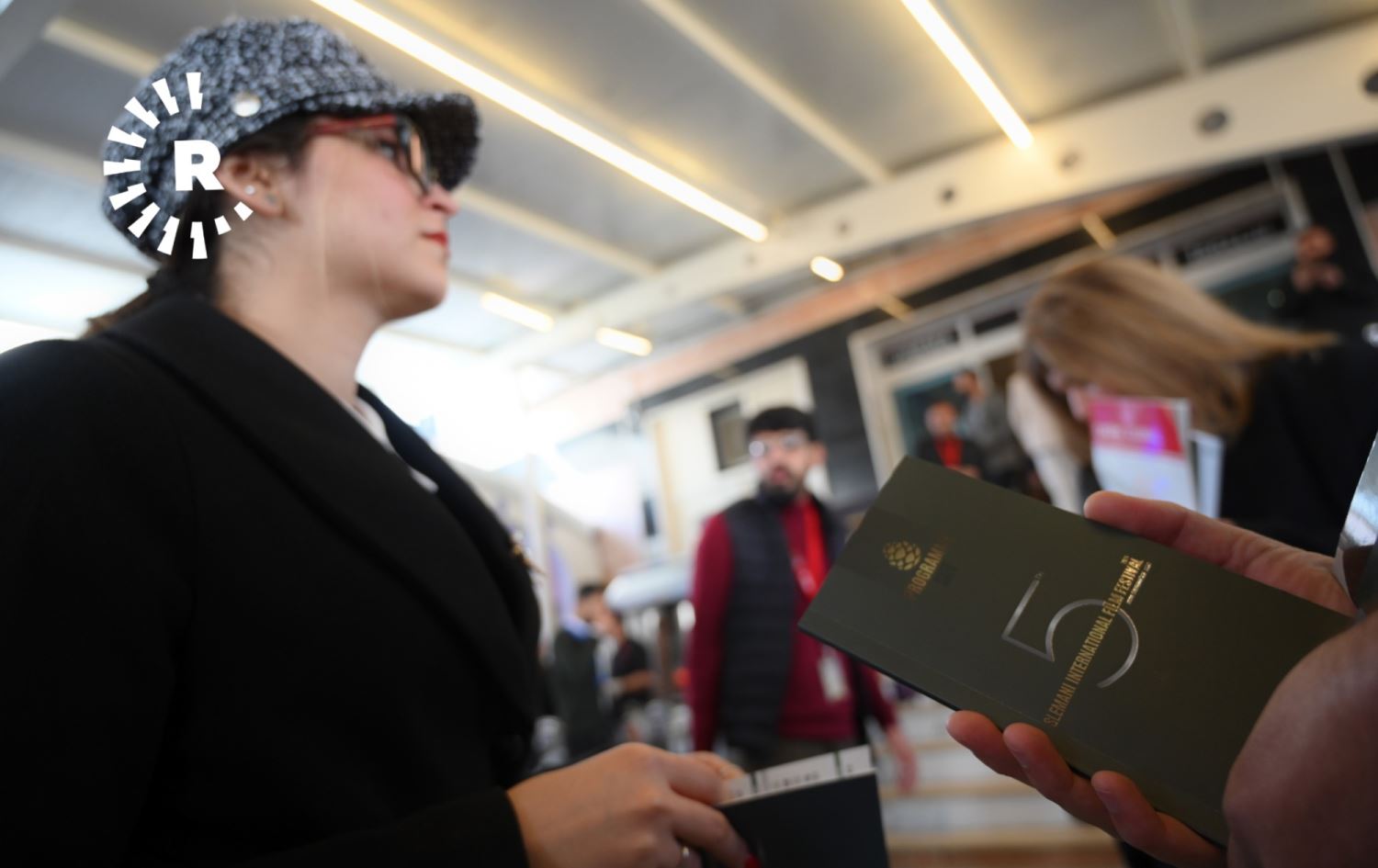
Attendees at the Sulaimani International Film Festival on December 18, 2021. Photo: Bilind T. Abdullah

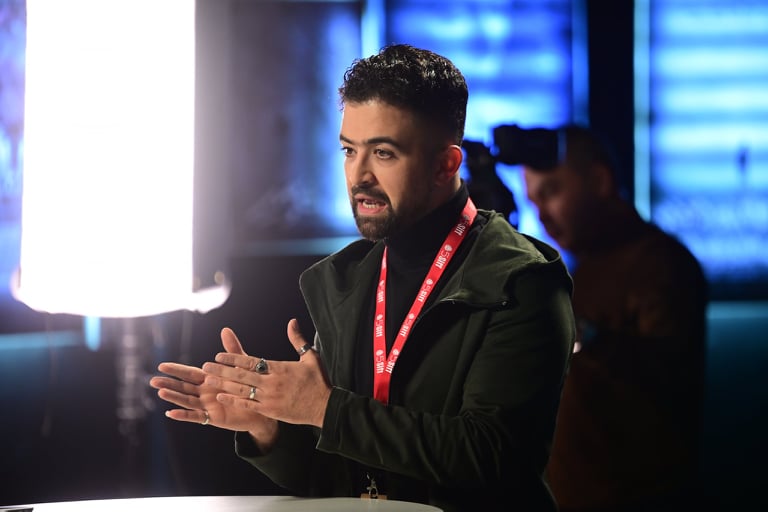
SULAIMANI, Kurdistan Region - Standing just outside Sulaimani's City Cinema hall on Saturday was the 32-year-old Harde Samir, whose first ever directing work was showcased in the fifth round of the Sulaimani International Film Festival.
Samir, originally from Kirkuk, had been displaced with his family several times during his lifetime. They eventually ended up in Sulaimani, where he grew up and pursued a career in the film industry.
His first short film, which was based on a true story from the 1980s, when the Baath regime ruled Sulaimani, was showcased on the second day of the festival, leaving Samir with a wave of profound feelings.
“I felt my hands go cold,” Samir told Rudaw English on Saturday. “I am expecting criticism and I know the mistakes I have made, but I have also told everyone that I was only able to bring 30 to 35 percent of my imagination to life.”
The 5th Sulaimani International Film Festival began on Friday, bringing together local and international actors and directors.
Samir’s film, which is among 57 Kurdish movies screened at the festival, narrated the story of a mother and her two sons who were arrested for being involved with the Kurdish resistance at the time. She is given a heart-wrenching choice that could hunt her for the rest of eternity: to free one of the boys and execute the other.
Samir believed that the film making industry was a very challenging one in the Kurdistan Region.
“Art is not supported in this country. I have films that I have had the scenario prepared for three years and I am waiting for proper funding,” Samir said, adding that the film “could have been done better with better support.”
Lack of funding
To Samir and many other young directors in the industry, fund investments remain the strongest challenge they are facing.
“This was very hard for me. People still do not get the concept of movie making and the importance of it,” Samir said. “I would go to people and give them my budget proposal and they would say it is a lot, do not do the film.”
According to Samir, whose nine minute film’s budget was $6,500, he managed to get his funding through personal networks he had established over the years of being in the field.
For the 20 year old Lazio Zana, a young director inspired by the movies of the British-American director Christopher Nolan, the main problem he has faced is a lack of support as well.
“I believe that the heart of Kurdish cinema which is yet to be built is the youth, however youth are not supported here,” Zana told Rudaw English.
Zana’s short film is of the action and mystery genres and his budget was $900, which has become a matter of concern to him as he claims he is competing with films who had better funds.
This grievance has led many other young directors to put their projects on hold, despite knowing the importance of youth involvement in the film industry.
“The main obstacle is fund. If our politicians and investors understand the importance of cinema, they would invest in that rather than investing in other stuff,” Srwsht Abarash, another director in his late twenties, told Rudaw English. “I personally have a feature film on hold because of a lack of funding.”
Youth, builders of film industry
The fifth round of the Sulaimani International Film Festival in its one week span will screen over 140 films of different categories from over 30 countries, and according to the festival organizers, the fifth round has the highest number of youth involvement which is considered as key by the juries.
“Cinema starts from the youth in schools and in universities. Short films are made to create experience and they are made for the youth. After that, they gain experience to make longer movies,” Akbar Shahbazi, jury of the animation films at the festival told Rudaw English.
The filmmaker who has over 20 years of experience in Iranian film industry believed that the Kurdistan Region needs to learn more in the field of filmmaking which is done through educating the youth.
.jpg "Youth dominated audience at the Sulaimani International Film Festival on December 18, 2021. Photo: Bilind T. Abdullah/Rudaw")
To the organizers, the fifth round of the festival was an educational academy to the youth as it was deeply oriented around the young generation.
“One of the main duties of the festival is to educate the youth, and we have tried to make the festival an academy that educates them,” Lina Raza, program manager of the festival told Rudaw English.
The Sulaimani International Film Festival has aimed to support youth since its first round, and this year it took a different step to encourage the young people.
“This year, we have created Kurdish View section for the young filmmakers whose movies have not entered the competition. In this section, the audience will vote for the best youth-made short film,” Raza said.
The Kurdish View section includes 24 films, all of which were made by young directors on a low budget.
Sulaimani University creating filmmakers
Many of the young directors participating in the fifth round of the festival shared a common educational background, which is the University of Sulaimani’s filmmaking department.
“The University of Sulaimani’s filmmaking department has played a great role in bringing up young filmmakers,” the Kurdish director Samir said, adding that opening up more colleges and theaters are a crucial part of developing the industry in the Kurdistan Region.
The festival organizers said that they shared a strong relationship with the university as well.
“If a young person wants to enter the filmmaking industry, it is a big challenge, but your passion is very important,” Raza said. “We have a really good relationship with the university of Sulaimani’s filmmaking department, to a point that every year when the festival is held, they cancel classes and come to the festival.”
To many people like Samir, whose short film in the festival was his graduation project, their goals remain big, yet their funding is low.
“There are stories that I have experienced or heard of and I want to put it into picture, youth now have many goals in film making,” Samir said. “However people often tell us well done that you make films without any support, we do not need them to tell us we did a good job, we want support to make better films.”


Comments
Rudaw moderates all comments submitted on our website. We welcome comments which are relevant to the article and encourage further discussion about the issues that matter to you. We also welcome constructive criticism about Rudaw.
To be approved for publication, however, your comments must meet our community guidelines.
We will not tolerate the following: profanity, threats, personal attacks, vulgarity, abuse (such as sexism, racism, homophobia or xenophobia), or commercial or personal promotion.
Comments that do not meet our guidelines will be rejected. Comments are not edited – they are either approved or rejected.
Post a comment