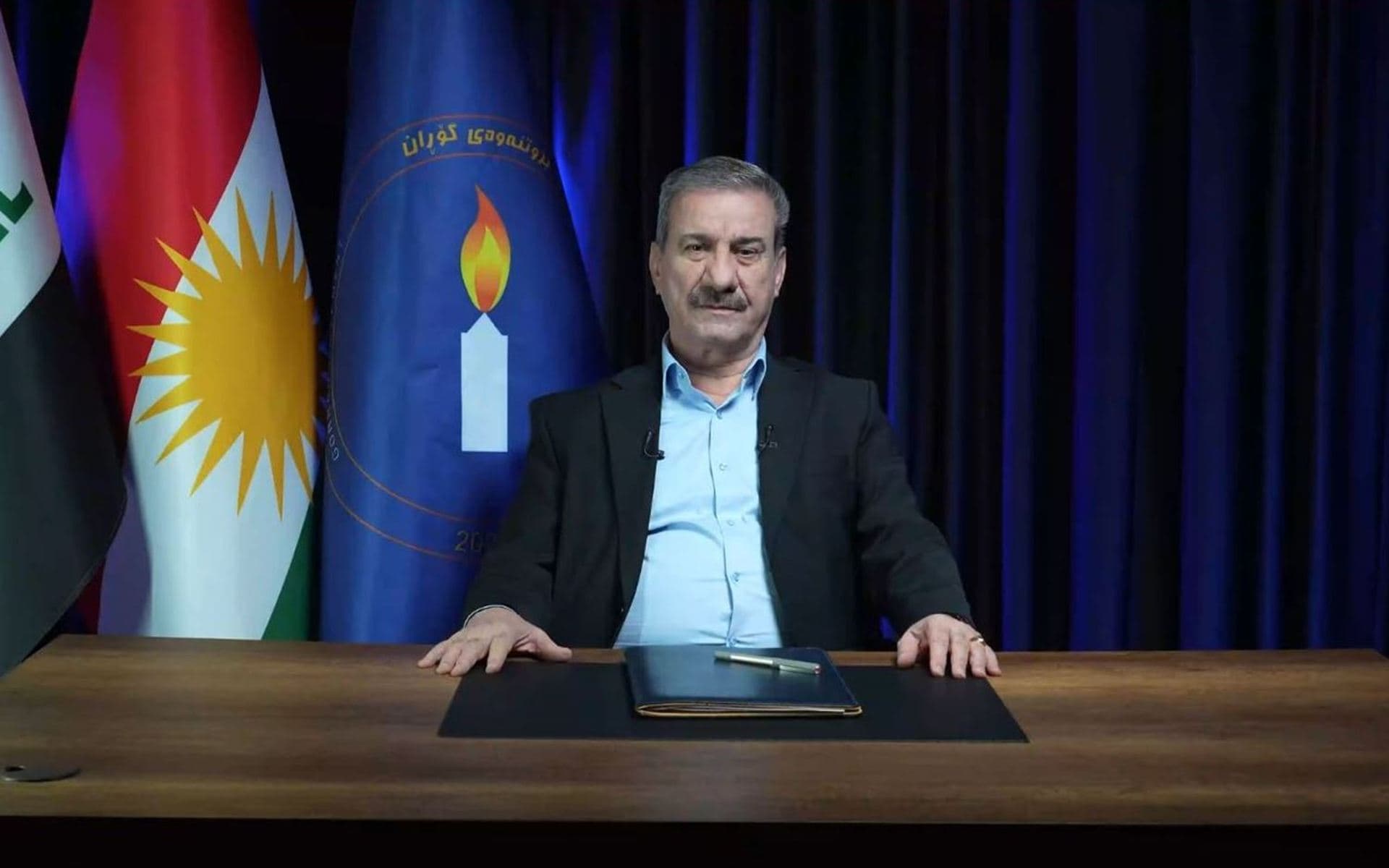
ERBIL, Kurdistan Region - An Iraqi judicial authority responsible for reviewing appeals against decisions made by the country’s election commission has overturned a ruling that approved Dana Ahmed Majid’s membership and subsequent leadership in the Change Movement (Gorran), once the second-largest political force in the Kurdistan Region and its main opposition party.
The Electoral Judicial Panel on Thursday overturned the decision by the Independent High Electoral Commission (IHEC), revoking Majid’s membership and his appointment as Gorran’s General Coordinator.
Majid’s membership was based on a power of attorney granted by the late Gorran leader Nawshirwan Mustafa (1944 - 2017). He was later elected as the movement’s leader at a mid-February conference in Kirkuk.
However, the Electoral Judicial Panel ruled that the authorization became null and void following Mustafa’s death.
Notably, the Panel’s decision came in response to a late March complaint filed by the Zargata Hill faction, led by Chia and Nma Nawshirwan Mustafa, the sons of the party’s late founder.
Named after Zargata Hill in the Kurdistan Region’s eastern Sulaimani province, where the party’s headquarters and assets are located, the faction is engaged in a power struggle over control of the movement’s legal and physical infrastructure.
The Zargata Hill faction had rejected the outcome of the mid-February conference in Kirkuk, which elected Majid to Gorran’s leadership.
In response, Gorran said the conference had followed proper procedures, adding that “any step or decision taken based on the contents of the Electoral Panel’s letter lacks legal foundation and will be overturned through due legal and procedural measures.”
The Electoral Judicial Panel’s ruling marks a significant development within the Change Movement (Gorran) that could reshape its internal leadership structure.
Gorran, a pro-reform party, shook the Kurdistan Region’s political landscape in 2009, winning 25 seats in the then 111-seat regional parliament. In that election, the Patriotic Union of Kurdistan (PUK) and the Kurdistan Democratic Party (KDP) together secured 59 seats. Gorran subsequently emerged as the first major opposition force in the parliament’s history.
However, Gorran later made several controversial decisions that are widely seen as contributing to a decline in its popular support, including the transfer of leadership to the sons of the late founder, as well as entering into agreements with the Kurdistan Democratic Party (KDP) and the Patriotic Union of Kurdistan (PUK). Critics viewed these moves as a departure from Gorran’s reformist and opposition roots.
.webp&w=3840&q=75)