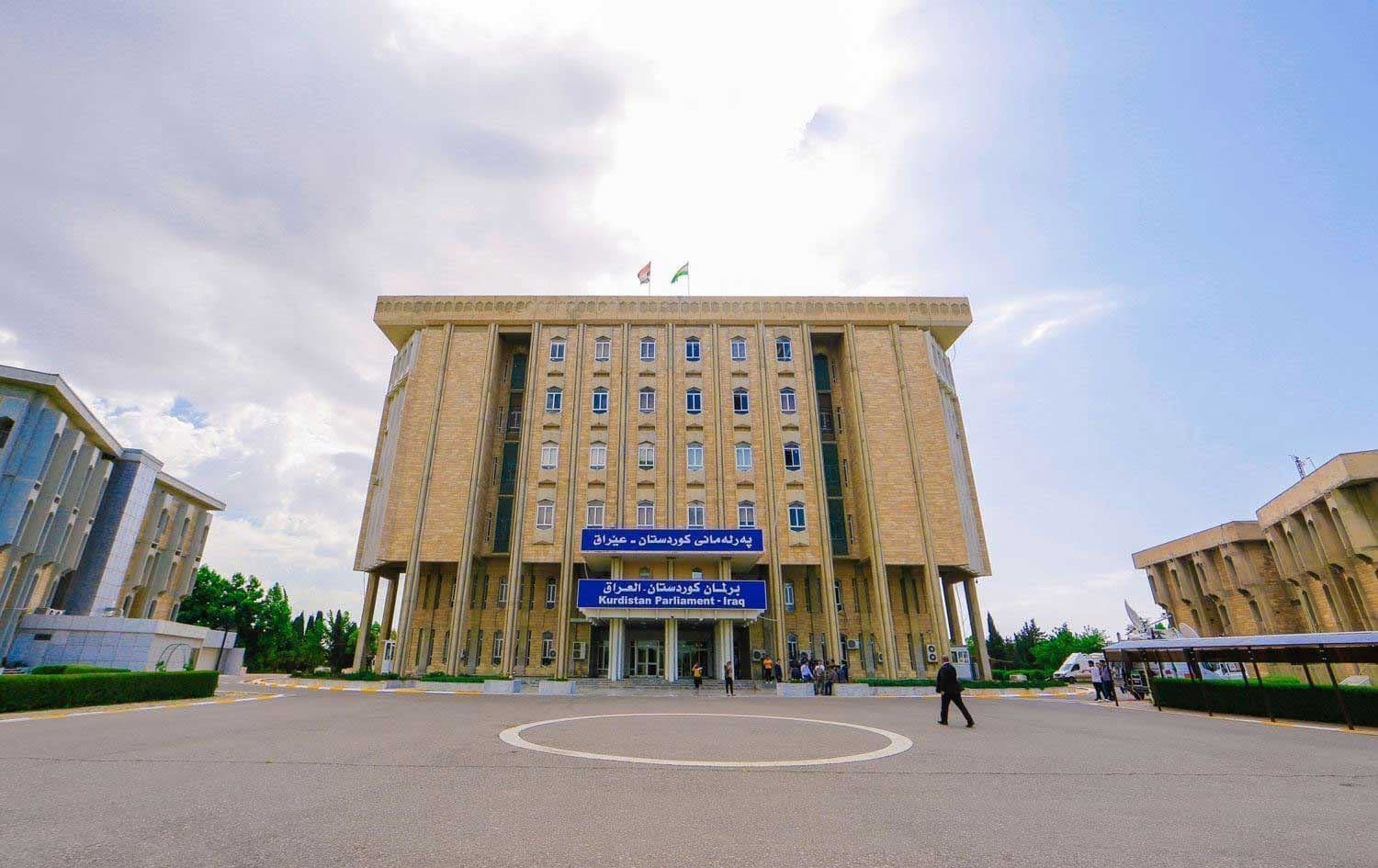
ERBIL, Kurdistan Region - Senior Kurdish party officials issue contrasting messages as stalled talks among ruling parties continue to block the formation of the next Kurdistan Regional Government (KRG), prompting warnings that new alliances may form amid growing concern that the deadlock is weakening the Kurdish position in Baghdad.
Senior Kurdistan Democratic Party (KDP) member Aras Hasso Mirkhan said on Sunday that his party can form the next cabinet without the Patriotic Union of Kurdistan (PUK) if necessary, though he insisted the KDP believes the PUK will eventually rejoin the process.
“We haven't said we will form the government, but we can do that without the PUK and with other parties. If the PUK doesn't come forward, we will form the government, but we believe the PUK will come forward,” he said.
Mirkhan also argued that the PUK’s long-standing demand for the interior ministry “was before the [federal] elections,” adding that the KDP has already held talks with other parties willing to move forward.
His comments come amid intensified negotiations in Baghdad, where Iraq’s major blocs are moving ahead to shape the next federal government while internal Kurdish divisions remain unresolved.
Kurds divided as Baghdad blocs consolidate
On Sunday, leaders of Iraq’s Sunni Arab political blocs announced the creation of a “National Political Council” to unify their positions during federal government negotiations.
A week earlier, the Shiite Coordination Framework declared it had formed parliament’s largest bloc - a critical step toward nominating the next prime minister.
Former federal lawmaker Karwan Yarwais from the PUK on Tuesday warned that while other blocs are unifying, Kurdish parties remain divided.
“Unfortunately, the Coordination Framework was able to bring together all the Shiite forces with deep disagreements. Sunnis also created a political and national council, but the disagreements between the KDP and PUK caused Kurds to go to Baghdad divided,” he said.
He urged Kurdistan Region President Nechirvan Barzani to intervene, saying that “as president of a national body, Mr. Nechirvan should take the initiative and bring the parties - the KDP, PUK, New Generation and Islamists- together at one table.”
PUK rejects claims of withdrawal from negotiations
“We as the PUK are ready to restart talks to reach a final conclusion to form the tenth cabinet of the Kurdistan Regional Government,” Kurdistan Region Deputy Prime Minister Qubad Talabani, who is also a senior PUK official, told reporters on Sunday.
PUK leadership member Luqman Wardi reiterated this on Monday, saying they are “ready for dialogue.” He added that the Iraqi latest elections have not changed their position and demands, which he said includes “real participation in all sensitive governmental positions.”
KDP lawmaker Halgurd Sheikh Najib told Rudaw on Tuesday that negotiations were smooth until talks shifted to ministerial posts.
He said the KDP’s strategy was to first agree on “the political program and the way to manage the country,” not positions. “Initially, the PUK's demand was that they give importance to the joint political process and the issue of posts is not very important.”
He added that “there were no issues between both sides [in the discussions],” but the situation changed once power-sharing was raised. “When they came to discussing posts, this is where the problem arose, the PUK raised the ceiling of its demands.”
Najib emphasized that a political stalemate cannot continue.
“The KDP will not wait indefinitely. Our people are tired, and the KDP carries that responsibility. The country cannot be run without a government and a parliament in place,” adding that “Sunnis and Shiites are organizing themselves. Kurds must also go to Baghdad with unity, so parliament needs to be activated as soon as possible.”
Main opposition’s position uncertain
The senior KDP member, Mirkhan, also claimed Sunday that the New Generation Movement (NGM) had “expressed its readiness” to join the next KRG.
However, a New Generation official, speaking to Rudaw on the condition of anonymity, said a final decision has not been made.
“We still haven't decided, we haven't made our final decision, and the movement's president] will decide, but we will do what is in the interest of citizens,” the official told Rudaw.
The NGM, which has 15 seats in the Kurdish legislature, opposes joining cabinets without securing high-level positions. Its leader, Shaswar Abdulwahid, jailed since August, said in January that while the KDP had offered ministries and posts, they “don't trust these things,” adding that without “power, authority, sovereign positions… we won't participate in any way and will remain in opposition.”
The NGM won nine seats in Iraq’s 2021 federal elections but only three in the latest vote.
The party maintains that Abdulwahid’s imprisonment was orchestrated by ruling parties to weaken their influence.
Largest Islamic party
The Kurdistan Islamic Union (KIU) reiterated that it will not join government formation efforts. Sabah Babiri, head of the party’s election bureau, told Rudaw that while they support parliament’s return, the KIU “won't participate in forming the government.”
“The KDP and PUK should reactivate parliament together and agree so that problems don't get bigger. We would also support that step of theirs, he said.
The Kurdistan Region held its long-delayed parliamentary elections in October 2024. The KDP won 39 seats, the PUK 23 seats, and the NGM 15.
All opposition parties initially declared they would not join a coalition government.
Negotiations since then have been dominated by KDP–PUK disagreements over governance mechanisms and key posts.
Hoshyar Zebari, a senior KDP official, warned Thursday that if parties fail to form a cabinet, “certainly another election might be held.”