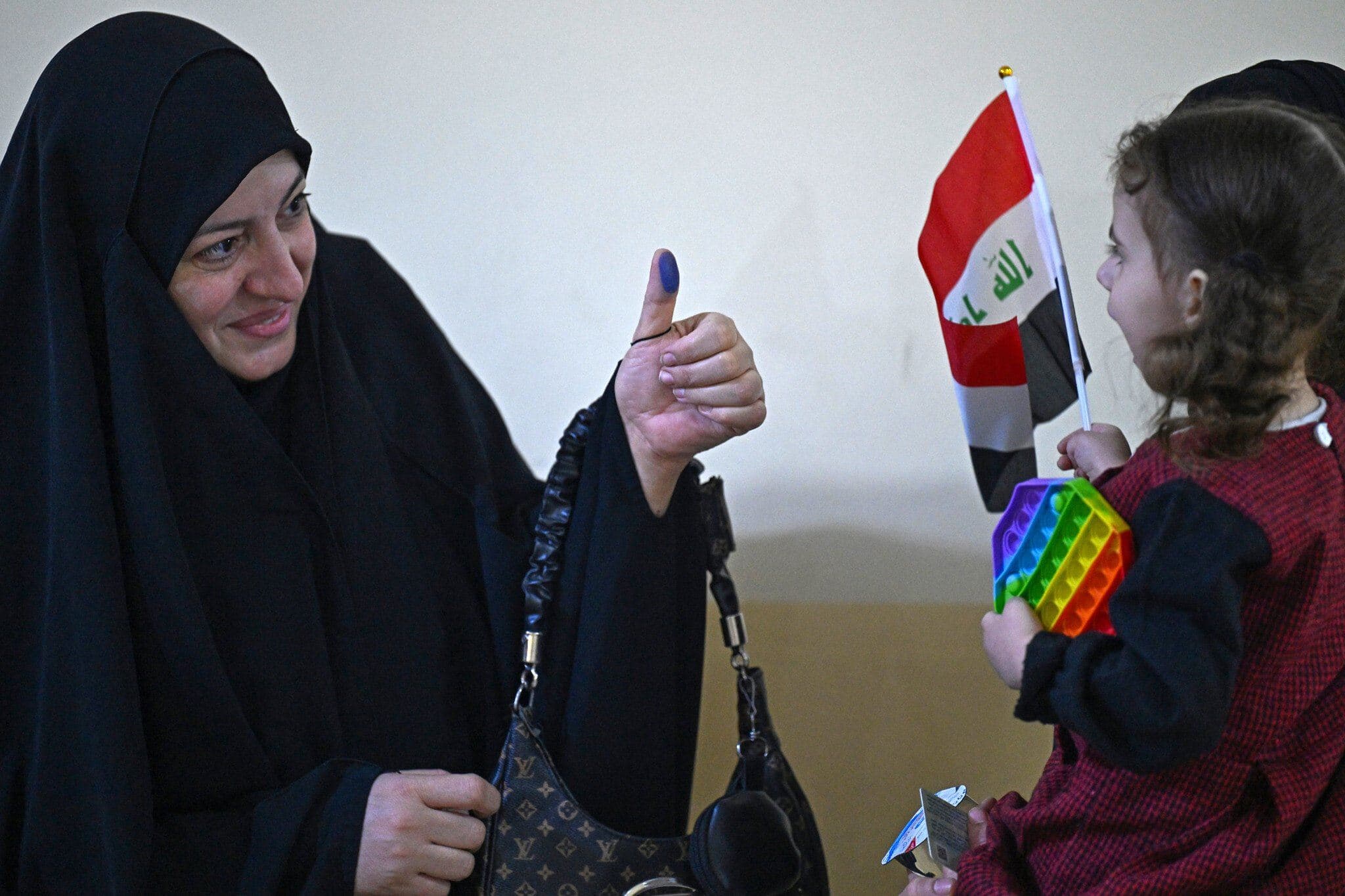
ERBIL, Kurdistan Region - Millions of Iraqis including in the Kurdistan Region took to the polls on Tuesday to elect their parliamentary representatives at a time that their country is trying to avoid being pulled into a conflict that has raged in recent years in the Middle East.
Prime Minister Mohammed Shia al-Sudani praised the Iraqi people in a statement for exercising their democratic rights and said that the successful implementation of the election across the country was a testament to the peaceful transfer of power, adding that the formatting of the government stems from the "free choices of the Iraqi people."
President Nechirvan Barzani said that this election was one of the most important elections ever held in Iraq as the country is on the right democratic path and called on people to take part in the election. "We hope that the election will be a new beginning for Iraq, an Iraq that is federal and democratic," President Barzani said after casting his vote in Erbil. "This is a new beginning in implementing the Iraqi constitution so it becomes a guarantor for the peace and security for all the Iraqi people."
Initial estimates suggested that the turnout across the country was just above 50 percent. This compared to the first parliamentary election in December 2005 when almost 80 percent of the eligible voters took to the polls shows a level of disillusionment of the electorate with the ruling elite.
Iraqis went to the poll to choose 329 members for the Council of Representatives amongst 7,743 candidates filed by around nearly 70 political parties and alliances as well as amongst several dozen independent candidates.
The official tally will be announced within 24 hours of closing the ballot. The official tally will not include those voters that decided not to register to vote. The real turnout will even be lower as out of nearly 30 million eligible Iraqi voters, only 21 million registered to vote. According to the electrical commission, the initial estimate suggested that the turnout was 53 percent. However if the total eligible voters of 30 million are taken into account the real turn out is around 37%.
Despite the optimism from the political class, the decline in voter turnout raises serious questions about the credibility of the political elite that has run the country from Baghdad since 2003 when the US-led coalition overthrew the dictatorship of Saddam Hussein, paving the way for the establishment of a parliamentary democracy. The electorate have raised questions about whether change is possible in Iraq through the ballot box.
Baghdad versus Erbil
The pressing issues concerning the electorate in the Kurdistan Region and Iraq proper could not be more different.
In the Kurdistan Region, the most pressing issue is the delay in the payment of civil servants salaries which has stalled the economy and angered the public. While the civil servants in southern Iraq have been paid their full salaries, the Kurdistan Region civil servants have only received their salaries up until August.
The delay in payment of salaries comes down to the lingering dispute between Baghdad and Erbil over several issues including oil, the budget and the internal revenue.
Despite the delay from Baghdad, the Kurdish authorities have taken important steps in providing services such as 24/7 electricity through Runaki Project and inaugurating important infrastructure projects. The ordinary citizens in southern Iraq complained about lack of electricity and other services on various Rudaw programs in the weeks leading up to the election day.
Low turnout in the disputed areas and Kirkuk
The Kurdish electorate in the disputed areas and Kirkuk appear to have shunned the election and the turnout compared to other Kurdish areas was low. Various Kurdish political figures in Kirkuk tried to rally the Kurds throughout the day to take to the polls and cast their votes.
Kirkuk and other disputed areas have been under the central government control since October 2017 when the Iraqi security forces backed by Iran seized back the areas from Kurdish Peshmerga forces following Erbil's Independence Referendum in September that year.
The political rivalry between the two ruling Kurdish parties - the Kurdistan Democratic Party (KDP) and the Patriotic Union of Kurdistan (PUK) - may have played a role in disillusioning the Kurdish voters in the disputed areas. Rudaw reporters throughout the day warned that the turnout in the predominantly Kurdish area was much lower than other areas in several towns and cities in Kirkuk, Diyala and Salahaddin provinces.
"Political money"
"Political money" was the buzzword across several cities where Rudaw's Nwenar Fatih travelled including Baghdad to speak to ordinary citizens and candidates.
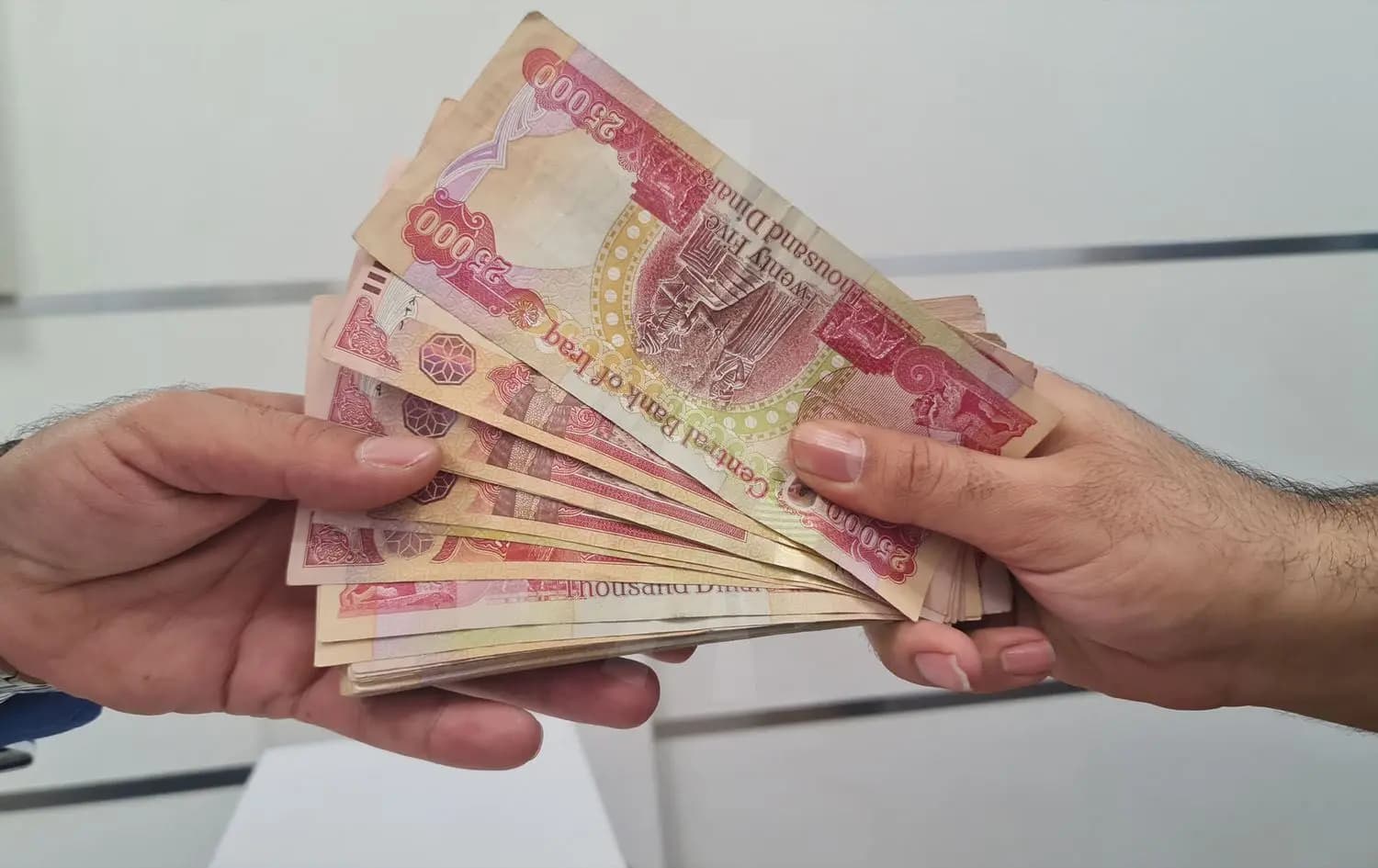
"Everyone was talking about political money, even the candidates," Fatih said, adding that a ballot was bought for somewhere between 100,000 Iraqi dinars in rural areas to 300,000 dinars in urban areas. "Even the candidates who appeared on my show stated that 'political money' was actually of paramount importance but none accepted that they were actually buying ballots and only accused their rivals of buying votes."
Tribalism was another prominent feature of the election where tribal affiliation of the candidates were highlighted to appeal to the tribesmen across the country. "This is not the election of people, this is the tribes' election," a member of the communist party in Baghdad told Rudaw. "Everyone is using their tribal affiliation."
Former Prime Minister Haider al-Abadi warned about this phenomenon in early October when he was interviewed by Rudaw.
"It has become [a process of] buying votes, using state resources in elections, and the funds being spent are enormous," Abadi said, stressing that they "did not want to be part of this type of competition," t
He went on to say that they do not "want to compete with others in seizing state resources. I am against this."
Renad Mansour of Chatham House that the election "is less a referendum on government performance than an opportunity for deeply entrenched party elites to recalibrate power among themselves."
"The seats won at the polls will serve as bargaining chips, which elites deploy alongside other levers of power – including violence and street mobilization – as parties vie for senior government positions," he says.
Regional Tension
The new government when it is formed in Baghdad following this election will have a herculean task of holding the powerful Iraqi militias affiliated with Tehran to account. The regional dynamics have changed and most of Iran's powerful proxies have been seriously crippled except for the Iraqi militia groups.
President Donald Trump who ordered the killing of Iran's powerful Islamic Revolutionary Guard Corps (IRGC) commander Qassem Soleimani and his Iraqi counter part Abu Mahdi Mohandes in January 2020, has decided to clip Iran's tentacles in Iraq and this task will fall on the new prime minister.
Iraq has been a contested space between the US and Iran since 2003 when an international coalition led by Washington toppled the regime of former dictator Saddam Hussein. Iran provided a large amount of assistance including funds and arms in the 1980s to Iraqi opposition groups including the Kurds who fought alongside the Iranian security forces during the eight year war against Iraq.
Thanks to this close alliance between Tehran and the opposition groups, the post 2003 was dominated by parties affiliated with Iran. Now Tehran which has exerted enormous influence since 2003 does not want its power to wane in the country despite the setbacks in the 12 day war with Israel in June and being under crippling sanctions from the USA and the international community.
But the US is adamant that Iran should stop interfering in the wider region and it appears that it wants to deprive Tehran of its influence in Iraq. Iraq Defense Minister Thabit Al-Abbasi said in an interview recently that the US has delivered a final warning to Iraq about the Shiite militias affiliated with Iran. The Secretary of War Pete Hegseth reportedly told his Iraqi counterpart that the US could be involved in an imminent military operation In the region and the Iraqi militias should sit out the conflict.
Washington has imposed sanctions on militia groups and individuals working with Iran as well Iraqi banks for money laundering on behalf of Tehran.
Prime Minister Sudani who has chosen his own path by having his own list in the election - Reconstruction and Development Coalition (RDC) - despite the objections of his powerful Shiite backers who brought him to power in 2022 more than a year after the fifth parliamentary election were held, believes that he could save Iraq from becoming mired in the regional conflict between Tehran and Washington. But while he is projected to be the frontrunner in the election thanks to using his executive power to provide over one million public sector employment opportunities during his term, his powerful Shiite backers from the Coordination Framework, a coalition of Shiite groups, most likely block his candidacy to the next premier.
The initial tallies suggest that PM Sudani has received a considerable share of the national vote, strengthening his hands in future negotiations over the formation of a new government. Prime Minister Sudani knows that this election will have long lasting geopolitical consequences for Iraq because of the intense pressure from Washington and Tehran.
Twenty years since the passing of the Iraqi constitution establishing a parliamentary democracy, the Iraqi people have come a long way in exercising their democratic rights but there is still a long way to go for them to bring about change through election.
For the Kurdistan Region, the Kurdish parties have all emphasised that in order to secure the rights of the Kurdish people, they need to be strong and united in Baghdad.
"Every election is important, the importance of this election and elections is that we believe there is a new beginning in Iraq and the Kurdistan Region must participate in Baghdad with its full might, because the document that the Kurdistan Region and Iraq voted for was the Iraqi constitution," President Barzani said. "Up until now this constitution has not been implemented. For sure the most important task to be done after this election, is for a serious effort for the constitution to be implemented."