


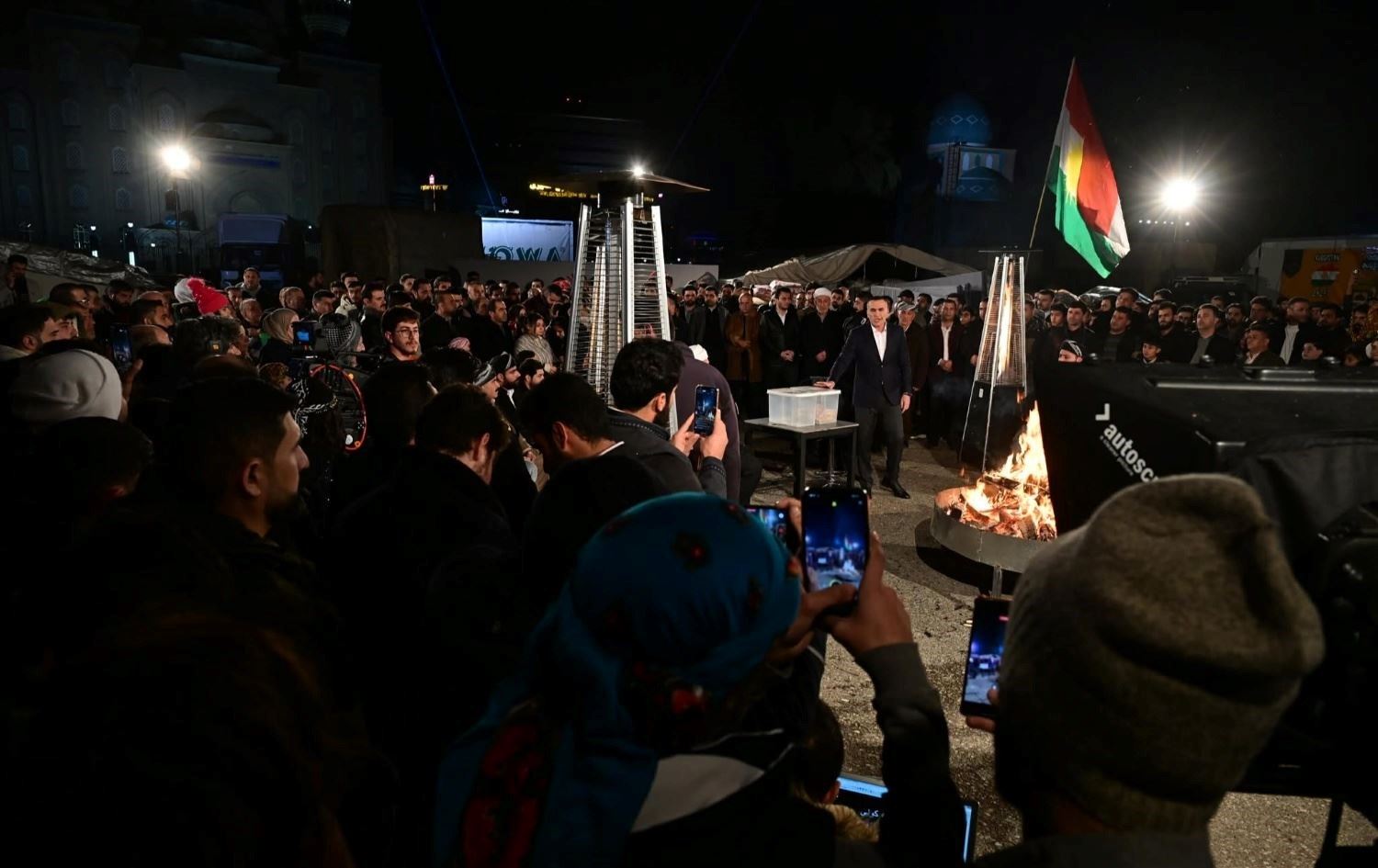
ERBIL, Kurdistan Region – Thousands of people from different parts of the Kurdistan Region queued over the past three days to support the Kurdish region of northeast Syria (Rojava), which has been under siege by Damascus for days following a military offensive.
A large amount of money and goods worth at least two billion dollars has been collected during the campaign, titled Rudaw’s Ranj Campaign for Western Kurdistan.
The third night of the campaign was held on Saturday in freezing conditions, with temperatures ranging between 2 and 3 degrees Celsius. The presenter, guests, and participants gathered around fires while taking part in the program, donating, and collecting aid for Rojava—especially for areas that currently lack heating fuel, oil, blankets, food, and other basic necessities amid the cold.
“If we ourselves do not act, no one will come to our aid. Today is the day to address the problems and heal the wounds of Western Kurdistan [Rojava]. Supporting Western Kurdistan is a religious and national duty to protect our existence,” said Abdullah Saeed Waisi, head of the Union of Religious Scholars of Kurdistan, during a program which was aired live on Rudaw TV.
Speaking about the religious significance of the aid, Waisi added: “This assistance is the greatest act of worship and devotion to God. Be assured of that.”
A blind child, nearly nine years old, also attended the campaign.
“I have brought some socks, hats, and gloves for the children of Western Kurdistan. Long live Kurdistan,” he said.
The recent attacks by the Syrian Arab Army and affiliated armed groups launched a large-scale offensive on areas previously under the control of the Kurdish-led Syrian Democratic Forces (SDF). The SDF later retreated from Arab-majority areas after Arab tribes refused to maintain their loyalty to the group.
The war left Kurdish areas under siege, with the Kurdistan Region serving as the only gateway for humanitarian aid.


Comments
Rudaw moderates all comments submitted on our website. We welcome comments which are relevant to the article and encourage further discussion about the issues that matter to you. We also welcome constructive criticism about Rudaw.
To be approved for publication, however, your comments must meet our community guidelines.
We will not tolerate the following: profanity, threats, personal attacks, vulgarity, abuse (such as sexism, racism, homophobia or xenophobia), or commercial or personal promotion.
Comments that do not meet our guidelines will be rejected. Comments are not edited – they are either approved or rejected.
Post a comment