
ERBIL, Kurdistan Region - Kurdistan Region Prime Minister Masrour Barzani announced on Wednesday that a delegation from Baghdad is expected to arrive in Erbil within the next two days to discuss the federal government's decision to freeze the Kurdistan Regional Government’s (KRG) budget. The freeze has resulted in the suspension of salaries for more than 1.2 million public sector employees in the Region.
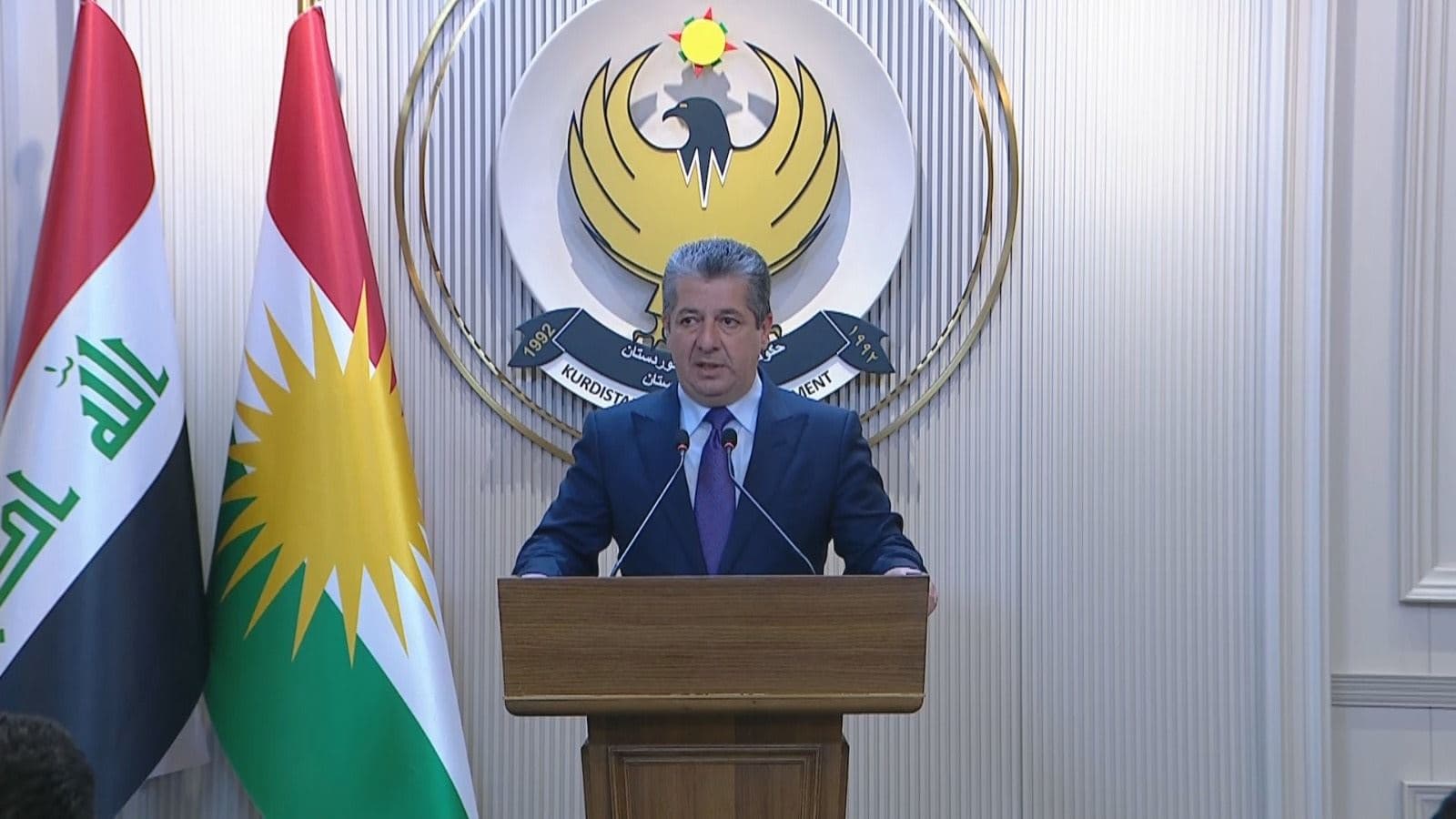
At a press conference attended by Rudaw, PM Barzani emphasized that “the salaries of Kurdistan Region employees must be kept separate from any dispute between Baghdad and Erbil.” He reiterated his criticism of the Iraqi federal finance ministry’s actions, calling the budget freeze “unconstitutional” and stating that civil servant salaries “were cut illegally.”
PM Barzani expressed gratitude to public sector workers for their “steadfastness and long patience,” and voiced optimism that a resolution is within reach.
“We hope that the salary problem will be resolved,” he said.
Tensions between Erbil and Baghdad escalated in late May when the federal finance ministry halted all budget transfers to the KRG, citing that the Region had exceeded its 12.67 percent share of the 2025 federal budget. The move drew sharp condemnation from Kurdish parties, who argue the suspension is politically motivated and unconstitutional.
Importantly, the timing of Baghdad’s decision coincided with the KRG signing two major energy agreements with US companies, worth a combined $110 billion over their lifespans. The federal government rejected the deals as illegal, claiming all energy contracts must go through Baghdad.
However, PM Barzani on Wednesday defended the deals as extensions of existing contracts and insisted they were legal. “The door of negotiations with Baghdad will always be open,” he added, but stressed, “We will not compromise on the constitutional rights of the people of Kurdistan in any way.”
He urged Baghdad to act “responsibly toward the citizens of the Kurdistan Region” and reiterated that Erbil remains committed to handing over [oil] revenues to the federal government.
The Kurdistan Region PM also criticized the ongoing stalemate over the resumption of the Kurdistan Region’s oil exports.
Exports through the Iraq-Turkey pipeline have been suspended since March 2023, following a ruling by a Paris-based arbitration court that found Turkey had violated a 1973 pipeline agreement by allowing independent exports from Erbil.
In February, the Iraqi parliament approved amendments to the federal budget law, including a $16-per-barrel fee for production and transport costs for international oil companies (IOCs) operating in the Kurdistan Region.
The amendments also require both sides to establish an international technical consultancy within 60 days to assess oil production and transportation costs. If no agreement is reached, the federal council of ministers should appoint the consultancy.
Despite repeated claims from federal officials that exports would resume “within weeks,” the process has stalled. PM Barzani lamented the continued delay, estimating that the stalemate has cost around $25 billion. He attributed the delay to IOCs “demanding guarantees for [outstanding] dues.”
On the domestic political front, the Kurdistan Region held delayed parliamentary elections in October. The Kurdistan Democratic Party (KDP) emerged as the leading party with 39 out of 100 seats, followed by the Patriotic Union of Kurdistan (PUK) with 23 seats. No single party secured a majority, necessitating the formation of a governing coalition.
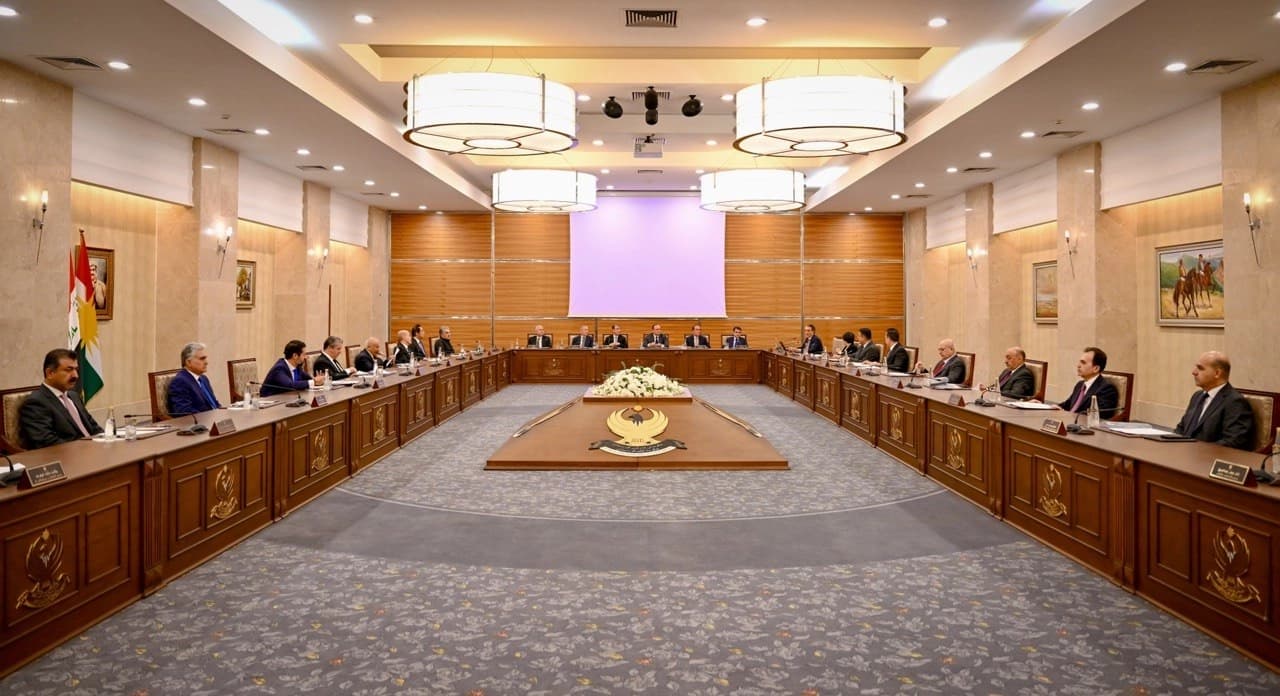
Talks between the KDP and PUK on the shape of the KRG’s tenth cabinet have been ongoing for months. According to PM Barzani the two parties have “agreed on the upcoming government’s agenda,” but have yet to reach consensus on ministerial appointments.
Turning to regional developments, PM Barzani welcomed the US-brokered ceasefire between Iran and Israel that took effect on Tuesday. “Halting the war is in the interest of the entire region,” he said, stressing that the Kurdistan Region will remain a “catalyst of peace” and will not “be used by one side to harm another.”
Tensions between Iran and Israel flared on June 13, when Israeli airstrikes inside Iran killed senior military and nuclear officials. Iran retaliated with missile and drone attacks targeting Israel. The conflict escalated further when the US struck Iranian nuclear sites - Fordow, Isfahan, and Natanz - on Sunday. In response, Tehran launched a ballistic missile attack at the US’s largest military installation in the Middle East – the al-Udeid Air Base in Qatar.
While the ceasefire has brought a temporary halt to hostilities, violations by both sides were recorded. Moreover, unresolved issues between the two countries - particularly around Iran’s nuclear program - have cast doubt on whether the truce will hold.