


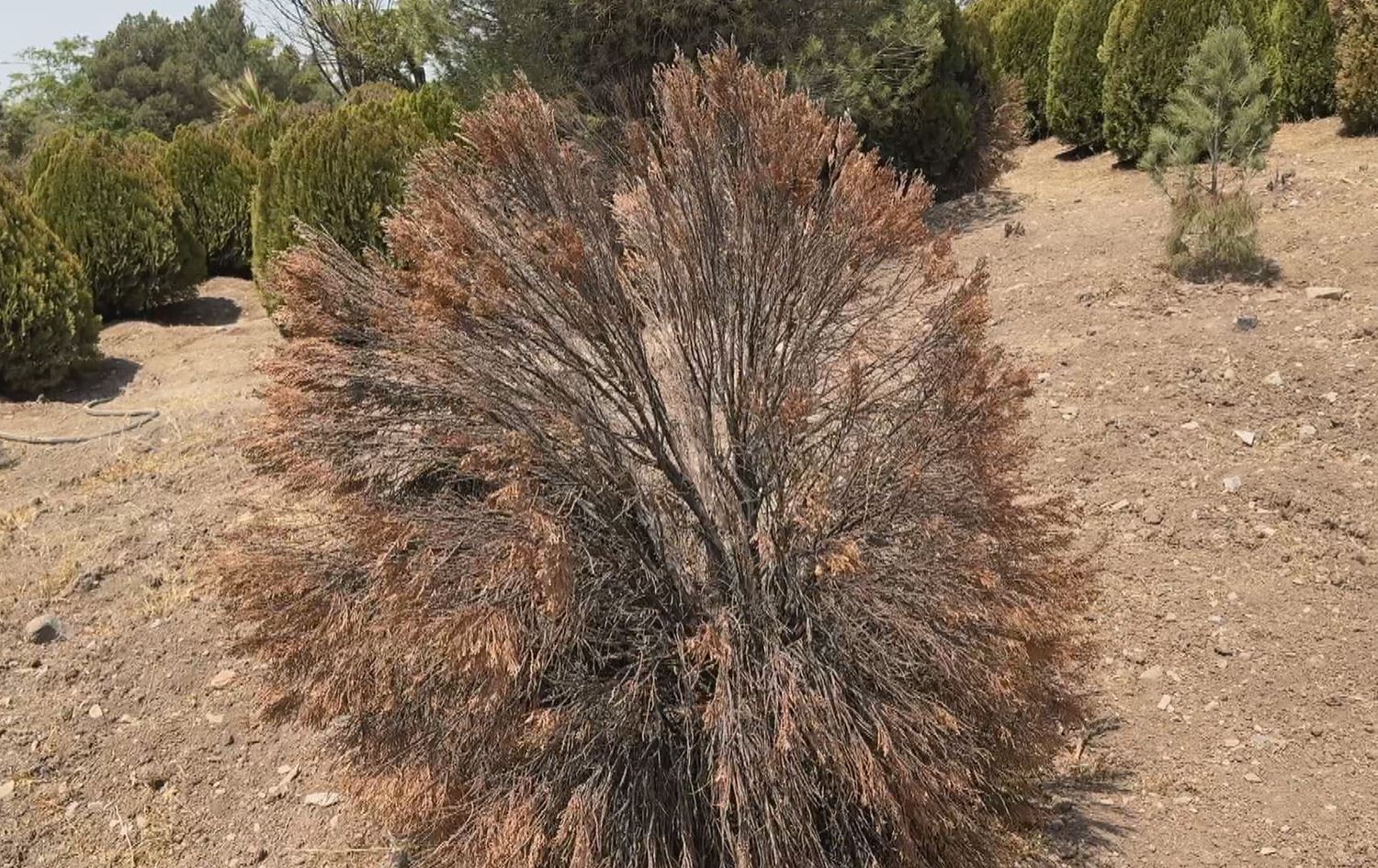
ERBIL, Kurdistan Region - Parks and green spaces in Sulaimani province are drying up amid a severe water shortage and high temperatures this year, local officials said Sunday.
“This year, the temperature was very high, and most of our greenery has withered,” Bahroz Salar, head of Sulaimani parks, told Rudaw, explaining that the expiration of the water supply company’s contract for tanker services compounded the difficulties.
As a result, daily water supply has decreased from four million liters to 1.5 million, according to Salar.
There are seven large parks, 510 gardens, 85 boulevards, and 233 water wells within Sulaimani city, according to information obtained by Rudaw. Water shortage this year has dried up or reduced water in nearly 200 of the wells.
“The problem was that most of our wells dried up, and Qilyasan, as our main water source, often has its water cut off. Additionally, the tender for the water supply company received approval late,” said Alan Burhan, supervisor of the city’s boulevards’ irrigation.
Villages in Sulaimani province’s southern Garmiyan administration are also grappling with an escalating water crisis.
In addition to reduced rainfall, a major contributing factor is reduced water flow from neighboring Iran, which is retaining water that would otherwise feed into Dukan Lake. Once a vibrant tourist destination, the lake’s levels have dropped dramatically.
Iraq’s deepening water crisis is driven by a combination of reduced rainfall, rising temperatures, upstream dams built by Turkey and Iran, and years of mismanagement. The country ranks fifth among the most vulnerable countries in the world to the effects of climate change, according to the United Nations.
Arkan Ali contributed to this report.
“This year, the temperature was very high, and most of our greenery has withered,” Bahroz Salar, head of Sulaimani parks, told Rudaw, explaining that the expiration of the water supply company’s contract for tanker services compounded the difficulties.
As a result, daily water supply has decreased from four million liters to 1.5 million, according to Salar.
There are seven large parks, 510 gardens, 85 boulevards, and 233 water wells within Sulaimani city, according to information obtained by Rudaw. Water shortage this year has dried up or reduced water in nearly 200 of the wells.
“The problem was that most of our wells dried up, and Qilyasan, as our main water source, often has its water cut off. Additionally, the tender for the water supply company received approval late,” said Alan Burhan, supervisor of the city’s boulevards’ irrigation.
Villages in Sulaimani province’s southern Garmiyan administration are also grappling with an escalating water crisis.
In addition to reduced rainfall, a major contributing factor is reduced water flow from neighboring Iran, which is retaining water that would otherwise feed into Dukan Lake. Once a vibrant tourist destination, the lake’s levels have dropped dramatically.
Iraq’s deepening water crisis is driven by a combination of reduced rainfall, rising temperatures, upstream dams built by Turkey and Iran, and years of mismanagement. The country ranks fifth among the most vulnerable countries in the world to the effects of climate change, according to the United Nations.
Arkan Ali contributed to this report.


Comments
Rudaw moderates all comments submitted on our website. We welcome comments which are relevant to the article and encourage further discussion about the issues that matter to you. We also welcome constructive criticism about Rudaw.
To be approved for publication, however, your comments must meet our community guidelines.
We will not tolerate the following: profanity, threats, personal attacks, vulgarity, abuse (such as sexism, racism, homophobia or xenophobia), or commercial or personal promotion.
Comments that do not meet our guidelines will be rejected. Comments are not edited – they are either approved or rejected.
Post a comment