


Kurdistan

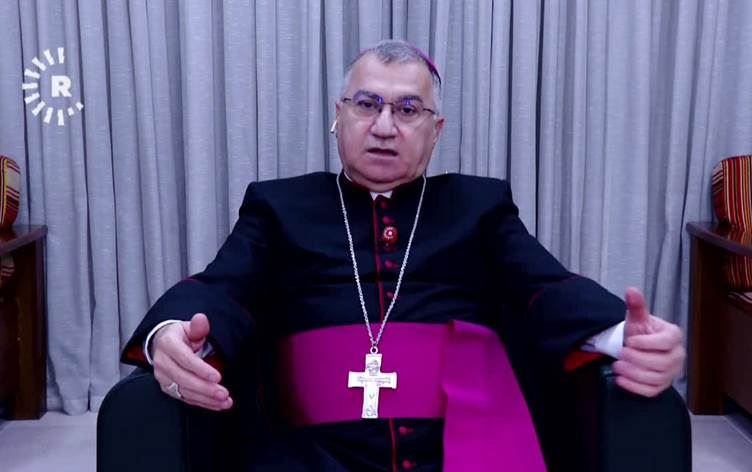
Archbishop Bashar Warda of the Chaldean Archdiocese of Erbil speaks to Rudaw on April 26, 2025. Photo:Screengrab/Rudaw
ERBIL, Kurdistan Region - Archbishop Bashar Warda of the Chaldean Archdiocese of Erbil described the participation of Kurdistan Region President Nechirvan Barzani in the farewell ceremony for Pope Francis in Rome as a source of pride that places the Kurdistan Region on the global map.
Speaking to Rudaw on Saturday, Archbishop Warda stated, “As of today, a nine-day mourning period begins, during which a mass will be held each day.” He added that “the names of the cardinals and the locations of the masses held for the intention of the Pope have already been set.”
Warda further explained that during this mourning period, the College of Cardinals would convene regularly to deliberate on the Church’s current status and its responsibilities moving forward. “These discussions are crucial for defining the character of the next phase in the Church’s journey,” he noted.
On President Nechirvan Barzani’s participation in the farewell ceremony, Archbishop Warda remarked that it “is a source of pride for us as Christians in Kurdistan and Iraq. To see the President of the Region present at a global event where humanity bids farewell to the Pope - a spiritual leader for over 1.4 billion Catholics - is deeply significant.”
He also highlighted the special relationship between the Vatican and the leadership of the Kurdistan Region. “Let us not forget the unique and friendly ties between Pope Francis and the Barzani leadership - President Nechirvan Barzani, President Masoud Barzani, and Prime Minister Masrour Barzani,” he said.
Warda recalled the exceptional protocol extended to the Kurdistan Region during the Pope’s historic visit to Iraq. “Typically, the Pope meets all political leaders together in one place, as he did in Baghdad. However, in recognition of the Kurdistan Region’s role - especially in hosting and protecting over a million displaced people, including many Christians, in 2014 - the Vatican arranged a special meeting in Erbil.”
He stressed that this gesture reflected the Vatican’s deep appreciation and the warmth of its relationship with the Kurdistan Region. “Such protocols demonstrate the depth of this friendship,” he added.
“President Nechirvan Barzani’s participation in this international event shows that the Kurdistan Region is not isolated, but is actively engaged on the world stage - with strength and a meaningful message,” the Archbishop concluded.
President Barzani arrived in Rome on Friday evening to attend the funeral, which began on Saturday.
On the selection of the next pope, Archbishop Warda clarified that the process is not influenced by campaigns or speculation. “What is being circulated in the media is just that - speculation. Historically, the elected pope is rarely among the widely expected names,” he said.
On May 9, the cardinals will enter what is known as the conclave, and other procedures will follow that are characterized more by ecclesiastical privacy than secrecy.
According to Archbishop Warda, “The privacy is due to the nature of the election which is more of a mission than a calling and is primarily aimed at serving the Church.”
He elaborated that a new pontiff would be elected within less than two weeks and that “the mourning period, which lasts nine days, is an established tradition derived from the Bible.”
Pope Francis passed away in Rome on Monday at the age of 88, following complications from severe pneumonia that had persisted for over two months.
On Saturday, the Vatican hosted the funeral service in St. Peter’s Square, presided over by Italian Cardinal Giovanni Battista Re. Authorities anticipated the attendance of over 200,000 people, including world leaders, religious figures, and faithful from around the globe. The Pope had selected his final resting place in his favorite church in Rome.
According to the Vatican, 162 official delegations, including dozens of heads of state, government officials, and monarchs, confirmed their attendance at the funeral.
Speaking to Rudaw on Saturday, Archbishop Warda stated, “As of today, a nine-day mourning period begins, during which a mass will be held each day.” He added that “the names of the cardinals and the locations of the masses held for the intention of the Pope have already been set.”
Warda further explained that during this mourning period, the College of Cardinals would convene regularly to deliberate on the Church’s current status and its responsibilities moving forward. “These discussions are crucial for defining the character of the next phase in the Church’s journey,” he noted.
On President Nechirvan Barzani’s participation in the farewell ceremony, Archbishop Warda remarked that it “is a source of pride for us as Christians in Kurdistan and Iraq. To see the President of the Region present at a global event where humanity bids farewell to the Pope - a spiritual leader for over 1.4 billion Catholics - is deeply significant.”
He also highlighted the special relationship between the Vatican and the leadership of the Kurdistan Region. “Let us not forget the unique and friendly ties between Pope Francis and the Barzani leadership - President Nechirvan Barzani, President Masoud Barzani, and Prime Minister Masrour Barzani,” he said.
Warda recalled the exceptional protocol extended to the Kurdistan Region during the Pope’s historic visit to Iraq. “Typically, the Pope meets all political leaders together in one place, as he did in Baghdad. However, in recognition of the Kurdistan Region’s role - especially in hosting and protecting over a million displaced people, including many Christians, in 2014 - the Vatican arranged a special meeting in Erbil.”
He stressed that this gesture reflected the Vatican’s deep appreciation and the warmth of its relationship with the Kurdistan Region. “Such protocols demonstrate the depth of this friendship,” he added.
“President Nechirvan Barzani’s participation in this international event shows that the Kurdistan Region is not isolated, but is actively engaged on the world stage - with strength and a meaningful message,” the Archbishop concluded.
President Barzani arrived in Rome on Friday evening to attend the funeral, which began on Saturday.
On the selection of the next pope, Archbishop Warda clarified that the process is not influenced by campaigns or speculation. “What is being circulated in the media is just that - speculation. Historically, the elected pope is rarely among the widely expected names,” he said.
On May 9, the cardinals will enter what is known as the conclave, and other procedures will follow that are characterized more by ecclesiastical privacy than secrecy.
According to Archbishop Warda, “The privacy is due to the nature of the election which is more of a mission than a calling and is primarily aimed at serving the Church.”
He elaborated that a new pontiff would be elected within less than two weeks and that “the mourning period, which lasts nine days, is an established tradition derived from the Bible.”
Pope Francis passed away in Rome on Monday at the age of 88, following complications from severe pneumonia that had persisted for over two months.
On Saturday, the Vatican hosted the funeral service in St. Peter’s Square, presided over by Italian Cardinal Giovanni Battista Re. Authorities anticipated the attendance of over 200,000 people, including world leaders, religious figures, and faithful from around the globe. The Pope had selected his final resting place in his favorite church in Rome.
According to the Vatican, 162 official delegations, including dozens of heads of state, government officials, and monarchs, confirmed their attendance at the funeral.


Comments
Rudaw moderates all comments submitted on our website. We welcome comments which are relevant to the article and encourage further discussion about the issues that matter to you. We also welcome constructive criticism about Rudaw.
To be approved for publication, however, your comments must meet our community guidelines.
We will not tolerate the following: profanity, threats, personal attacks, vulgarity, abuse (such as sexism, racism, homophobia or xenophobia), or commercial or personal promotion.
Comments that do not meet our guidelines will be rejected. Comments are not edited – they are either approved or rejected.
Post a comment