


Kurdistan

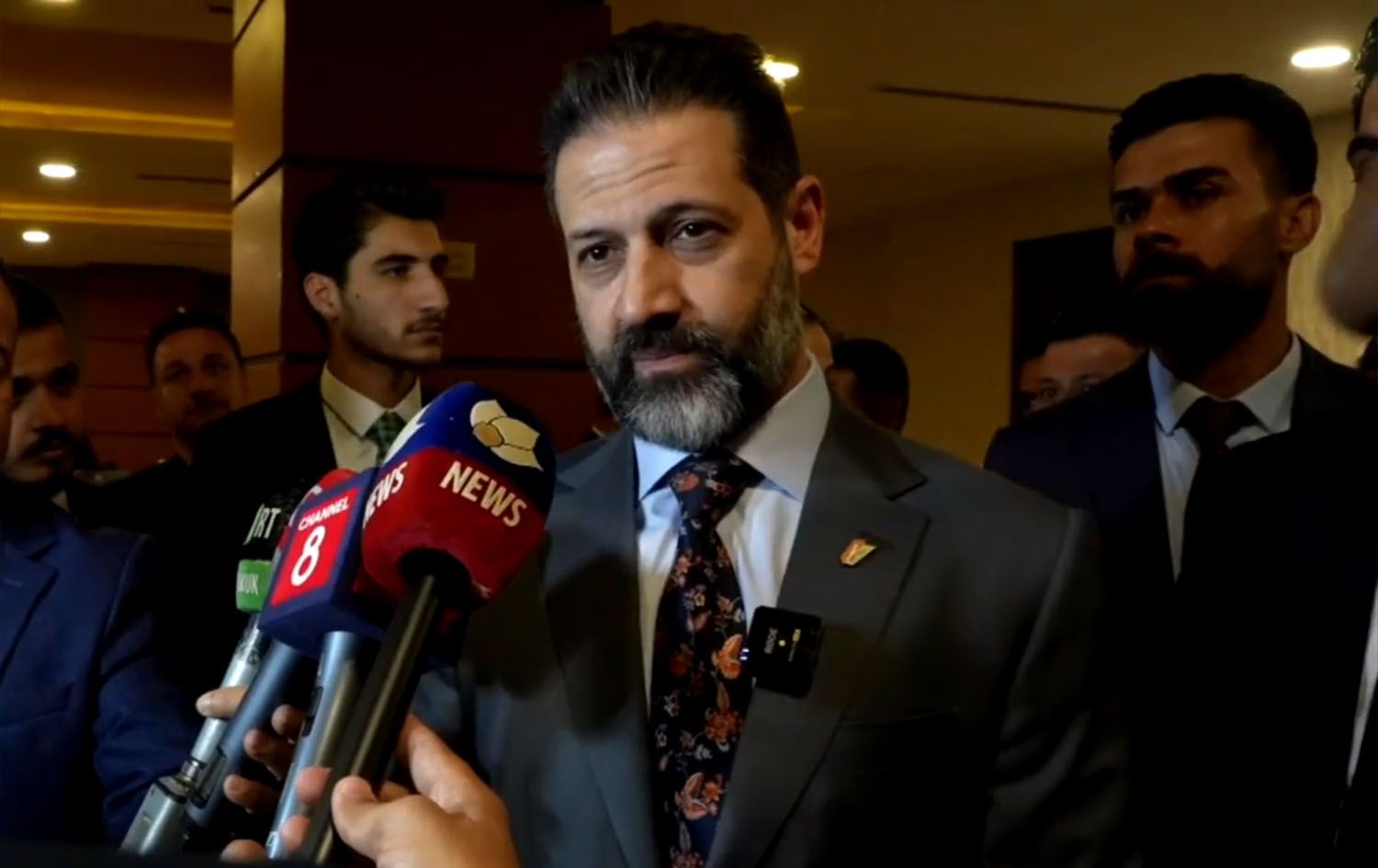
Kurdistan Region Deputy Prime Minister Qubad Talabani speaking to reporters in Sulaimani on May 26, 2025. Photo: screengrab/Rudaw
ERBIL, Kurdistan Region - Kurdistan Region Deputy Prime Minister Qubad Talabani, from the Patriotic Union of Kurdistan (PUK), on Monday signaled that his party may bring new demands in upcoming negotiations with the Kurdistan Democratic Party (KDP) to form the next cabinet, over seven months after parliamentary elections.
“In the previous meetings, we may have had some demands, in the next meeting we might have new demands,” Talabani told reporters in Sulaimani. “Don’t be surprised if the PUK presents new demands in the next meeting.”
Speaking separately at a forum in Erbil on Monday, senior KDP official Hoshyar Zebari, regarding the division of positions and the formation of the cabinet, said that they “have discussed many details. In the coming period, it will be decided.”
The KDP and PUK resumed meetings in Erbil on Wednesday for the first time since late April, headed by Talabani and Zebari, continuing long-delayed efforts to form a new cabinet, more than seven months after the Kurdistan Region held parliamentary elections.
No party won an outright majority in the vote, requiring a coalition government to be formed as in previous terms. The KDP secured 39 seats in the 100-member parliament, while the PUK came in second with 23.
On Friday, Kurdistan Regional Government (KRG) Cabinet Secretary Amanj Raheem told Rudaw that the two parties have exchanged their preferred lists of ministries and aim to finalize the cabinet before Iraq’s federal elections scheduled for November.
After their April meeting, a KDP central committee member told Rudaw that the PUK had requested control over several key positions, including the interior and natural resource ministries, but the KDP had only offered the Peshmerga ministry.
The ongoing deadlock has significantly impacted the Kurdistan Region’s legislative process. Since the October elections, the regional parliament has convened only once. No further meetings have been scheduled, as lawmakers await the outcome of government formation talks.
It has also sparked legal action.
Earlier this month, Omar Gulpi, a newly elected member of parliament from the Kurdistan Justice Group (Komal) who has not yet been sworn in, said he had filed a complaint with Iraq’s Federal Supreme Court, challenging the parliament’s failure to convene regularly and calling for the annulment of the election results.
Regarding the lawsuit, Dilshad Shahab, spokesperson for the Kurdistan Region Presidency and a member of the KDP delegation involved in government formation talks, said that “we are part of that complaint, as the presidency of the [Kurdistan] Region. We will also present our papers [case] and defend our stance and the presidency’s decision.”
“Our meetings continue, and we hope that in the near future we will reach a result,” Shahab said on Monday.
A second complaint was lodged by the New Generation Movement; namely the head of its bloc in the Iraqi parliament Srwa Abdulwahid and the head of its bloc in the Kurdistan Region’s parliament Kurdawan Jamal.
Their complaint also invokes Article 10, Clause Four of the 2005 law, which allows for the dissolution of the parliament if it fails to grant confidence to a new Council of Ministers after three attempts.
Iraq’s Federal Supreme Court is scheduled to review both complaints on July 6, 2025. The court’s decisions could have sweeping implications amid the prolonged political gridlock.


Comments
Rudaw moderates all comments submitted on our website. We welcome comments which are relevant to the article and encourage further discussion about the issues that matter to you. We also welcome constructive criticism about Rudaw.
To be approved for publication, however, your comments must meet our community guidelines.
We will not tolerate the following: profanity, threats, personal attacks, vulgarity, abuse (such as sexism, racism, homophobia or xenophobia), or commercial or personal promotion.
Comments that do not meet our guidelines will be rejected. Comments are not edited – they are either approved or rejected.
Post a comment