
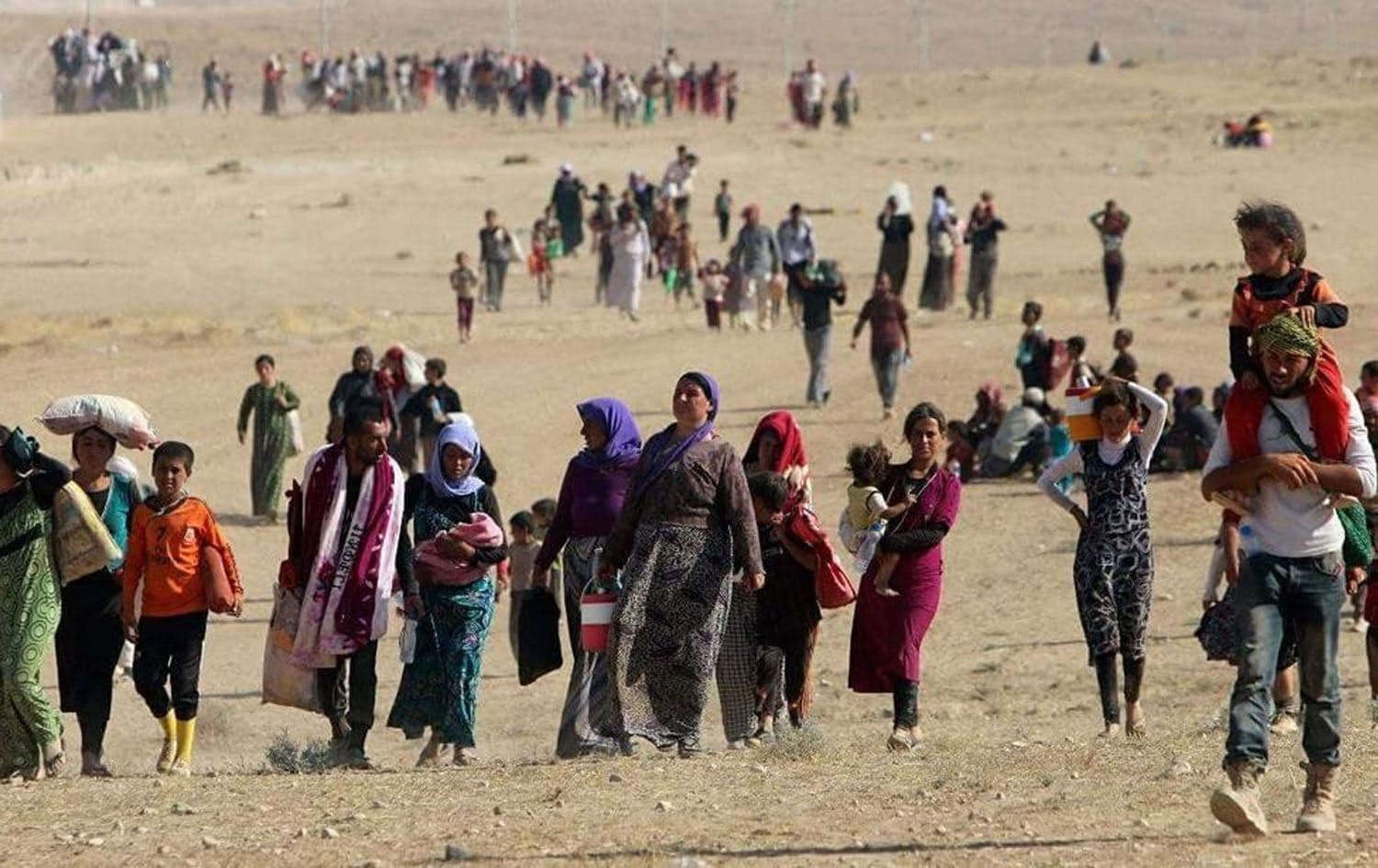

ERBIL, Kurdistan Region - On the 11th anniversary of the Yazidi genocide by the Islamic State (ISIS), Kurdistan Region President Nechirvan Barzani reaffirmed commitment to Yazidi rights and well-being, urging Baghdad to implement a key 2020 agreement with Erbil aimed at “restoring normalcy” in the Yazidis’ ancestral homeland Shingal (Sinjar) and facilitate the return of displaced Yazidis.
Speaking at a commemoration event in Erbil, the Kurdistan Region Presidency spokesperson Dilshad Shahab quoted President Barzani as emphasizing that “it is fundamentally the responsibility of the Iraqi government to ensure that [Shingal] Sinjar and the Yazidi regions do not become battlegrounds for armed factions and militias.” The ongoing instability in Shingal is “a significant injustice” to the Yazidis who “deserve support to heal and rebuild their lives,” he added.
President Barzani further urged Baghdad “to reestablish peace, security, and essential services” in Shingal and its surroundings to reassure the Yazidis “that they can safely return and rebuild their communities.” He also reiterated the need to implement the October 2020 Shingal Agreement between Baghdad and Erbil. The deal brokered with the support of the United Nations Assistance Mission for Iraq (UNAMI) aims to eliminate non-state armed groups from Shingal and normalize the administrative and security situation in Shingal.
In June 2014, ISIS seized large parts of northern and western Iraq. By August, the group launched a brutal assault on the Yazidi community in Shingal, killing an estimated 5,000 to 10,000 Yazidi men and older women, and abducting 6,000 to 7,000 women and girls for sexual slavery and human trafficking. Around 400,000 Yazidis were forced to flee, with most seeking refuge in the Kurdistan Region.
Although Iraq declared the full liberation of its territory from ISIS in 2017, around 21,000 Yazidi families remain displaced, primarily in camps in Kurdistan Region’s Duhok province. Their return is hindered by ongoing security concerns and the continued presence of various armed groups in Shingal.
President Barzani on Monday decried that “almost half” of Shingal’s Yazidi residents “continue to live in displacement and camps,” calling it unjust that "a Yazidi child born in the camps, is now 11 years old.” He further vowed that the Office of Rescuing Abducted Yazidis, affiliated with the Kurdistan Region Presidency, will continue its operations "as long as there remains even one Yazidi abductee” still in captivity.
As of May the Office reported that 2,590 Yazidis remain missing.
UN and international takes
Monday’s commemoration event in Erbil was organized by the Yazidi Yazda non-profit in partnership with the German Cooperation Organization (GIZ), both of which support survivors of the Yazidi genocide.
Speaking at the ceremony, Claudio Cordone, Deputy Special Representative for UNAMI, highlighted the Yazidi community’s ongoing struggle 11 years after the ISIS genocide. He expressed the UN’s “full solidarity with all the victims of [ISIS] Daesh, one of the most brutal, ignorant, and perverse ideologies in modern history,” and condemned the “unspeakable atrocities” committed against the Yazidis.
Cordone urged both Baghdad and Erbil to intensify and accelerate efforts to restore the rights of the Yazidis, stating that their recovery would represent “the ultimate defeat of Daesh.” He also outlined three key priorities: reparations, greater support for women forced to marry ISIS members and children born of rape, and enabling “voluntary, safe, and dignified” returns.
The deputy special representative for UNAMI also stressed the need to implement the stalled 2020 [Shingal] Sinjar Agreement, noting that “without stability and security, people cannot be expected to return.”
For his part, the United States Consul General to Erbil Steven Bitner reaffirmed Washington’s “solidarity with Yazidi families and survivors” and recognizes “their unimaginable loss and unwavering resilience." He emphasized the US’s commitment to helping communities recover and to preventing the resurgence of ISIS, pledging to “do everything possible to make sure that Daesh cannot return and revisit its horrors upon the world.”
Bitner further reiterated Washington’s efforts in "delivering accountability to those responsible” for the Yazidi genocide and “ensuring this can never happen again.”
Recognizing Iraq’s efforts toward peace and stability - with Yazidis playing a vital role in rebuilding - Bitner noted that challenges remain, including the internal displacement of “over one million Iraqis…including about 300,000 Yazidis, and of course the [cases of the] 2,558 Yazidis who remain missing and unaccounted for."
The US consul general called on the Iraqi government to support the safe return of Yazidi survivors by reaching consensus on appointing a mayor in Shingal, recruiting local police, and increasing reconstruction funding. Critically, Bitner warned that “militias beholden to Iran must leave areas liberated from Daesh, such as [Shingal] Sinjar,” stating their continued presence "prevents the return of the internally displaced population and hinders economic development."
Meanwhile, Albrecht von Wittke, the German consul general in Erbil, praised the "exceptional" courage of Yazidi survivors who "consciously chose to share their stories to make the voices of the forgotten heard." He acknowledged the ongoing pain of the Yazidi community, noting that “to this day, many wounds have not healed” as “the fate of more than 2,600 women and children remains uncertain.”
Von Wittke highlighted concrete steps by Germany, including the unanimous recognition of the Yazidi genocide by the German parliament in January 2023 - a move he called a “milestone in the global fight against impunity” that shifts the focus “from the perpetrators to justice for the victims.” He reaffirmed Germany’s “unwavering commitment to justice,” recognizing that survivors still face marginalization, trauma, and threats to their security and dignity.
Germany, a long-time provider of humanitarian aid, now prioritizes "long-term work for Yazidi families,” focusing on "education and employment" and supporting "those who want to return to Sinjar," von Wittke said, commending survivor-led initiatives, including those led by Yezidi Yazda and GIZ.
.png&w=3840&q=75)