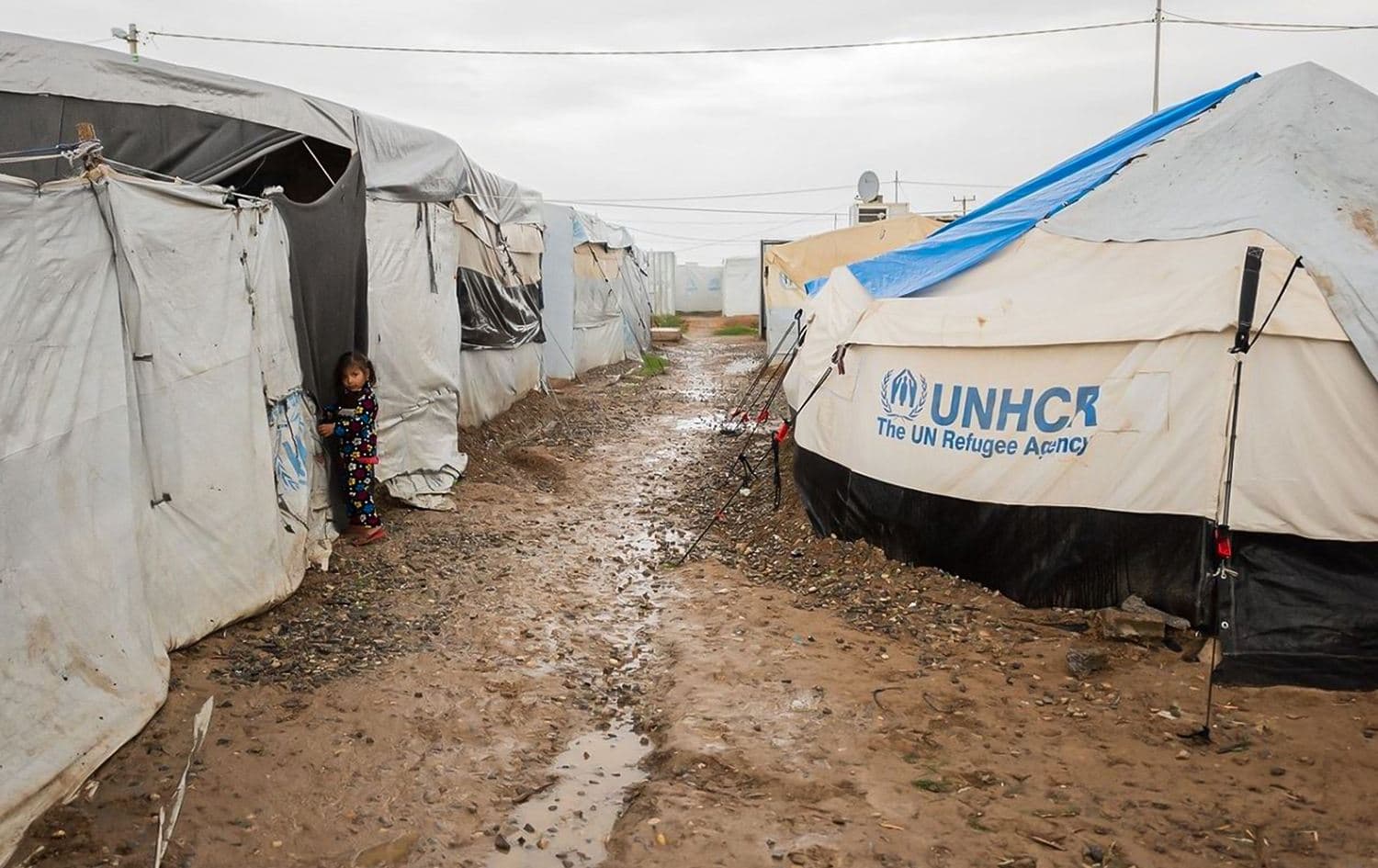
ERBIL, Kurdistan Region - More than 850,000 internally displaced persons (IDPs) and refugees are living in the Kurdistan Region across over two dozen camps, Erbil’s interior ministry reported on Wednesday.
“As of March, the Kurdistan Region is hosting 850,831 displaced persons across 27 camps,” the ministry’s Joint Crisis Coordination Center (JCC), which oversees disaster and humanitarian response, said. Of these, “573,413 are internally displaced persons (IDPs), while 283,418 are refugees.”
The majority of refugees are from Syria, totaling 265,012 people. Of these, 173,044 Syrians live outside camps. Refugees from Iran, Palestine, Turkey, and other countries make up the remainder of the refugee population in the Region, the JCC added.
Despite the ouster of Syria’s longtime ruler Bashar al-Assad in December 2024, the return of Syrians has been largely hindered by ongoing instability, damaged infrastructure, and widespread poverty.
More than 90 percent of Syria’s population lives below the poverty line, and 16.7 million people are in need of humanitarian assistance in 2026, according to the Germany-based Bertelsmann Stiftung’s Transformation Index.
Lilly Carlisle, a spokesperson for the United Nations High Commissioner for Refugees (UNHCR), told Rudaw in January that most Syrian refugees prefer to “stay in Iraq for the foreseeable future.”
“As UNHCR, we continue to support and assist them while they remain here in Iraq,” she added. All 27 camps in Iraq are located in the Kurdistan Region.
The JCC report also noted that 18 of the camps are designated for IDPs.
The Iraqi government has previously urged the Kurdistan Regional Government (KRG) to close the camps and facilitate the “voluntary return” of IDPs to their areas of origin by July 2024. Baghdad based its request on Iraq’s transition from a humanitarian to a development phase in late 2022, when the UN disbanded its humanitarian clusters responsible for coordinating emergency aid.
As a result, international aid declined sharply, dropping from more than $1.6 billion in 2016 to around $220 million in 2024.
At Baghdad’s request, the UN Security Council in May 2024 also decided to end the mandate of the United Nations Assistance Mission for Iraq (UNAMI) by late 2025.
However, the KRG argues that while the IDPs original regions were liberated from the Islamic State (ISIS) in late 2017, they still lack basic services and security, warning that such a return would at this stage be “forced” and “uncoordinated.”