


Kurdistan

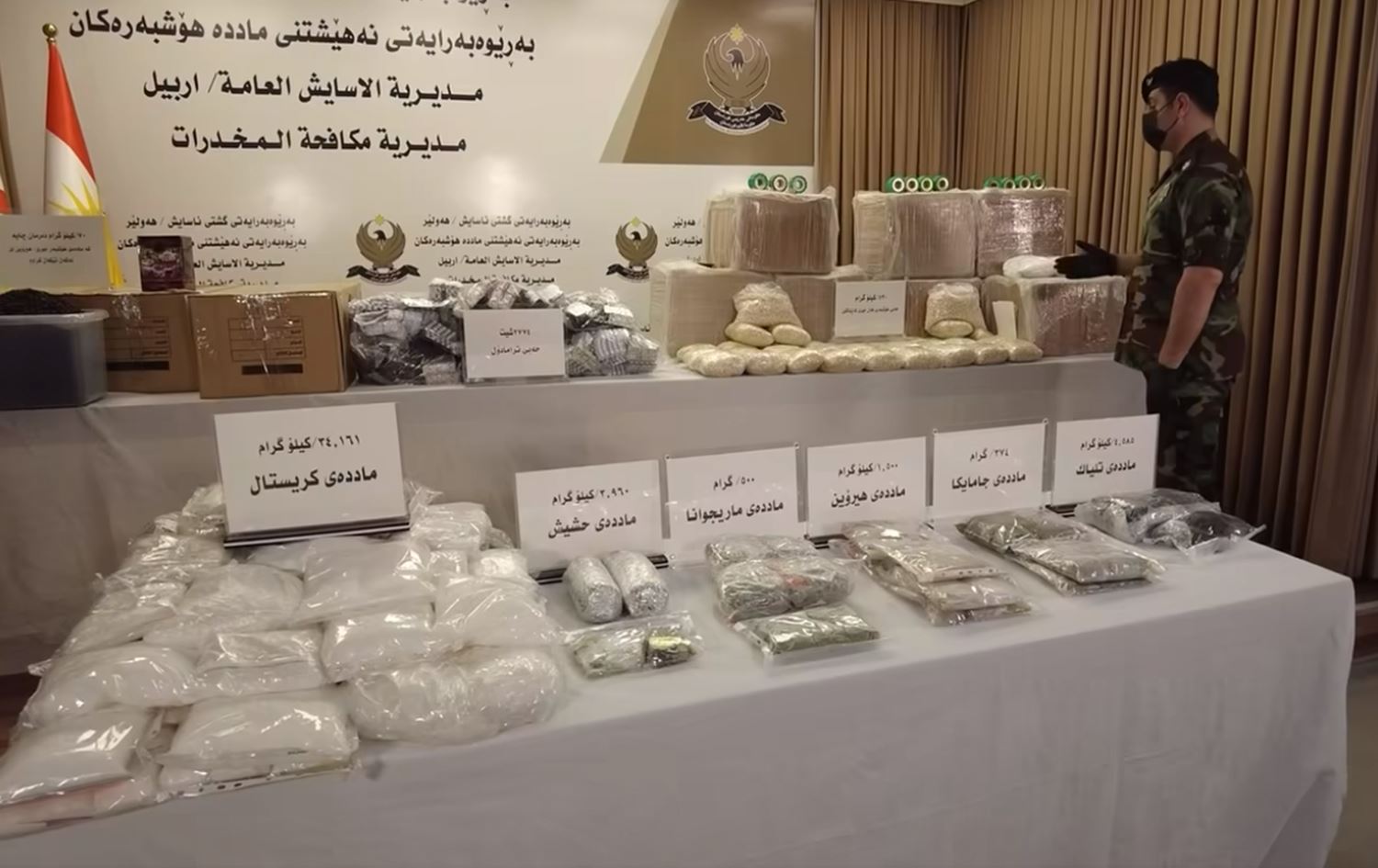
A security officer standing over the confiscated drugs between January and May 2023. Photo: Kurdistan Region Security Council
ERBIL, Kurdistan Region - The Kurdistan Region’s local security forces (Asayish) have arrested 667 people across the Region on drug-related charges over the past four months, also confiscating hundreds of kilograms of various narcotics during that same period.
Over 45 kilograms of narcotics, including crystal, heroine, and marijuana, were confiscated between January 23 to May 22, according to a video statement from the Kurdistan Region Security Council.
An additional 530 kilogram of captagon pills, 2774 tramadol tablets, and 70 kilograms of “tea mixed with heroin” were also confiscated.
“Investigation files have been made for all the arrested suspects and have been sent to a judge,” said the Asayish.
Drug trafficking and use have been on a rise in the Kurdistan Region and Iraq, specifically since the fall of Saddam Hussein in 2003.
The Region lacks rehabilitation centers for drug addicts, as well as resources to raise awareness about the repercussions of drug use. Most drug consumers end up arrested rather than rehabilitated.
At least 1,417 people were arrested on drug related charges and over 60 kilograms of narcotics were confiscated in January, according to the General Directorate of Narcotics Control in Iraq’s Ministry of Interior. Around 15 thousand suspects were arrested and more than 400 kilograms of narcotics were confiscated in 2022 in Iraq.
Syria became the main supplier of the illicit captagon pills which began spreading across the Middle East following the Syrian civil war in 2011.
Over 45 kilograms of narcotics, including crystal, heroine, and marijuana, were confiscated between January 23 to May 22, according to a video statement from the Kurdistan Region Security Council.
An additional 530 kilogram of captagon pills, 2774 tramadol tablets, and 70 kilograms of “tea mixed with heroin” were also confiscated.
“Investigation files have been made for all the arrested suspects and have been sent to a judge,” said the Asayish.
Drug trafficking and use have been on a rise in the Kurdistan Region and Iraq, specifically since the fall of Saddam Hussein in 2003.
The Region lacks rehabilitation centers for drug addicts, as well as resources to raise awareness about the repercussions of drug use. Most drug consumers end up arrested rather than rehabilitated.
At least 1,417 people were arrested on drug related charges and over 60 kilograms of narcotics were confiscated in January, according to the General Directorate of Narcotics Control in Iraq’s Ministry of Interior. Around 15 thousand suspects were arrested and more than 400 kilograms of narcotics were confiscated in 2022 in Iraq.
Syria became the main supplier of the illicit captagon pills which began spreading across the Middle East following the Syrian civil war in 2011.


Comments
Rudaw moderates all comments submitted on our website. We welcome comments which are relevant to the article and encourage further discussion about the issues that matter to you. We also welcome constructive criticism about Rudaw.
To be approved for publication, however, your comments must meet our community guidelines.
We will not tolerate the following: profanity, threats, personal attacks, vulgarity, abuse (such as sexism, racism, homophobia or xenophobia), or commercial or personal promotion.
Comments that do not meet our guidelines will be rejected. Comments are not edited – they are either approved or rejected.
Post a comment