


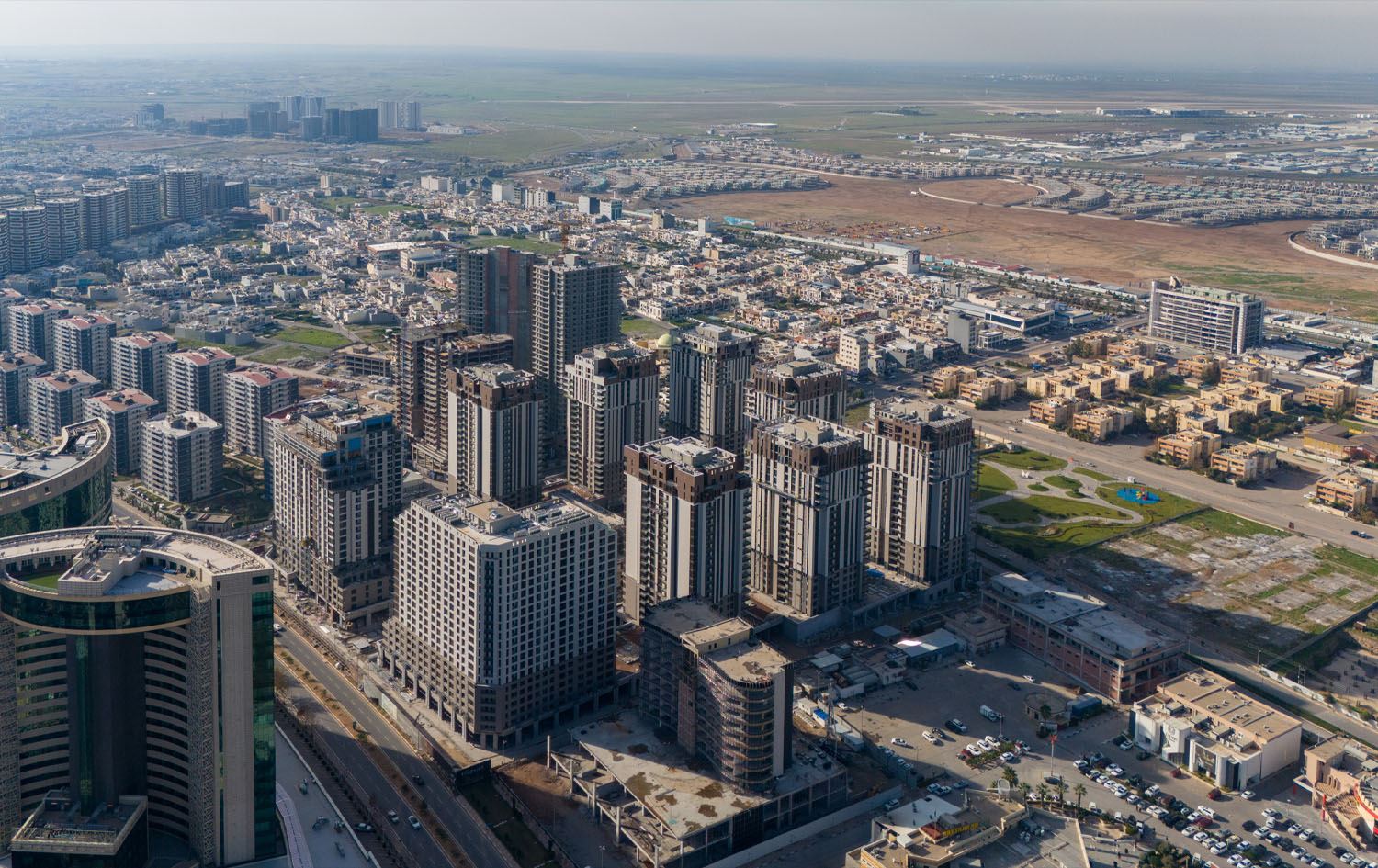
ERBIL, Kurdistan Region - As the country suffers under a severe drought, three wells have dried up in a neighbourhood in northwestern Erbil, leaving residents reliant on water brought in by tankers. Local authorities said an emergency water project that is now under construction will ease the problem by the end of the year.
“The three wells dried up this year. But most of the water problem in the neighborhood has been resolved after digging two new wells,” Rabar Hussein, head of Erbil’s water directorate, told Rudaw on Thursday.
He said water has also been delivered to 32 Park neighborhood by tanker trucks, but added that “the main solution will be through Erbil’s Emergency Water Project,” which is expected to deliver water to the area by November. Pipeline networks to the neighborhood are already in place, he said.
Local residents have complained about having to pay for water to be brought in by private tankers.
The $200 million Emergency Water Supply Project, also called the Rapid Water Emergency Project, aims to address chronic shortages by recycling the province’s wastewater for irrigation and agriculture. Kurdistan Region Prime Minister Masrour Barzani laid the foundation stone in September. It is located on the Gwer-Erbil road.
Erbil experiences frequent problems with water scarcity, especially in neighborhoods in the east of the city.
Iraq is facing its worst water crisis in decades as its reserves have plummeted to historic lows. It is among the 25 countries facing “extreme water stress,” according to the World Resources Institute, which warns the country consumes more than 80 percent of its available supply and risks running dry during a short-term drought.
Iraq relies heavily on the waters of the Tigris and Euphrates rivers, both of which originate in Turkey. Large Turkish dam projects, including the Southeastern Anatolia Project (GAP), have significantly reduced flows, worsening drought, desertification, and environmental degradation. Iraq currently receives less than 40 percent of its historical water share.
In July, Turkey pledged to increase water releases into the Tigris and Euphrates rivers by 420 cubic meters per second following a meeting between President Recep Tayyip Erdogan and Iraqi Parliament Speaker Mahmoud al-Mashhadani. Iraqi officials later complained Ankara did not release the agreed volumes, though Turkish officials told Rudaw in August that Iraq had expressed satisfaction with the flow.
Iraq’s Supreme Water Council, in a meeting chaired by Prime Minister Mohammed Shia’ al-Sudani on Thursday, tasked the Foreign Ministry with pressing Turkey to increase water releases into the two river basins and to “emphasize Iraq’s urgent needs during this critical period.” The council also approved holding a ministerial-level technical meeting with Iran on water.
Iraq’s deepening water crisis is driven by a combination of reduced rainfall, rising temperatures, upstream dams built by Turkey and Iran, and years of mismanagement. Rainfall across the Kurdistan Region dropped this year compared to last year, with the exception of Sulaimani province.


Comments
Rudaw moderates all comments submitted on our website. We welcome comments which are relevant to the article and encourage further discussion about the issues that matter to you. We also welcome constructive criticism about Rudaw.
To be approved for publication, however, your comments must meet our community guidelines.
We will not tolerate the following: profanity, threats, personal attacks, vulgarity, abuse (such as sexism, racism, homophobia or xenophobia), or commercial or personal promotion.
Comments that do not meet our guidelines will be rejected. Comments are not edited – they are either approved or rejected.
Post a comment