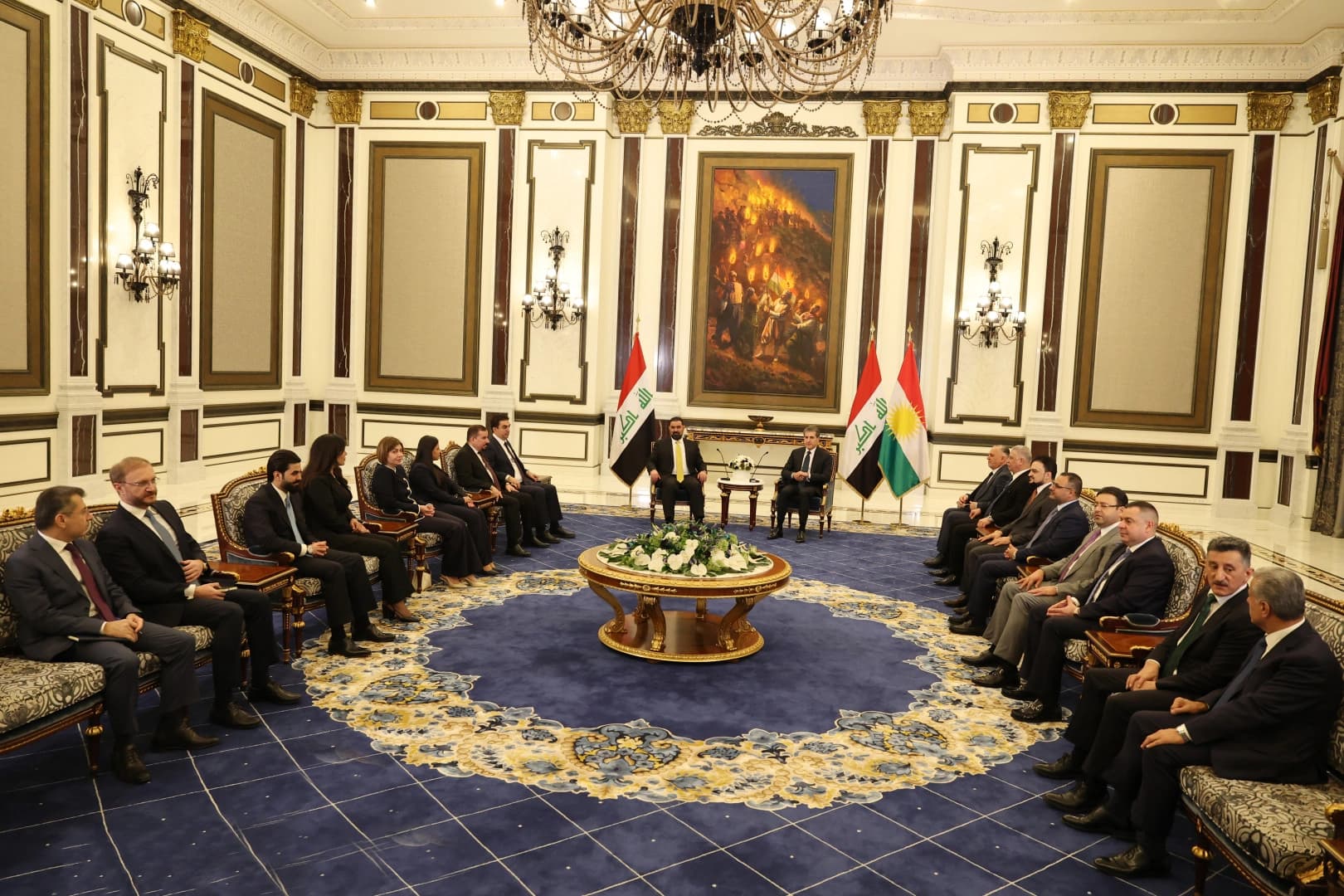
ERBIL, Kurdistan Region - Baghdad will play a more prominent role in overseeing Kurdish oil exports, following their resumption on Saturday under a landmark tripartite agreement between the federal government, the Kurdistan Regional Government (KRG), and the majority of international oil companies (IOCs) operating in the Region, a leading energy publication reported Monday.
According to the Middle East Economic Survey (MEES) the historic deal unblocks the Iraq-Turkey pipeline which has been closed since March 2023.
Oil exports from the Kurdistan Region through the Iraq-Turkey pipeline were then suspended, following a ruling by a Paris-based arbitration court in favor of Baghdad. The court found that Ankara had violated a 1973 pipeline agreement by allowing Erbil to independently export oil since 2014.
The tripartite deal now allows exports through the Ceyhan Port and grants Baghdad a "more prominent role in overseeing Kurdish exports than ever before,” MEES said.
Key details
Under the new terms, the KRG's natural resources ministry has committed to deliver a minimum of 230,000 barrels per day (bpd) to Iraq’s State Oil Marketing Company (SOMO) for export. An additional 50,000 bpd will be used for domestic consumption in the Kurdistan Region.
SOMO is set to take title to the oil "from the Pishkhabour metering station to the Ceyhan export terminal," bearing all costs of transportation, storage and loading. However, it reserves the right to reject crude that does not meet quality standards.
The deal also establishes rigorous reporting standards to maintain transparency.
The total number of barrels will be measured when loaded onto tankers at Ceyhan and SOMO must report total monthly volumes to all parties within 10 business days after the end of each month.
Subsequently, the KRG’s natural resources ministry must then issue a final report to SOMO and the Iraqi finance ministry within another 10 business days, showing allocations for each oil field operator.
Furthermore, Erbil’s natural resources ministry has also signed individual lifting agreements with IOCs to manage their share of the oil. Any disputes raised by IOCs regarding the final report are to be resolved directly with the ministry without amendment of SOMO payments under the agreement.
Another key point for the IOCs in the agreement is the provisional in-kind compensation system
The agreement introduces a provisional in-kind compensation system, where oil companies are paid through Provisional Seller Barrels (PSBs) - crude shipments lifted at Ceyhan by marketers chosen by the KRG and IOCs.
The Region’s natural resources ministry is required to provide an estimated lifting schedule 25 days before each month starts. Any quantity differences will be reconciled against future allocations.
Moreover, compensation will be limited to PSBs until an assessment is finalized by the advisory firm Wood Mackenzie.
Until a final review is done by Wood Mackenzie, compensation remains at a temporary rate of $16 per barrel - as set by an amendment to Iraq’s 2023-2025 federal budget law in February.
Once the firm completes its assessment, SOMO must adjust the payment rate retroactively.
Additional payments based on this final assessment will also be made in-kind within three months, and any deductions must follow a mechanism agreed upon by all parties.
Outstanding debts
As for outstanding debts, the agreement "excludes provisions for the up to $1 billion in receivables owed to the IOCs" from past exports. However, the eight signatory IOCs agreed to "meet within 30 days ... to work toward creating a separate mechanism" to address the outstanding arrears.
Of note, although Norwegian oil and gas firm DNO ASA - the largest foreign operator in the Region - did not sign the agreement, it has reportedly aligned its operations with the new terms.
Moreover, to secure the long-term viability of the deal, significant legal commitments were also made.
The agreement, though initially valid for 30 days, is set to be "automatically extended until 31 December 2025." Moreover, flexibility is maintained, as the parties can agree to extend the agreement to a later date or terminate it early.
Regarding the legal framework, the agreement is governed by Iraqi law.
Despite this, it allows parties to seek "International Chamber of Commerce (ICC) arbitration in Paris" for disputes that cannot be settled amicably within two months.
Furthermore, in a significant legal safeguard, the federal government "waived its sovereign rights, including immunity from legal proceedings or judgment" and the enforcement of arbitration awards.