


Kurdistan

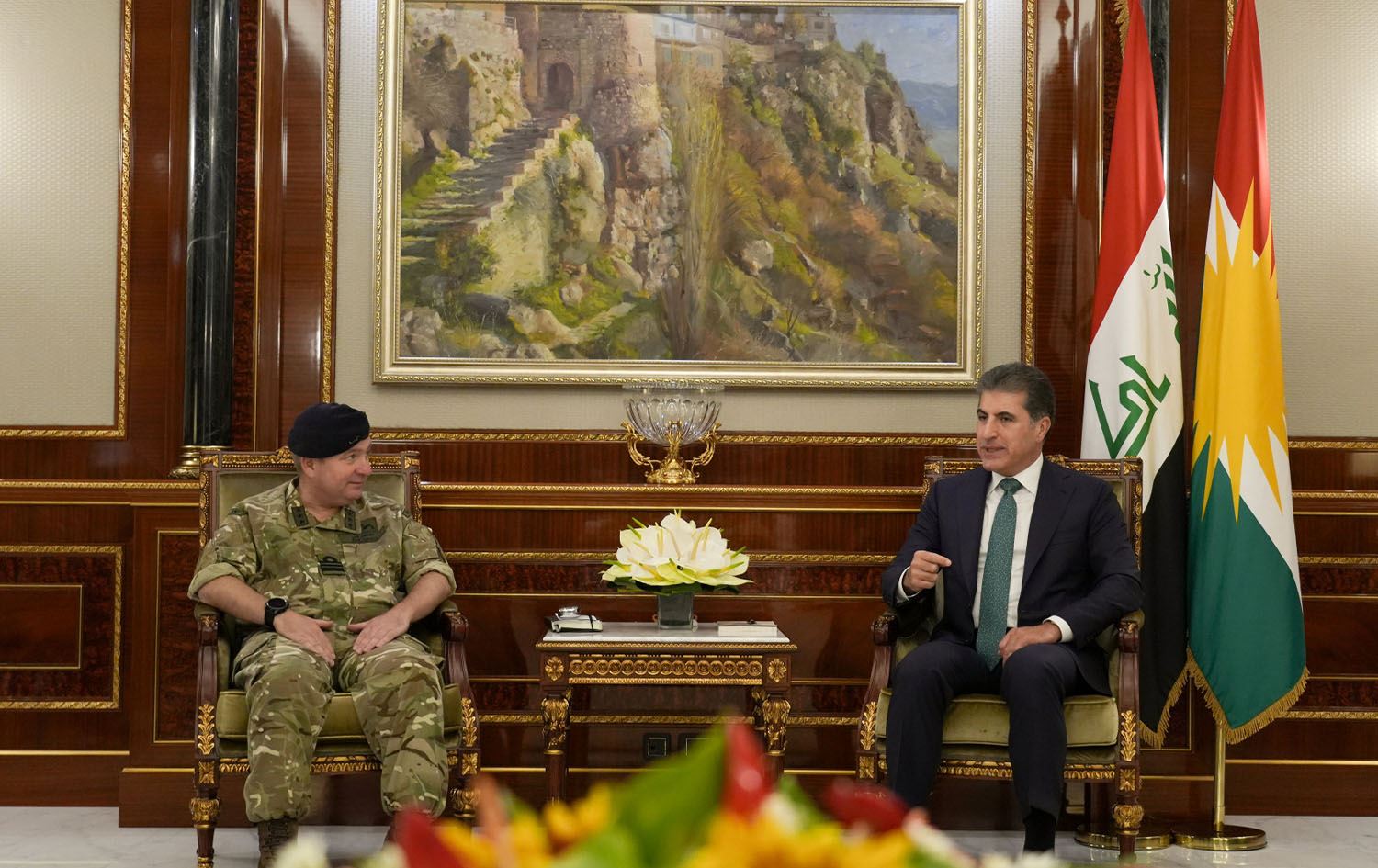
Kurdistan Region President Nechirvan Barzani (right) meets UK Defence Senior Advisor to the Middle East and North Africa, Vice Admiral Edward Ahlgren (left) in Erbil on July 30, 2025. Photo: Kurdistan Region Presidency
ERBIL, Kurdistan Region - Kurdistan Region President Nechirvan Barzani in a meeting on Wednesday with a senior British military delegation, called for stronger measures to be taken to stop drone strikes targeting the Region’s oil infrastructure and warned of Islamic State’s (ISIS) continued threat to Iraq and Syria, according to the Kurdish presidency.
In meeting with the delegation, which was led by UK Defence Senior Advisor to the Middle East and North Africa, Vice Admiral Edward Ahlgren, President Barzani “described the targeting of energy infrastructure in the Kurdistan Region as a threat and damage to Iraq's entire economy and advocated that these attacks must be prevented,” read a statement from the presidency.
According to Rudaw data, the Kurdistan Region has been targeted by around 20 drone and rocket attacks in recent weeks, many aimed at oil infrastructure. While no group has claimed responsibility, the Kurdistan Region’s interior ministry earlier in July accused the Iran-aligned Popular Mobilization Forces (PMF) of involvement - a charge Baghdad swiftly rejected as “unacceptable.” The Kurdistan Regional Government (KRG) has also criticized the Iraqi federal government for failing to prevent or investigate the escalating drone threats.
The attacks have significantly dropped since Erbil and Baghdad reached an agreement on finance and oil.
Ahlgren showed his county’s commitment to maintain relations and cooperation with Baghdad and Erbil and “reiterated that his country views the peace and stability of the region with great importance and value,” the statement continued.
He also expressed “all British support for protecting the security of the Kurdistan Region, Iraq and the rest of the region.”
The two sides also spoke about the threat of ISIS resurgence. “President Nechirvan Barzani reiterated that ISIS is still a real threat and poses a danger to the peace and stability of Iraq and Syria,” it added.
ISIS controlled swathes of Iraqi and Syrian territories in 2014. Despite its territorial defeat by 2019 in both countries with the support of the US-led anti-ISIS coalition, of which the UK is an active member, the group still tries to exploit security vacuums in Iraq and Syria, mainly carrying out hit-and-run attacks.
Barzani’s meeting with the British delegation also covered “Iraq’s federal system, the Kurdistan Region and Iraq’s ties with neighboring countries, the situation in Syria and the rights of Kurds and other communities there, as well as recent developments in Turkey’s peace process,” according to the presidency.
Erbil and London enjoy long-standing relations.
The UK has played a significant role in training Kurdish Peshmerga forces during the fight against ISIS and remains a key contributor to the global coalition. Around 1,400 British personnel are reportedly deployed in the Kurdistan Region and Iraq to provide military advisory and support to both the Peshmerga and Iraqi security forces.
The UK’s involvement with the Kurdistan Region dates back to 1991, when then-Prime Minister Sir John Major was instrumental in establishing a no-fly zone over northern Iraq. This provided a safe haven for Kurds fleeing the Ba’athist regime and enabled them to achieve autonomy. In recognition, a street in Erbil was named after Sir John Major in April 2021.
The United Kingdom also maintains strong ties with Iraq across military, security, and other sectors. In 2021, the two countries signed a Strategic Partnership aimed at boosting cooperation in areas such as the economy, education, and culture.


Comments
Rudaw moderates all comments submitted on our website. We welcome comments which are relevant to the article and encourage further discussion about the issues that matter to you. We also welcome constructive criticism about Rudaw.
To be approved for publication, however, your comments must meet our community guidelines.
We will not tolerate the following: profanity, threats, personal attacks, vulgarity, abuse (such as sexism, racism, homophobia or xenophobia), or commercial or personal promotion.
Comments that do not meet our guidelines will be rejected. Comments are not edited – they are either approved or rejected.
Post a comment