



Error occured during this request! Please try again later.
Iraq

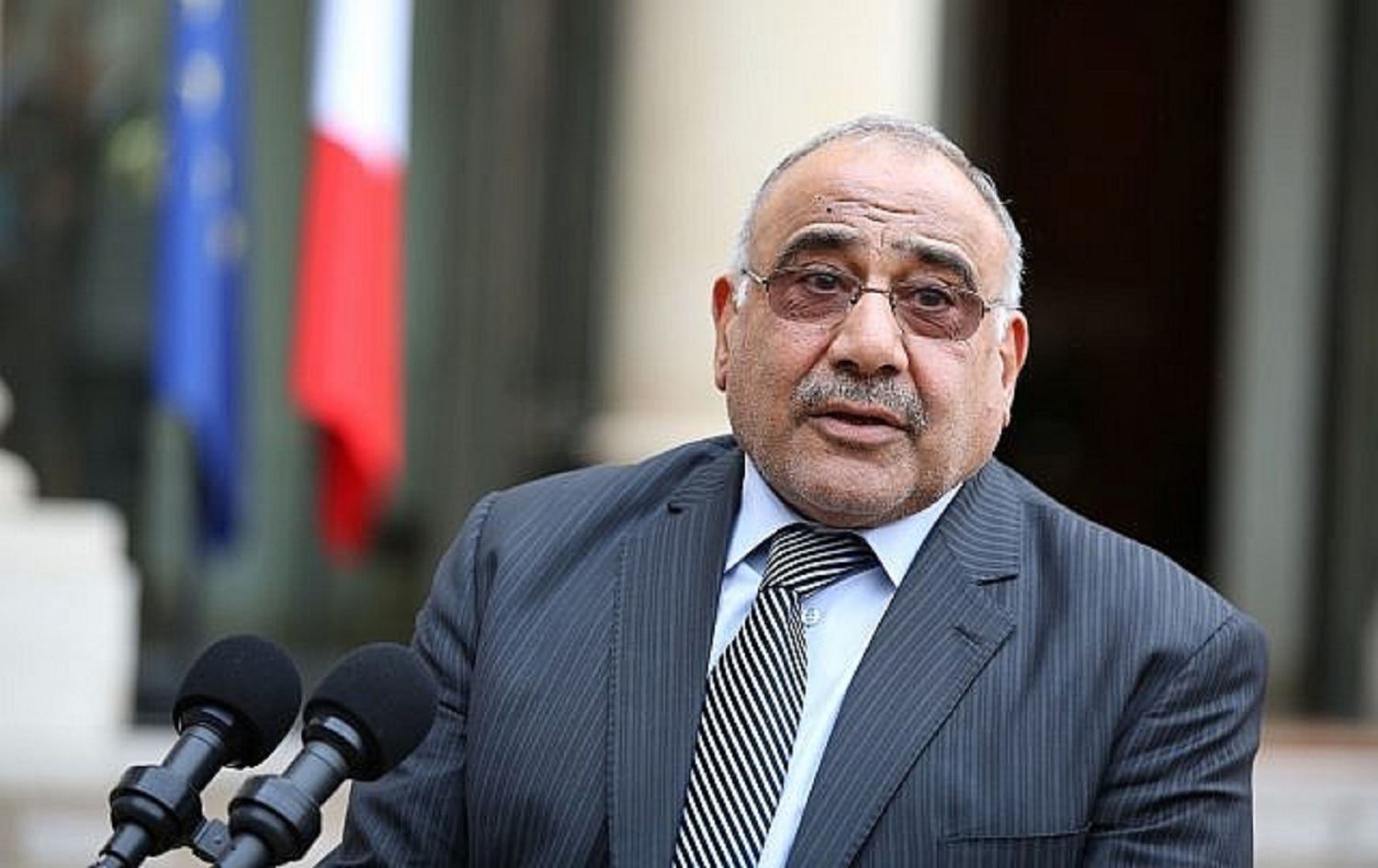
Adel Abdel Mahdi, at the time Iraqi oil minister, addresses reporters at the Elysee Palace in Paris, France, April 2, 2015. Photo: Remy de la Mauviniere/AP
ERBIL, Kurdistan Region — Former Iraqi Prime Minister Adil Abdul-Mahdi came out on Tuesday to defend the record of his short-lived government, lashing out at an unnamed "series of media interviews" by current finance minister Ali Allawi.
Abdul-Mahdi said his government did well under the circumstance, and the country under his tenure witnessed "considerable economic developments" despite the global decline in oil price.
Describing Allawi as one of the "advanced Iraqi minds" who has "the courage and knowledge that makes him the right man in the right place in the right circumstance", Abdul-Mahdi said he found it important to respond to criticism the minister made of "the policies pursued by successive governments and the financial crisis that the country is currently experiencing".
It has remained unclear as to what specific interview Abdul-Mahdi was referring to, but the current finance minister in July spoke to the Financial Times during which he said all his government can do "is to point out the disaster before us if we continue along this path," referring to the previous governments.
“Issues which were buried because of large and growing oil revenues are now crystallizing,” said Allawi referring to huge spending and a monthly wage bill of $5bn for its vast public payroll. He added that this included payments for what he estimated are 300,000 “ghost” or fictional employees.
“[My] firm opinion is that the economy, if it’s not restructured radically in a very consistent and well-implemented medium-term programme, can lead to really severe security consequences,” Allawi had said.
In response to Allawi's claims, Abdul-Mahdi said in a lengthy Facebook post he found it important to address two main issues which financially haunted his government; first, a lack of cash reserve in the state's treasury, second; commitment to "OPEC Plus" to reduce oil produce of countries in a bid to higher prices, a move obliging Iraq "to reduce its oil exports."
OPEC oil producers have been cutting down on production by 10 percent of global supply since May after the COVID-19 virus slashed demand. OPEC+ agreed to ease the measure from August as the global economy shows signs of recovery. Iraq was slow to comply with the production cuts. Oil Minister Ihsan Abdul Jabbar Ismail said it would be in full compliance by August and would compensate for its overproduction in May and June.
"The previous government suffered from an increase in spendings and decrease in revenues, as is the case for the current government" Abdul-Mahdi said, adding that, in fact, during his reign "the economy witnessed growth during 2019 despite the decline in oil prices from $ 65.5 per barrel on average in 2018 to $ 61.1 barrel in 2019, a reduction of $ $4.4 per barrel per day."
"An important goal of the previous government was to reduce dependency on oil and rely on non-oil sectors," he added.
He said during his tenure, Central Bank reserves increased at the end of 2019 and the first quarter of 2020 to $ 67.6 billion, compared to $ 64.3 billion at the end of 2018.
Abdul-Mahdi resigned from his post in late 2019 following months of protests against his government cabinet, in addition to demanding jobs, basic services, and action against corruption.
In addition to US-Iran tensions which soured in the wake of the killing of Qasem Soleimani, commander of Iran’s elite Quds Force, anti-government protesters never gave up on their demands despite Abdul-Mahdi's resignation continuing through the early months of 2020 calling for grassroots reforms to the country’s political system.
In numbers
Abdul-Mahdi says in 2019 there were sufficient amounts of domestic agricultural products including "wheat, barley, rice, vegetables and livestock" which largely met domestic demands. He says this saved large amounts of money to be spent by the government and businesses on imports.
He added that his cabinet laid out a significant water conservation plan in the face of drought and a lack of rainfall.
"A large amount of water was reserved that exceeded 50 billion cubic meters, after investing in rains and torrents in 2019, which will help in facing water scarcity in the upcoming years," he added.
In terms of electricity, "power increased in the summer of 2019 by about 23% than it was in the summer of 2018. The hours of blackouts in 2019 were less than in other years," he said, adding the current government has seen a decline in electricity hours.
Iraq has long suffered from chronic outages and shortages of electricity, in a country where summer temperatures reach 50 degrees Celsius.
Rampant electricity shortages have in past years been a rallying call for protests, most notably in the summer of 2018.
War, corruption, insecurity and lack of investment have all together contributed to a deteriorating grid, leaving Iraqis at times with just five hours of national electricity per day. Privately owned generators set up in neighborhoods try to supplement the lost hours, making Iraqis pay twice for electricity.
To make up for the shortage in electricity production, Iraq has been importing electricity and gas to power its electricity stations from neighboring Iran, much to the ire of Washington, which has imposed crippling economic sanctions on Tehran.
Washington has granted Iraq several waivers to continue imports of Iranian energy without penalty, but ultimately expects it to gradually reduce its reliance on Iranian gas and electricity imports.
The former premier who is currently based in Paris, said his government decreased public debt from "$ 115.2 billion in 2017 to $ 110.4 billion in 2018 and to $ 104.4 billion in 2019."
The external debt declined to $ 54 billion in 2019, down from $ 59 billion in 2018 and 2017's $69.5.
He added his government allowed the resumption of "hundreds of stalled projects" and new projects by funding them with billions of dollars allowing the restart of "activities in many non-oil sectors."
"Hundreds of thousands of unemployed people returned to work, as a result," he added.
Referring to data from the National Investment Commission made available in October 2019, he added the restart of the stalled projects helped return "396,000 workers in various provinces either directly or indirectly to work."
The total number of investment projects numbered to 646 projects and were altogether worth $ 48 billion, helping the employment of 782,000 workers from August 2018 to January 2019.
Abdul-Mahdi said his government did well under the circumstance, and the country under his tenure witnessed "considerable economic developments" despite the global decline in oil price.
Describing Allawi as one of the "advanced Iraqi minds" who has "the courage and knowledge that makes him the right man in the right place in the right circumstance", Abdul-Mahdi said he found it important to respond to criticism the minister made of "the policies pursued by successive governments and the financial crisis that the country is currently experiencing".
It has remained unclear as to what specific interview Abdul-Mahdi was referring to, but the current finance minister in July spoke to the Financial Times during which he said all his government can do "is to point out the disaster before us if we continue along this path," referring to the previous governments.
“Issues which were buried because of large and growing oil revenues are now crystallizing,” said Allawi referring to huge spending and a monthly wage bill of $5bn for its vast public payroll. He added that this included payments for what he estimated are 300,000 “ghost” or fictional employees.
“[My] firm opinion is that the economy, if it’s not restructured radically in a very consistent and well-implemented medium-term programme, can lead to really severe security consequences,” Allawi had said.
In response to Allawi's claims, Abdul-Mahdi said in a lengthy Facebook post he found it important to address two main issues which financially haunted his government; first, a lack of cash reserve in the state's treasury, second; commitment to "OPEC Plus" to reduce oil produce of countries in a bid to higher prices, a move obliging Iraq "to reduce its oil exports."
OPEC oil producers have been cutting down on production by 10 percent of global supply since May after the COVID-19 virus slashed demand. OPEC+ agreed to ease the measure from August as the global economy shows signs of recovery. Iraq was slow to comply with the production cuts. Oil Minister Ihsan Abdul Jabbar Ismail said it would be in full compliance by August and would compensate for its overproduction in May and June.
"The previous government suffered from an increase in spendings and decrease in revenues, as is the case for the current government" Abdul-Mahdi said, adding that, in fact, during his reign "the economy witnessed growth during 2019 despite the decline in oil prices from $ 65.5 per barrel on average in 2018 to $ 61.1 barrel in 2019, a reduction of $ $4.4 per barrel per day."
"An important goal of the previous government was to reduce dependency on oil and rely on non-oil sectors," he added.
He said during his tenure, Central Bank reserves increased at the end of 2019 and the first quarter of 2020 to $ 67.6 billion, compared to $ 64.3 billion at the end of 2018.
Abdul-Mahdi resigned from his post in late 2019 following months of protests against his government cabinet, in addition to demanding jobs, basic services, and action against corruption.
In addition to US-Iran tensions which soured in the wake of the killing of Qasem Soleimani, commander of Iran’s elite Quds Force, anti-government protesters never gave up on their demands despite Abdul-Mahdi's resignation continuing through the early months of 2020 calling for grassroots reforms to the country’s political system.
In numbers
Abdul-Mahdi says in 2019 there were sufficient amounts of domestic agricultural products including "wheat, barley, rice, vegetables and livestock" which largely met domestic demands. He says this saved large amounts of money to be spent by the government and businesses on imports.
He added that his cabinet laid out a significant water conservation plan in the face of drought and a lack of rainfall.
"A large amount of water was reserved that exceeded 50 billion cubic meters, after investing in rains and torrents in 2019, which will help in facing water scarcity in the upcoming years," he added.
In terms of electricity, "power increased in the summer of 2019 by about 23% than it was in the summer of 2018. The hours of blackouts in 2019 were less than in other years," he said, adding the current government has seen a decline in electricity hours.
Iraq has long suffered from chronic outages and shortages of electricity, in a country where summer temperatures reach 50 degrees Celsius.
Rampant electricity shortages have in past years been a rallying call for protests, most notably in the summer of 2018.
War, corruption, insecurity and lack of investment have all together contributed to a deteriorating grid, leaving Iraqis at times with just five hours of national electricity per day. Privately owned generators set up in neighborhoods try to supplement the lost hours, making Iraqis pay twice for electricity.
To make up for the shortage in electricity production, Iraq has been importing electricity and gas to power its electricity stations from neighboring Iran, much to the ire of Washington, which has imposed crippling economic sanctions on Tehran.
Washington has granted Iraq several waivers to continue imports of Iranian energy without penalty, but ultimately expects it to gradually reduce its reliance on Iranian gas and electricity imports.
The former premier who is currently based in Paris, said his government decreased public debt from "$ 115.2 billion in 2017 to $ 110.4 billion in 2018 and to $ 104.4 billion in 2019."
The external debt declined to $ 54 billion in 2019, down from $ 59 billion in 2018 and 2017's $69.5.
He added his government allowed the resumption of "hundreds of stalled projects" and new projects by funding them with billions of dollars allowing the restart of "activities in many non-oil sectors."
"Hundreds of thousands of unemployed people returned to work, as a result," he added.
Referring to data from the National Investment Commission made available in October 2019, he added the restart of the stalled projects helped return "396,000 workers in various provinces either directly or indirectly to work."
The total number of investment projects numbered to 646 projects and were altogether worth $ 48 billion, helping the employment of 782,000 workers from August 2018 to January 2019.


Comments
Rudaw moderates all comments submitted on our website. We welcome comments which are relevant to the article and encourage further discussion about the issues that matter to you. We also welcome constructive criticism about Rudaw.
To be approved for publication, however, your comments must meet our community guidelines.
We will not tolerate the following: profanity, threats, personal attacks, vulgarity, abuse (such as sexism, racism, homophobia or xenophobia), or commercial or personal promotion.
Comments that do not meet our guidelines will be rejected. Comments are not edited – they are either approved or rejected.
Post a comment