

Iraq


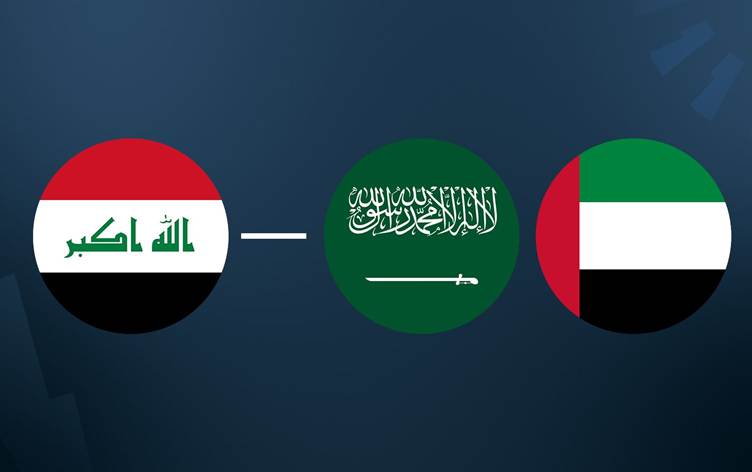
Flag of Iraq (left), flag of Saudi Arabia (middle), and flag of the United Arab Emirates (right). Graphic: Rudaw
ERBIL, Kurdistan Region - Iraq on Wednesday established a “special committee” to liaise with Saudi Arabia and the United Arab Emirates regarding investigations into attacks targeting their territories, state media reported. The move comes after both Abu Dhabi and Riyadh reported drone attacks on key facilities, with both claiming the assaults originated from Iraq.
Iraqi government Spokesperson Sabah al-Numan relayed that in its first meeting chaired by incoming Iraqi Prime Minister Ali al-Zaidi, the Ministerial Council for National Security “reaffirmed its condemnation of recent attacks targeting Saudi Arabia and the United Arab Emirates, stressing the government’s rejection of the use of Iraqi territory or airspace to attack brotherly Arab countries and friendly regional states."
The meeting further "addressed ongoing investigations into the attacks" targeting Saudi Arabia and the UAE, noting "the formation of a special committee to contact the relevant authorities in both countries," Numan said.
He added that the Iraqi premier “instructed that all necessary measures be taken against those involved if it is proven that Iraqi territory was used as a launch point for the attacks, and affirmed Iraq’s commitment to cooperation with the brotherly countries on this matter.”
The Council further emphasized Iraq’s commitment to fostering “the best relations with regional countries and the international community, as well as the new government’s desire to be a partner in regional stability,” while affirming its commitment to “restricting arms to the hands of the state."
The development comes shortly after Abu Dhabi on Wednesday “condemned in the strongest terms the unprovoked terrorist drone attacks launched from Iraqi territory, including an attack targeting the Barakah Nuclear Power Plant on Sunday."
A day earlier, the Emirati defense ministry said its investigation confirmed that three drones targeted the critical facility, noting that the attack “originated from Iraqi territory” and while two drones were intercepted, “the third struck an electrical generator outside the plant’s inner perimeter.”
Abu Dhabi further urged Baghdad to “prevent all acts of aggression launched from its territory" and work towards enhancing its position as “an active and responsible regional partner.”
Meanwhile, Saudi defense ministry Spokesperson Major General Turki al-Malki on Sunday stated that “on the morning of Sunday, May 17, 2026, three drones were intercepted and destroyed after entering Saudi Arabia’s airspace from Iraq.”
“The Ministry of Defense reserves the right to respond at the appropriate time and place and will implement all necessary operational measures to counter any attempted aggression against the Kingdom’s sovereignty, security, or the safety of its citizens and residents,” Malki affirmed.
The US and Israel launched a large-scale aerial campaign against Iran in late February, striking thousands of targets across the country during six weeks of hostilities.
In response, Iran carried out thousands of drone and missile strikes across the Middle East, targeting alleged US assets - particularly in Gulf Arab states - as well as launching retaliatory attacks against Israel.
The Iranian response has also included strikes by factions aligned with the Iran-led ‘Axis of Resistance’, including by shadowy armed groups in Iraq that have claimed numerous attacks against alleged US targets in the country and the wider region.
The US and Iran later agreed to a Pakistan-mediated ceasefire on April 8, halting fighting to allow space for talks. While the first round of discussions concluded without a final agreement on April 11, a second round has yet to take place, as the war has yet to fully conclude.
In mid-April, the UAE handed the chargé d’affaires at the Iraqi embassy a “strongly worded” letter of protest over what it described as “terrorist attacks” launched from Iraqi territory by Iran-aligned armed groups targeting facilities in Gulf Arab states, despite the ongoing truce.
Importantly, Abu Dhabi then warned that the continuation of such attacks places ties with Baghdad “under highly sensitive strain.”
Last updated at 9:15 pm


Comments
Rudaw moderates all comments submitted on our website. We welcome comments which are relevant to the article and encourage further discussion about the issues that matter to you. We also welcome constructive criticism about Rudaw.
To be approved for publication, however, your comments must meet our community guidelines.
We will not tolerate the following: profanity, threats, personal attacks, vulgarity, abuse (such as sexism, racism, homophobia or xenophobia), or commercial or personal promotion.
Comments that do not meet our guidelines will be rejected. Comments are not edited – they are either approved or rejected.
Post a comment