


Iraq

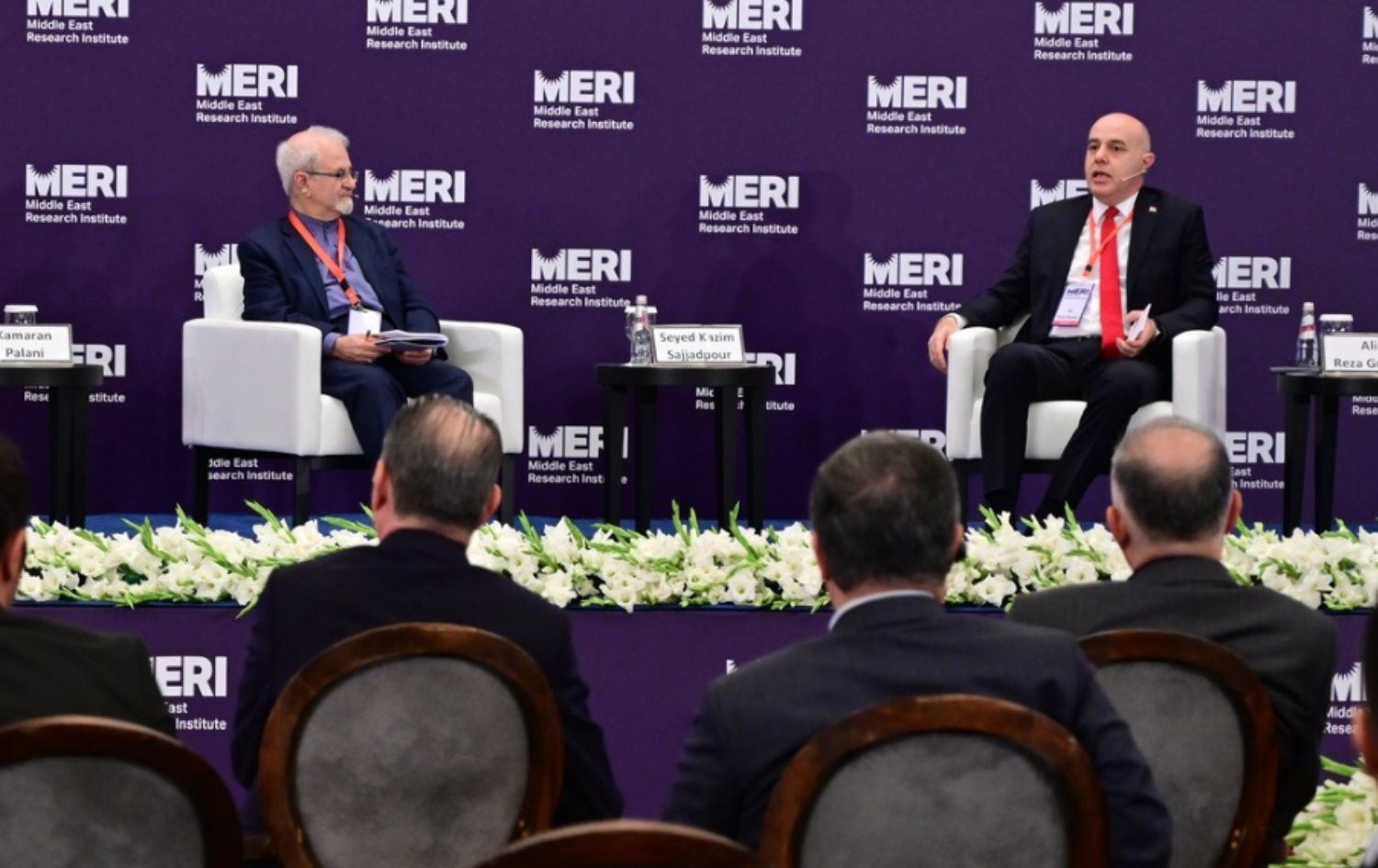
Seyed Kazem Sajjadpour, an advisor to Iran’s foreign minister (left), and Turkish Ambassador to Baghdad Ali Reza Guney (right) speak on a MERI forum panel in Erbil on October 27, 2021. Photo: Rudaw
ERBIL, Kurdistan Region - Officials from Iran and Turkey on Wednesday said that the climate crisis is not bound by borders and needs a common strategy to combat it, when they were confronted about water management policies and deforestation activities that are damaging the environment in the Kurdistan Region and Iraq.
“This is a common issue. This is not an Iranian issue or Turkish issue or… Iraqi issue,” said Seyed Kazem Sajjadpour, an advisor to Iran’s foreign minister. He said the whole region has “significant” environmental problems that can only be solved with “common practices.”
He was speaking on a panel at the Middle East Research Institute (MERI) forum in Erbil alongside Turkish Ambassador to Baghdad Ali Reza Guney to discuss regional influence in Iraq. They were asked how Ankara and Tehran can consider themselves good neighbours of Iraq when they cut the flow of rivers that cross the border and chop down trees in the Kurdistan Region.
Turkey is accused of cutting down trees in northern Duhok where they are carrying out military operations against the Kurdistan Workers’ Party (PKK). Member of the Kurdistan Region parliament Reving Hirori called it a “crime against the environment of Kurdistan.”
Iraq’s Ministry of Water Resources has proposed taking Iran to the International Court of Justice in order to guarantee its right to shared water resources after Tehran built dams and diverted the flow of water from several rivers that cross the border, feeding Darbandikhan Dam and irrigating farmlands before joining the Tigris River.
Turkey, Iran, and Iraq are all suffering from drought and drought-like conditions.
In Turkey, water shortages are killing fish and Lake Van is shrinking. “Protecting water resources before their depletion, using them efficiently and their proper management is now a must rather than a choice,” Turkish President Recep Tayyip Erdogan said last week.
Tehran is experiencing its worst drought in 50 years, Mohammad Shahriari, a water official in Tehran, said Tuesday. Iranian President Ibrahim Raisi ordered efforts redoubled on water infrastructure projects after deadly protests over shortages this summer, saying “People expect justice from the government and in water distribution it is necessary to report the amount of reserves and how to distribute it."
Turkish Ambassador Guney agreed with Sajjadpour that water is a “trans-border” issue and said Ankara is sensitive to Iraq’s needs. “Turkey in 2018 delayed the construction of a dam upon the request of the Iraqi government because Iraq was quite badly in need of water,” he said, referring to the Ilisu Dam.
Iraq’s problem, he said, is infrastructure. Baghdad needs to build more dams and rehabilitate its infrastructure to reduce the impact of shortages and Ankara is helping with that, he explained.
“Turkey has started sharing its knowledge and experience regarding the matter with Iraq. We have prepared a very comprehensive plan,” he told Rudaw's Hadi Salimi on the sidelines of the forum.
Iraq is the fifth-most vulnerable nation in the world to the effects of climate change, including water and food insecurity. Low rainfall levels and high temperatures caused by climate change are depleting water supplies across the country. Water levels in the Euphrates and Tigris rivers - shared by Iraq, Syria, and Turkey - have dropped by more than half. Much of Iraq’s agricultural lands depend on irrigation, but dams and reservoirs were at record-low levels this summer.
“This is a common issue. This is not an Iranian issue or Turkish issue or… Iraqi issue,” said Seyed Kazem Sajjadpour, an advisor to Iran’s foreign minister. He said the whole region has “significant” environmental problems that can only be solved with “common practices.”
He was speaking on a panel at the Middle East Research Institute (MERI) forum in Erbil alongside Turkish Ambassador to Baghdad Ali Reza Guney to discuss regional influence in Iraq. They were asked how Ankara and Tehran can consider themselves good neighbours of Iraq when they cut the flow of rivers that cross the border and chop down trees in the Kurdistan Region.
Turkey is accused of cutting down trees in northern Duhok where they are carrying out military operations against the Kurdistan Workers’ Party (PKK). Member of the Kurdistan Region parliament Reving Hirori called it a “crime against the environment of Kurdistan.”
Iraq’s Ministry of Water Resources has proposed taking Iran to the International Court of Justice in order to guarantee its right to shared water resources after Tehran built dams and diverted the flow of water from several rivers that cross the border, feeding Darbandikhan Dam and irrigating farmlands before joining the Tigris River.
Turkey, Iran, and Iraq are all suffering from drought and drought-like conditions.
In Turkey, water shortages are killing fish and Lake Van is shrinking. “Protecting water resources before their depletion, using them efficiently and their proper management is now a must rather than a choice,” Turkish President Recep Tayyip Erdogan said last week.
Tehran is experiencing its worst drought in 50 years, Mohammad Shahriari, a water official in Tehran, said Tuesday. Iranian President Ibrahim Raisi ordered efforts redoubled on water infrastructure projects after deadly protests over shortages this summer, saying “People expect justice from the government and in water distribution it is necessary to report the amount of reserves and how to distribute it."
Turkish Ambassador Guney agreed with Sajjadpour that water is a “trans-border” issue and said Ankara is sensitive to Iraq’s needs. “Turkey in 2018 delayed the construction of a dam upon the request of the Iraqi government because Iraq was quite badly in need of water,” he said, referring to the Ilisu Dam.
Iraq’s problem, he said, is infrastructure. Baghdad needs to build more dams and rehabilitate its infrastructure to reduce the impact of shortages and Ankara is helping with that, he explained.
“Turkey has started sharing its knowledge and experience regarding the matter with Iraq. We have prepared a very comprehensive plan,” he told Rudaw's Hadi Salimi on the sidelines of the forum.
Iraq is the fifth-most vulnerable nation in the world to the effects of climate change, including water and food insecurity. Low rainfall levels and high temperatures caused by climate change are depleting water supplies across the country. Water levels in the Euphrates and Tigris rivers - shared by Iraq, Syria, and Turkey - have dropped by more than half. Much of Iraq’s agricultural lands depend on irrigation, but dams and reservoirs were at record-low levels this summer.


Comments
Rudaw moderates all comments submitted on our website. We welcome comments which are relevant to the article and encourage further discussion about the issues that matter to you. We also welcome constructive criticism about Rudaw.
To be approved for publication, however, your comments must meet our community guidelines.
We will not tolerate the following: profanity, threats, personal attacks, vulgarity, abuse (such as sexism, racism, homophobia or xenophobia), or commercial or personal promotion.
Comments that do not meet our guidelines will be rejected. Comments are not edited – they are either approved or rejected.
Post a comment