



Error occured during this request! Please try again later.
Iraq

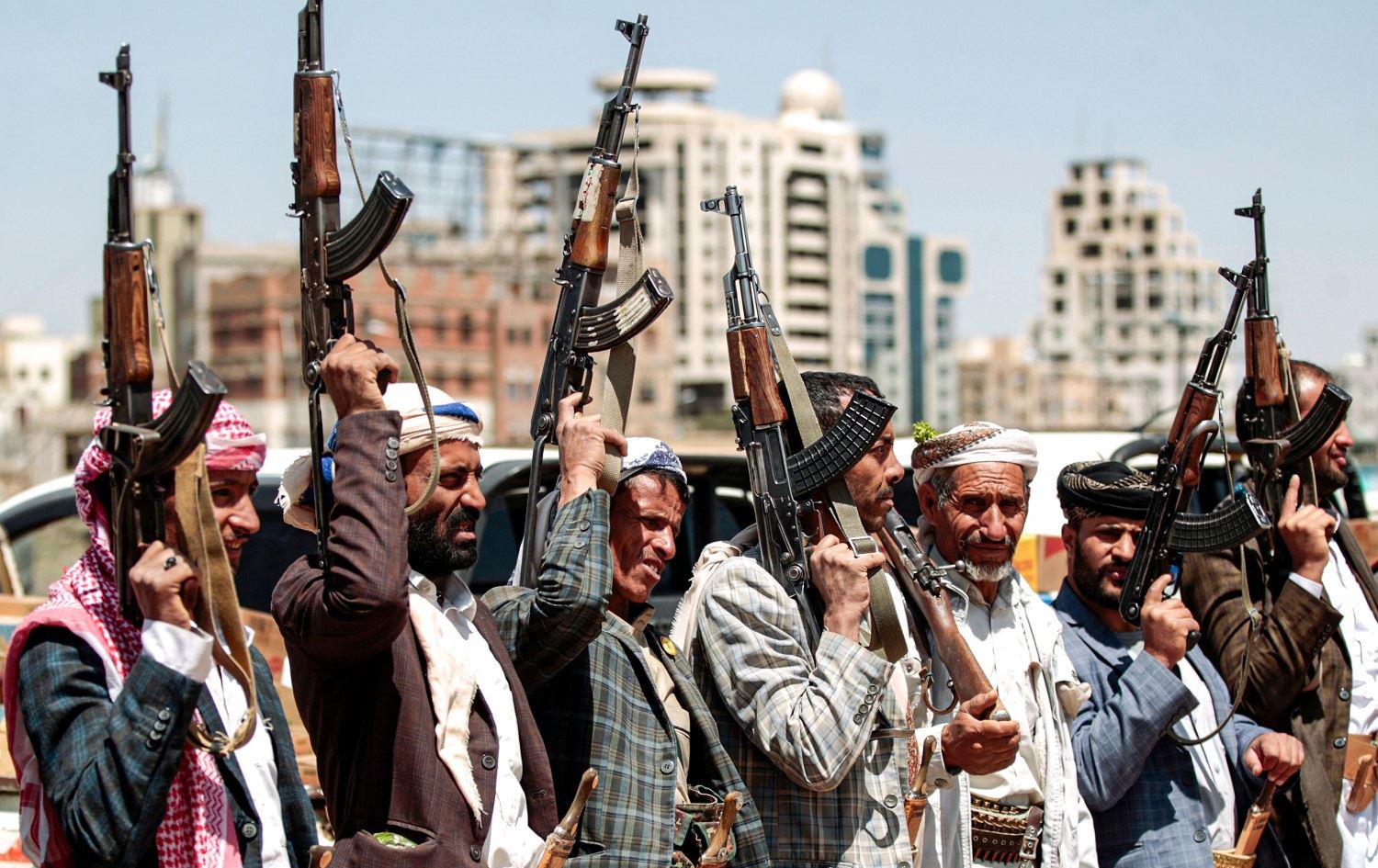
Yemeni men chant slogans as they hold up Kalashikov assault rifles during a tribal meeting in the Huthi rebel-held capital Sanaa, September 21, 2019. Photo: Mohammed Huwais / AFP
ERBIL, Kurdistan Region – Iraq can play the part of mediator between the United States and Iran and between Saudi Arabia and rebel forces in Yemen, Iraqi Prime Minister Adil Abdul-Mahdi said Sunday.
Tensions in the Persian Gulf region reached fever pitch after the September 14 drone and missile attacks on Saudi Aramco oil installations, which temporarily knocked out half of the country’s oil output.
Iran has been widely accused of being behind the attacks, despite claims of responsibility from Iran-backed Houthi rebels in Yemen.
The attacks raised concerns about the global oil supply and possible open conflict in the Gulf.
During a roundtable interview with journalists on Sunday, Abdul-Mahdi said Iraq could play the part of mediator.
“During my recent visit to Saudi Arabia, I and Saudi leaders agreed that Iraq can be a peaceful mediator in the region, by mediating between Saudi Arabia and Yemen, also between Iran and US,” Abdul-Mahdi said.
“During the Persian Gulf tensions, Iraq had a role in restoring peace to the Gulf with other regional and international partners.”
Abdul-Mahdi traveled to Riyadh on Wednesday to discuss regional security with Saudi King Salman and Crown Prince Muhammad bin Salman.
“Iraq has the advantage of being a peaceful mediator to reduce regional tensions since Iraq has positive relations with all regional rivals, such as Saudi Arabia and Iran, also the United Arab Emirates and Qatar, and positive relations with all Yemen parties,” the Iraqi PM said.
Solving the crisis in Yemen would help resolve tensions across the region, he added.
The Yemeni crisis has raged since 2015, pitting the Iran-backed Houthi rebels (Ansar Allah) against the Saudi-backed government and an international coalition.
Between January 1, 2016 and April 13, 2019, more than 70,000 people have been killed in the conflict, according to the Armed Conflict Location & Event Data Project (ACLED).
Iraq is sandwiched between the two regional rivals, Saudi Arabia and Iran, at a time when the country desperately needs friends in the region to support its reconstruction.
Tehran and Baghdad have long maintained close ties. But with Iran struggling under US sanctions, Iraq is also keen to deepen its ties with Riyadh, fashioning Iraq into a hub where regional interests converge.
Rapprochement between Iraq and Saudi Arabia began in 2015, when Saudi Arabia reopened its Baghdad embassy after 25 years of closure. A coordination council to strengthen the two countries’ relations was established in 2017.
Riyadh opened a consulate in Baghdad in April 2019 and pledging $1.5 billion in loans to Iraq during the trip. The Arar border crossing between the two countries is set to reopen next month after nearly three decades of closure.
Iran continues to wield considerable influence in Iraq and remains one of its main energy providers.
Iran also backs the powerful Iraqi Popular Mobilization Forces (PMF), known in Arabic as Hashd al-Shaabi. The militias first formed to fight the Islamic State (ISIS) in 2014, but observers fear the PMF has become an Iranian proxy.
Soon after the Aramco attack, Saudi Arabia joined a US-led maritime coalition, established to protect navigational freedom in the Persian Gulf after a series of attacks on commercial tankers in August.
Britain, Australia, Bahrain, and the UAE are also members. There was even speculation that Iran’s archrival Israel may join the operation.
Although it is concerned about the impact of Gulf insecurity on its own maritime oil exports, Iraq has declined to take part.
Tensions in the Persian Gulf region reached fever pitch after the September 14 drone and missile attacks on Saudi Aramco oil installations, which temporarily knocked out half of the country’s oil output.
Iran has been widely accused of being behind the attacks, despite claims of responsibility from Iran-backed Houthi rebels in Yemen.
The attacks raised concerns about the global oil supply and possible open conflict in the Gulf.
During a roundtable interview with journalists on Sunday, Abdul-Mahdi said Iraq could play the part of mediator.
“During my recent visit to Saudi Arabia, I and Saudi leaders agreed that Iraq can be a peaceful mediator in the region, by mediating between Saudi Arabia and Yemen, also between Iran and US,” Abdul-Mahdi said.
“During the Persian Gulf tensions, Iraq had a role in restoring peace to the Gulf with other regional and international partners.”
Abdul-Mahdi traveled to Riyadh on Wednesday to discuss regional security with Saudi King Salman and Crown Prince Muhammad bin Salman.
“Iraq has the advantage of being a peaceful mediator to reduce regional tensions since Iraq has positive relations with all regional rivals, such as Saudi Arabia and Iran, also the United Arab Emirates and Qatar, and positive relations with all Yemen parties,” the Iraqi PM said.
Solving the crisis in Yemen would help resolve tensions across the region, he added.
The Yemeni crisis has raged since 2015, pitting the Iran-backed Houthi rebels (Ansar Allah) against the Saudi-backed government and an international coalition.
Between January 1, 2016 and April 13, 2019, more than 70,000 people have been killed in the conflict, according to the Armed Conflict Location & Event Data Project (ACLED).
Iraq is sandwiched between the two regional rivals, Saudi Arabia and Iran, at a time when the country desperately needs friends in the region to support its reconstruction.
Tehran and Baghdad have long maintained close ties. But with Iran struggling under US sanctions, Iraq is also keen to deepen its ties with Riyadh, fashioning Iraq into a hub where regional interests converge.
Rapprochement between Iraq and Saudi Arabia began in 2015, when Saudi Arabia reopened its Baghdad embassy after 25 years of closure. A coordination council to strengthen the two countries’ relations was established in 2017.
Riyadh opened a consulate in Baghdad in April 2019 and pledging $1.5 billion in loans to Iraq during the trip. The Arar border crossing between the two countries is set to reopen next month after nearly three decades of closure.
Iran continues to wield considerable influence in Iraq and remains one of its main energy providers.
Iran also backs the powerful Iraqi Popular Mobilization Forces (PMF), known in Arabic as Hashd al-Shaabi. The militias first formed to fight the Islamic State (ISIS) in 2014, but observers fear the PMF has become an Iranian proxy.
Soon after the Aramco attack, Saudi Arabia joined a US-led maritime coalition, established to protect navigational freedom in the Persian Gulf after a series of attacks on commercial tankers in August.
Britain, Australia, Bahrain, and the UAE are also members. There was even speculation that Iran’s archrival Israel may join the operation.
Although it is concerned about the impact of Gulf insecurity on its own maritime oil exports, Iraq has declined to take part.


Comments
Rudaw moderates all comments submitted on our website. We welcome comments which are relevant to the article and encourage further discussion about the issues that matter to you. We also welcome constructive criticism about Rudaw.
To be approved for publication, however, your comments must meet our community guidelines.
We will not tolerate the following: profanity, threats, personal attacks, vulgarity, abuse (such as sexism, racism, homophobia or xenophobia), or commercial or personal promotion.
Comments that do not meet our guidelines will be rejected. Comments are not edited – they are either approved or rejected.
Post a comment