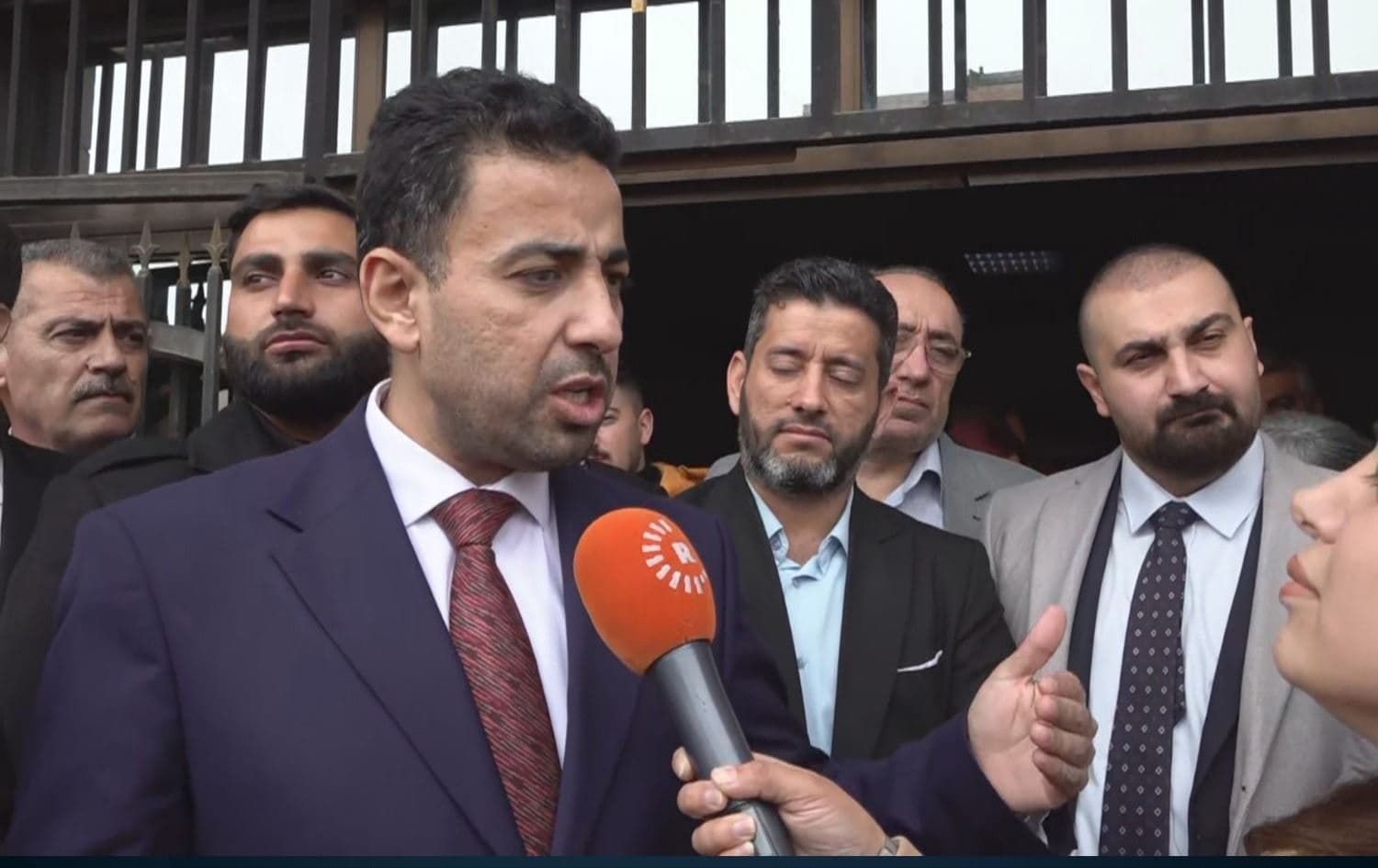
ERBIL, Kurdistan Region - Syrian Health Minister Musab al-Ali said Friday that his ministry is working to support the health sector in northeast Syria’s (Rojava) Hasaka province through coordination with local authorities, security officials, and other active parties to facilitate the work of medical institutions.
Ali told Rudaw the ministry and Hasaka governorate are jointly focusing on accelerating the activation of al-Shaddadi Hospital, while efforts are underway to address shortages at hospitals in Qamishli, Derik (al-Malikiyah), and Hasaka city “as soon as possible.”
He added that the delegation visiting Hasaka included eight central directors from the health ministry.
The minister said improvements would not be immediate, “but there are urgent changes that have already occurred,” pointing to the arrival of kidney dialysis machines, ambulances, and a mobile clinic, as well as the delivery of medical equipment and supplies to several hospitals.
Ali said the ministry’s three-year strategic health plan “is published, known, and available to everyone via social media,” adding that the visit aims to conduct a field assessment of health needs and develop practical plans for improvement.
The comments come as displaced Kurds in northeast Syria (Rojava) face severe shortages of life-saving medicines and limited access to medical care amid a tightening siege around Qamishli.
According to the city’s health department, nearly 1,000 displaced people are currently ill, more than 400 of whom suffer from chronic diseases.
Displacement across Rojava has surged to nearly 300,000 people - far exceeding United Nations estimates - with most sheltering in the besieged Kurdish city of Kobane, Sheikhmous Ahmed, who oversees camps for internally displaced persons and refugees in Rojava, told Rudaw Tuesday.
Meanwhile, the humanitarian and health crisis in Kobane has reached alarming levels despite a ceasefire agreement between the Kurdish-led Syrian Democratic Forces (SDF) and Damascus.
The Syrian Arab Army and allied armed groups have yet to lift a 25-day siege on the city, cutting off water, electricity, fuel, and other essential services. Previously, medicines were supplied from the Kurdistan Region, Damascus, and Aleppo, but all access routes are now closed.
More than 700 packages of essential medical supplies reached Kobane on Friday, Ahmed Mahmood, co-chair of the town’s health department, told Rudaw. The aid was delivered by the Diyarbakir City Protection and Solidarity Platform, a coalition of more than 100 civil society organizations, professional chambers, and trade unions in Diyarbakir (Amed).
Late last month, the SDF and the Syrian government announced an internationally brokered agreement aimed at ending hostilities and integrating Rojava’s civil and military institutions under state authority.
Despite the deal, Kobane has remained under siege for more than three weeks, raising growing concern over worsening humanitarian conditions.
Viviyan Fatah contributed to this report from Syria.